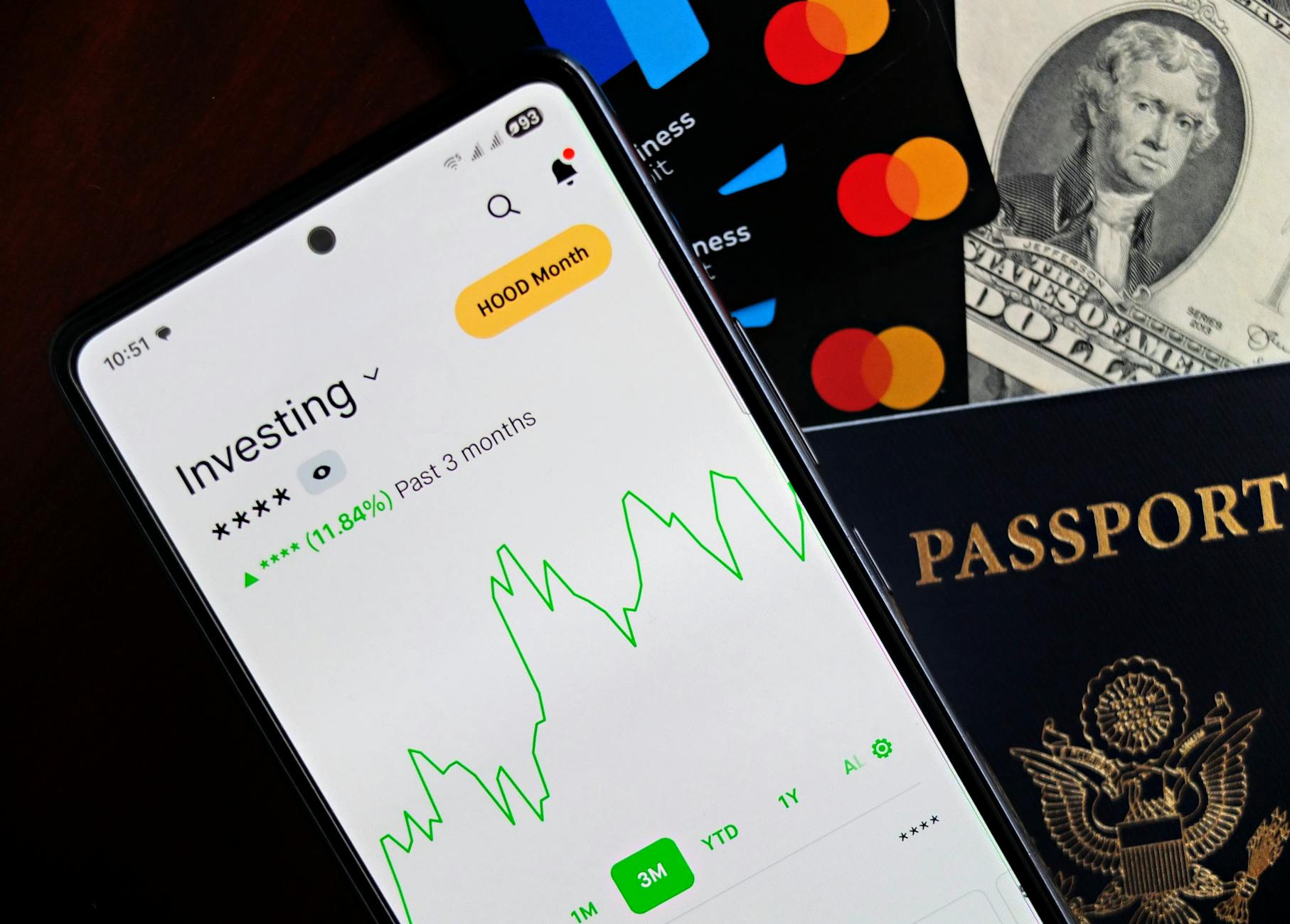

Yes, there are free financial apps that genuinely rival what you’d pay a financial planner hundreds of dollars to provide. Apps like YNAB, Mint, Personal Capital, and others now offer budgeting, investment tracking, and financial planning features that were once exclusive to paid advisors charging 0.5% to 1.5% annually on assets under management. For someone managing under $500,000 in assets, making less than $150,000 yearly, or simply wanting to get control of spending habits, these free or low-cost alternatives can deliver 80% of what a human planner would—without the fees. The gap has narrowed significantly because software doesn’t sleep, doesn’t have cognitive biases, and scales to serve millions without added cost.
The real question isn’t whether free apps work—it’s whether you have the discipline to use them. A financial planner’s main job is accountability and behavior modification, not genius-level advice. They show up, they ask questions, they nudge you toward your goals. A free app does the tracking and math perfectly, but it won’t call you out for ordering takeout four times a week. That human element of judgment and hand-holding is what you’re actually paying for when you hire a planner—and most people can replicate it with smartphone discipline.
Table of Contents
- How Free Financial Apps Have Replaced Paid Advisory Services
- The Trade-Offs: What Free Apps Can’t Do
- Real-World Example: How a Free App Stack Actually Works
- Choosing the Right Free App for Your Situation
- The Biggest Pitfalls That Derail Free App Users
- Security and Privacy: What You’re Trading for Free
- The Future: Will Free Apps Become Sufficient?
- Conclusion
How Free Financial Apps Have Replaced Paid Advisory Services
For the past decade, wealth management software has been democratizing features that once required a six-figure minimum and a fiduciary duty agreement. YNAB (You Need A Budget) started as a spreadsheet philosophy and grew into a budgeting engine that forces you to assign every dollar to a category before you spend it—a discipline that directly prevents overspending more reliably than any planner’s lecture could. Personal Capital aggregates all your accounts, shows asset allocation in real-time, calculates net worth, and flags when you’re over-allocated in stocks or bonds.
Fidelity’s Go Bananas and Vanguard’s Personal Advisor Services (a hybrid) even run automated portfolio management for under $20 monthly, far cheaper than traditional advisors who typically charge $1,000 to $3,000 annually just for a review. The mechanics are straightforward: budgeting apps track income and expenses in real time, investment apps show you if you’re on track for retirement, and debt-tracking apps help you calculate payoff dates and interest saved by changing repayment methods. What you don’t get is someone to tell you that buying a third car is mathematically incompatible with retiring at 55. That gap is real, but it’s recoverable if you can be honest with yourself about your goals and spend 30 minutes monthly reviewing the numbers.

The Trade-Offs: What Free Apps Can’t Do
The biggest limitation of free apps is that they assume you understand basic financial concepts—or are willing to learn them. A human planner will sit with a 62-year-old who has never opened a 401(k) statement and explain tax-loss harvesting, asset location, and why a Roth conversion might make sense. Free apps assume you either know these terms or will Google them. For someone living paycheck to paycheck or with significant debt, this gap is substantial. Mint (now absorbed into Credit Karma) was beloved for its simplicity but discontinued its standalone product partly because free users needed more hand-holding than the software could provide. YNAB’s steep learning curve has led many users to drop it after two months because they don’t understand why the app insisted on a “to be budgeted” category before letting them spend money.
Second, free apps have motivations misaligned with your best interests. Mint made money by showing you credit card and loan offers—offers that were often profitable for Mint but not for you. Robinhood’s free trading platform incentivizes frequent trading, not long-term investing. Personal Capital pushes you toward their advisory services once you hit $100,000 in investable assets, which is when the free tier stops being free in spirit. Fidelity’s tools are excellent, but they gently steer you toward Fidelity products. Understanding these hidden incentives and resisting them requires financial literacy—the very thing a human planner would coach you through.
Real-World Example: How a Free App Stack Actually Works
Consider Sarah, 35, earning $82,000 a year, with $45,000 in a 401(k), $12,000 in credit card debt, and no budget. A traditional planner would charge her $250 to $400 for an initial consultation, then $1,500 to $2,500 annually for ongoing advice. Instead, Sarah installed YNAB ($15 monthly), logged all her accounts into Personal Capital (free), and set a debt payoff goal. YNAB forced her to stop and think before every purchase for three months; she discovered she was spending $240 monthly on subscriptions she’d forgotten about and cut that to $60. Personal Capital showed her that even at her modest income, she could max out her HSA ($4,150 annually) by shifting money allocated to groceries, then use the HSA as a stealth retirement account.
Within one year, she’d paid off $6,000 of credit card debt and increased 401(k) contributions from 3% to 8%. The free software gave her the data and structure; her discipline did the rest. The app stack worked because Sarah’s situation was straightforward. She had one employer, no business income, no real estate complications, and a clear goal (debt payoff). She needed visibility and structure, not tax strategy or estate planning. That’s the sweet spot for free apps: straightforward finances requiring consistency, not complexity.

Choosing the Right Free App for Your Situation
The tool selection depends entirely on what problem you’re solving. If you overspend every month and have no idea where the money goes, YNAB or EveryDollar (budget-focused apps) will break that pattern in two months or it won’t work for you at all. If you have multiple accounts and want a single dashboard showing net worth and asset allocation, Personal Capital or a similar aggregator is essential. If you invest through a broker, their built-in tools are often excellent: Fidelity’s platform, for instance, includes retirement calculators, expense analyzers, and tax-loss harvesting recommendations at no extra charge. If you’re in debt and want to see payoff timelines, unbury.me or the Debt Payoff Planner (Visa) will show you exactly how long it takes to become debt-free if you throw $200 extra monthly at your highest-interest card.
Combining three to four free apps often replaces a $2,000 annual planner fee. However, context-switching between apps burns time and creates friction. If you use YNAB for budgeting, Personal Capital for investing, and Bankrate’s loan calculator for a mortgage decision, you’re actively managing your finances rather than passively consuming advice. Most people prefer to pay a human to consolidate that into one quarterly meeting and an email. It’s a tradeoff between convenience (worth money) and cost (worth effort).
The Biggest Pitfalls That Derail Free App Users
The number-one failure mode is picking an app and never actually using it. Surveys show that 60% of people who download a budgeting app abandon it within 3 months. They don’t fail because the app is bad; they fail because budgeting is boring and the app doesn’t provide the reward signal or accountability that a human planner does. A planner sends a quarterly email saying, “You’re on track—keep it up.” An app just shows you the numbers. If you’re not intrinsically motivated by spreadsheets and charts, the app will feel like homework, and you’ll quit.
Second is garbage-in, garbage-out data. YNAB requires manual entry for every transaction or a constant stream of imported data; many users set it up, then miss three weeks of transactions and give up when they realize they’re out of sync. Personal Capital depends on your ability to grant it access to every financial account—brokerages, banks, 401(k) plans—which raises legitimate security concerns (you’re handing a third party your login credentials to sometimes fragile legacy systems). And if you have a small business, side gigs, rental property income, or significant tax considerations, free apps will give you a false sense of clarity while missing millions in optimization. That’s when you actually need a planner or a CPA.

Security and Privacy: What You’re Trading for Free
When you use a free financial app, you’re not the customer—you’re the product. Your financial data (spending habits, income, investment allocation, debt levels) is valuable information. Mint, Empower, and others have history of selling anonymized aggregated data to research firms, lenders, and advisors. Personal Capital specifically marketed the data from users who hadn’t hired them as planners. Your anonymity might be protected in the fine print, but the aggregate picture of your behavior helps companies decide who gets approved for credit, what interest rates are offered, and how aggressively they should market financial products to you.
For security specifically, aggregation apps that require you to store passwords are riskier than going directly to your bank or brokerage app. If an aggregator gets hacked, hackers have not just your financial data but potentially your credentials. Most major aggregators use read-only access tokens, but older systems sometimes still require password sharing. Before linking accounts to any app, verify it uses OAuth or token-based authentication and has undergone third-party security audits. Your bank’s own app, accessed directly, is always safer than a third-party middleman.
The Future: Will Free Apps Become Sufficient?
The trajectory is clear: free financial software improves every year while human financial planners have stagnated. A planner in 2010 and a planner in 2026 do roughly the same job, using similar tools, at similar fee levels. Meanwhile, apps have embedded AI-driven analysis, goal-based planning, scenario modeling, and tax optimization that rival human advisory.
Robo-advisors like Vanguard’s Personal Advisor Services, Betterment, and Wealthfront have compressed the planner fee from 1% to 0.25% or lower by automating everything but basic human check-ins. In five years, it’s reasonable to expect that a free app will do everything a 2026 planner does, faster and more reliably, leaving human advisors to handle only genuinely complex situations (business succession, high-net-worth tax optimization, estate planning) or pure psychology (accountability for people who can’t motivate themselves). This shift will force the planner industry to evolve toward genuine value-add services rather than routine portfolio management. For now, though, the window where free tools are sufficient for the middle-income majority is open—and widening.
Conclusion
Free financial apps genuinely can replace a paid financial planner for straightforward situations: single-income households earning under $150,000, assets under $500,000, no business ownership, and clear goals. They provide better transparency, faster updates, and zero fees—all forcing you into active financial engagement rather than passive advice-consumption. The core functions—budgeting, investment tracking, goal-setting, debt management—are now genuinely competitive with what planners offer, and in many cases superior because they operate in real time without human bias. The catch is that apps demand discipline and self-education in ways a planner does not.
You must actually use them, understand basic financial concepts, be willing to revise your own behavior, and not expect the software to call you out for poor decisions. For people with complex situations—business income, rental properties, significant tax optimization potential—or those who need behavioral hand-holding, a human planner remains worth the fee. For everyone else, a three-app stack costing under $200 annually will handle what a planner would charge $2,000 to manage. The choice is whether your time and discipline are more valuable than your money.