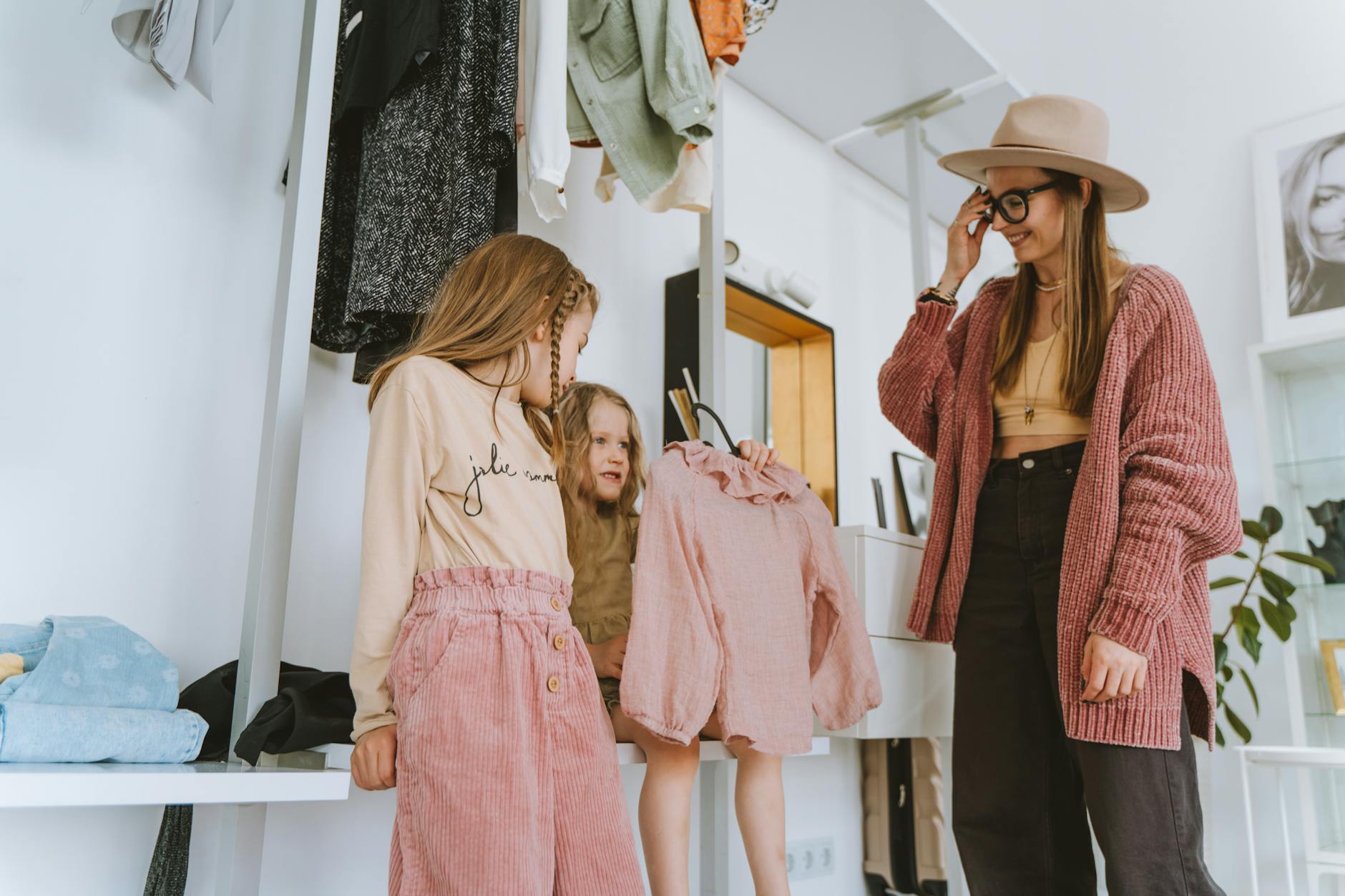

Getting kids’ clothes for 80% off is entirely possible if you know where to look, though the savings usually require flexibility on timing, brand selection, or condition. The four main sources that consistently deliver these deep discounts are consignment and thrift stores, online overstock retailers, seasonal clearance sales, and secondhand mobile apps combined with community swap groups. A parent shopping at Goodwill or a local consignment shop can easily find name-brand children’s clothing priced at $1 to $3 per item, which represents 70-90% savings compared to original retail prices.
Most families won’t achieve 80% off on every single purchase, but combining these four strategies throughout the year makes it realistic to keep your kids’ clothing budget at a fraction of what full-price shopping would cost. The tradeoff is that you’ll spend more time hunting for deals, you may need to accept used items in good condition, and selection varies by location and season. Understanding the strengths and limitations of each source helps you build a practical rotation of discounted kids’ clothes without constant searching.
Table of Contents
- What Are the Four Best Sources for 80% Off Kids’ Clothes?
- Consignment Stores and Thrift Shops – The Most Reliable Discount Source
- Online Overstock and Flash Sale Sites – Speed and Selection With Timing Pressure
- Seasonal Clearance at Mainstream Retailers – Strategy and Timing
- Common Pitfalls and Limitations of Deep-Discount Shopping
- Building a Wardrobe Rotation With Discount Sources
- The Future of Discount Kids’ Clothing Shopping
- Conclusion
- Frequently Asked Questions
What Are the Four Best Sources for 80% Off Kids’ Clothes?
The first source is consignment and thrift stores, which include both nonprofit thrift shops like Goodwill and for-profit consignment boutiques that specialize in children’s clothing. Nonprofit thrift stores typically offer the deepest discounts, with many items priced under $5 and frequent sale events where you can buy four items and pay for only two or three. For-profit consignment stores curate their inventory more carefully, so items are often in better condition and from current seasons, but prices are higher—usually $8 to $15 per item. The limitation here is that inventory changes constantly and selection depends on what other families have donated or sold, so you may visit the same store multiple times without finding anything useful for your child’s size. The second source is online overstock and clearance retailers like Rue La La, Zulily, Thrive Market, and Overstock, which offer flash sales and seasonal clearance on children’s clothing from major brands. These sites often have markdowns of 50-70% off original retail, and when combined with coupon codes or shopping during holiday sales events, you can reach 80% off. A typical example is buying a $60 winter coat on Rue La La during January clearance for $12 to $15. However, these sales move quickly—popular items and popular sizes sell out within hours—and shipping costs can eat into your savings if you’re not ordering above minimum thresholds or using free shipping promotions.
The third source is seasonal clearance sales at mainstream retailers like Target, Old Navy, Gap, and Walmart, which mark down inventory 50-75% or more at the end of each season. End-of-season clearance (typically January for winter clothes and July for summer clothes) offers the deepest discounts, sometimes 70-80% off original prices. The downside is that you’re shopping from what’s left after months of other customers picking through the racks, so sizes for popular items may be depleted. You’re also forced to buy for the upcoming season—storing winter coats for six months takes space and planning. The fourth source is secondhand mobile apps like Poshmark, Mercari, and Facebook Marketplace, combined with community clothing swap groups. These platforms let you buy directly from other parents, often at 50-80% below retail, and swap groups actually allow you to get clothing for free if you’re trading equivalent items. The trade-off is that you’re dealing with individual sellers, so quality varies, return policies are limited, and you need to factor in shipping costs on these platforms. Some sellers include free shipping, but many don’t, which can add $3 to $8 per purchase.

Consignment Stores and Thrift Shops – The Most Reliable Discount Source
Consignment and thrift stores are the most reliable year-round source for deep discounts on kids’ clothes, which is why many families prioritize them as their first stop. nonprofit thrift stores like Goodwill, Salvation Army, and local community thrift shops operate on donation-based inventory, which means prices are kept low to move volume—most children’s items are priced $1 to $4. These stores also run regular promotions: Goodwill often has “fill a bag for $5” sales, and many stores discount colored tag items by 50% on specific days. For-profit consignment boutiques that specialize in children’s clothing are more selective with inventory, accepting only gently used or new items from reputable brands, so you’ll find higher-quality pieces but at higher prices, typically $8 to $15 per item. The limitation of thrift and consignment shopping is the time investment required.
You may spend an hour browsing to find five usable items for your child. Inventory is unpredictable—you could find nothing one week and multiple items in your child’s size and style preferences the next. Condition is another variable; while you can inspect items for stains, holes, or worn seams before purchasing, occasional defects slip through. A specific example: a parent looking for a winter jacket might find a barely-worn Eddie Bauer or Columbia coat priced at $4 to $6 at Goodwill, which would retail for $80 to $120, but they may need to visit the store three times before finding the right size and style. Many experienced secondhand shoppers recommend visiting consignment stores weekly or signing up for text alerts when new inventory arrives, turning it into a habit rather than a one-time shopping trip.
Online Overstock and Flash Sale Sites – Speed and Selection With Timing Pressure
Online overstock retailers and flash sale sites like Rue La La, Zulily, and Thrive Market specialize in surplus inventory and end-of-season clearance from major brands, often at 50-70% off original retail prices. These sites are ideal if you know your child’s size, preferred brands, and clothing needs in advance, because they move inventory quickly and you can sometimes reach 80% off by combining sale discounts with coupon codes. A practical example: Rue La La frequently has events where you can buy a $50 to $80 name-brand outfit for $12 to $20, and if you have a 20% off coupon code from the site, you can get it for under $10. Zulily specializes in end-of-season clearance and often has flash sales on specific brands or categories, such as “50% off all Lands’ End” for 24 to 48 hours. The significant limitation is speed—popular items in common sizes sell out within hours, sometimes minutes.
If you see an item you want, you need to purchase it immediately rather than comparing prices or thinking it over. Shipping is another cost factor; these sites typically charge $5.95 to $6.95 per order, though some offer free shipping on orders over $50 or $75, or through membership programs. Returns policies vary by retailer and brand, so a defective or ill-fitting item may be difficult to return. Additionally, you’re purchasing for an upcoming season several months in advance, which requires accurate size predictions for a growing child. An 8-year-old wearing size 10 this summer may fit size 12 by next winter, so you’re taking a gamble on fit.

Seasonal Clearance at Mainstream Retailers – Strategy and Timing
End-of-season clearance at mainstream retailers like Target, Old Navy, Walmart, and Gap offers some of the deepest discounts available on kids’ clothing, often 60-80% off original prices. These stores reduce inventory aggressively at the end of each season to make room for new merchandise: winter clearance starts in late December and runs through February, summer clearance starts in July and runs through August, and spring and fall clearances follow similar schedules. A typical scenario involves finding a $40 winter coat marked down to $8 to $12 in February, or a $30 summer dress reduced to $6 to $9 in August. The advantage of shopping at major retailers is that you know the brand quality, sizing is standardized, and you have clear return windows if items don’t fit or have defects.
The tradeoff is that you’re shopping limited inventory after weeks of other customers picking through the racks. Popular sizes and colors are typically gone by the time markdowns reach 75% off; what remains may be odd colors, unpopular styles, or less common sizes. You’re also forced to buy for the upcoming season months in advance and store items until they’re needed. This works well if you have space and if your child’s size is predictable, but it’s a challenge for families with multiple kids or those in apartments with limited storage. To maximize clearance deals, shop mid-to-late in the season (late January for winter, mid-August for summer) after the first markdown wave but before everything is gone, and check markdown racks frequently since prices drop in tiers.
Common Pitfalls and Limitations of Deep-Discount Shopping
The biggest pitfall of chasing 80% off prices is falling into the trap of buying items your child doesn’t actually need or won’t wear. The psychology of a deep discount can make a $5 item feel like a bargain even if it’s the wrong color, style, or season for your child. Many parents end up with drawers full of clearance purchases that never got worn. Secondhand shopping in particular requires careful inspection for damage you might miss in-store or in photos: a stain that seems removable might be permanent, zippers might be broken, and elastic might be worn out in ways that aren’t visible until the item is washed. When shopping on mobile apps or from individual sellers, you have limited recourse if the item isn’t as described.
Another limitation is that shopping for 80% discounts requires flexibility on brand, style, and color preferences. If your child has a specific preference—say, purple rain boots or a particular character on a t-shirt—you may not find it at a deep discount, or you’ll need to visit multiple stores over weeks to locate it. Size and fit inconsistencies are also common when shopping secondhand or across multiple brands; a size 10 from Old Navy might fit very differently than a size 10 from Gap. A specific warning: avoid buying clothing for immediate needs (your child has a school event next week) from clearance or secondhand sources unless you’re flexible on fit and appearance. Discount shopping works best for building a seasonal wardrobe rotation, not for filling urgent needs. Set a budget before shopping at thrift stores and flash sale sites, because the ease of finding cheap items can lead to overspending on quantity rather than investing in versatile pieces.

Building a Wardrobe Rotation With Discount Sources
The most effective approach to achieving 80% off costs across your kids’ clothing budget is to combine all four sources in a rotation system throughout the year. Rather than buying all kids’ clothes at retail, allocate a consistent budget to weekly thrift store visits, seasonal clearance shopping, and periodic checks of flash sale sites. Maintain a simple inventory of what your child owns and what they’ll need for the upcoming season (4-6 basic shirts, 2-3 pairs of pants, weather-appropriate outerwear, and seasonal items like shorts or sweaters). When you find discounted items that fit these needs, purchase them—even if it’s months before the season.
A practical example: A family of two kids shopping this way might spend $40-50 per month at thrift stores, another $30-40 on one or two seasonal clearance shopping trips, and $20-30 on a flash sale purchase during sale events. Over a year, that’s $1,200 to $1,500 on kids’ clothing for two children, which would cost $3,500 to $5,000 at full retail prices. The key is consistency: store-level clearance purchases only happen twice a year, but thrift stores and flash sale sites can be checked regularly. Keep a wishlist on your phone of specific sizes and clothing types you’re looking for, so when you encounter a deal, you know immediately whether it fits your needs.
The Future of Discount Kids’ Clothing Shopping
As more parents adopt secondhand shopping and online discount platforms, the landscape of deep-discount kids’ clothing is shifting. Specialized secondhand platforms like ThredUp and Poshmark are building inventory-sharing systems and standardized pricing models that make discount shopping more predictable, though prices are slightly higher than marketplace apps or local thrift stores. Meanwhile, mainstream retailers are increasingly offering their own off-price channels—Target’s Clearance section online, Old Navy Factory outlet locations—which streamline clearance shopping and sometimes offer deeper discounts than in-store clearance.
Subscription models like Rent the Runway Kids allow families to rent clothing for growing children, which isn’t the same as buying at 80% off but offers a different economics for families who value the ability to change styles frequently. The reality is that achieving 80% off on most kids’ clothing requires an active, ongoing approach rather than a single strategy. Your best results will come from combining thrift store shopping with seasonal clearance events and maintaining a flexible wishlist. As kids’ clothing trends continue to shift faster and more families embrace secondhand shopping, the supply of discounted items may change, but the fundamental sources—thrift stores, clearance racks, online overstock sites, and secondhand apps—will remain reliable options for budget-conscious parents.
Conclusion
Getting kids’ clothes for 80% off is realistic and achievable through a combination of consignment stores, online overstock retailers, seasonal clearance sales, and secondhand mobile apps. The key is to approach discount shopping strategically, maintaining flexibility on brand and style preferences while being intentional about what you actually need. Each source has distinct advantages and limitations: thrift stores offer the deepest prices but require time investment, flash sale sites provide current inventory but move quickly, clearance sales offer known quantities but require advance planning, and secondhand apps provide convenience but variable quality.
Start by identifying which source fits your lifestyle best—if you enjoy browsing, thrift stores are your primary channel; if you prefer shopping online and have advance notice of your child’s needs, flash sales and clearance sites work better. Most families end up using all four sources in rotation, shopping seasonally for clearance items, weekly for thrift finds, and opportunistically when flash sales align with your child’s clothing needs. With consistent effort and realistic expectations, 80% off on kids’ clothing becomes a sustainable practice rather than an occasional lucky find.
Frequently Asked Questions
What’s the difference between thrift stores and consignment shops?
Thrift stores like Goodwill operate on donated inventory and offer the lowest prices ($1-$4 per item). Consignment shops buy gently used or new clothing from individuals and resell it, offering higher-quality items at higher prices ($8-$15). Thrift stores have more inventory but more variation in condition and quality. Consignment shops are more curated but pricier.
Can you actually get 80% off every purchase, or is that an average?
You won’t get 80% off on every single item; the 80% off benchmark is more accurately described as an average or potential across the year when you combine all four sources. Thrift stores and deep seasonal clearance often hit 70-90% off, while flash sales and secondhand apps average 50-75% off depending on the item and time of year.
What’s the best time to shop for kids’ clothes clearance?
The best times are mid-to-late season (late January for winter, mid-August for summer), when prices have been marked down multiple times but inventory hasn’t completely sold out. Shopping very early in the clearance period means limited discounts; shopping very late means limited selection.
Is it worth buying kids’ clothes months in advance to avoid full retail price?
It depends on your child’s growth rate and your storage space. Kids grow quickly, so buying 6-12 months in advance is risky for fit unless your child’s size is very stable. Buying 2-4 months in advance (buying summer clothes in May, winter clothes in September) is safer and still catches good clearance prices.
How do I know if a secondhand item is actually in good condition?
Ask sellers specific questions about any stains, discoloration, worn seams, broken zippers, or elastic issues. Request close-up photos of any areas of concern. When buying in-person at thrift stores, inspect seams, zippers, and fabric carefully under good lighting. Assume visible wear will remain after washing; don’t buy items banking on stain removal unless you’re willing to accept failure.
Should I buy secondhand clothes for babies or newborns?
Yes, secondhand shopping makes even more sense for babies because they outgrow clothes in weeks. Buy from reputable sources (consignment stores, established secondhand apps) to ensure quality. Inspect items carefully for stains and wear since baby clothing gets washed frequently. Never buy used car seats, cribs, or safety equipment, but clothing is completely safe secondhand.