You can realistically offset thirty to fifty dollars a month in grocery costs, sometimes more, by scanning every receipt through cashback apps like Ibotta, Fetch Rewards, and Checkout 51 while simultaneously using your store’s loyalty program to capture sale prices and fuel points. The method is straightforward: you let the store loyalty card handle the front-end discounts at checkout, then photograph that same receipt in two or three different apps that each reward you for different products on the same trip. A shopper buying a gallon of milk on sale at Kroger for $2.99 with a digital coupon, for instance, can then scan that receipt in Ibotta for a $0.50 rebate on the milk, earn points in Fetch Rewards for the total purchase amount, and accumulate fuel points through the Kroger Plus card, effectively tripling the savings from a single transaction. This stacking approach works because each layer of savings operates on a different mechanism. Store loyalty programs discount the shelf price.
Receipt apps offer post-purchase rebates from brand advertisers. And store-specific apps sometimes layer additional digital coupons on top of the loyalty price. None of these systems conflict with each other because they pull money from different sources. The store funds the loyalty discount, the brand funds the Ibotta rebate, and Fetch Rewards pays you from its own advertising revenue for the data your receipt provides. This article walks through exactly which apps stack together without violating terms of service, how to pair them with the major grocery loyalty programs, where the real earning potential sits versus the time investment required, and the specific pitfalls that cause people to waste hours for negligible returns.
Table of Contents
- Which Receipt Apps Actually Stack With Store Loyalty Programs for Free Groceries?
- How the Major Store Loyalty Programs Work and Where Their Limits Are
- Building a Receipt App Stack That Does Not Waste Your Time
- Stacking Digital Coupons With Paper Coupons and App Rebates
- Why Some Receipt App Earnings Disappear and How to Avoid Common Traps
- Store-Specific Apps That Add a Hidden Layer of Savings
- Where Grocery Stacking Is Headed as Apps Evolve
- Conclusion
- Frequently Asked Questions
Which Receipt Apps Actually Stack With Store Loyalty Programs for Free Groceries?
The receipt apps that stack most reliably with grocery loyalty programs are Ibotta, Fetch Rewards, Checkout 51, Shopkick, and the store’s own app when it has a separate rebate function. These all coexist because they monetize different data. Ibotta partners directly with brands like General Mills or Procter and Gamble, who pay for verified proof of purchase. Fetch Rewards earns revenue from aggregated purchase data and pays you in points regardless of what you bought. Checkout 51 operates on a weekly rotating offer list funded by brand partners. Your Kroger Plus card, Safeway Club Card, or Stop and Shop loyalty account discounts the price before any of these apps even see the receipt. A concrete example: say you shop at Safeway and buy Cheerios listed at $4.99. Your Club Card drops it to $3.49.
You clipped a digital coupon in the Safeway app for an additional dollar off, bringing it to $2.49. After checkout, you scan the receipt in Ibotta where Cheerios has a $1.00 rebate this week. You also scan it in Fetch Rewards and earn roughly 25 points (about $0.25 equivalent) on the total receipt. Your final effective cost on that box of Cheerios is around $1.24. None of these discounts interfered with each other because the store coupon reduced the price, Ibotta’s rebate came from General Mills, and Fetch Rewards paid you from its own pool. The one combination to watch out for is running two apps that both claim to offer manufacturer coupons, since some brands restrict one rebate per purchase per household. Ibotta and Checkout 51 occasionally feature the same product, and both will usually honor it, but if the same brand offer appears on both, read the fine print. In practice, most users report no issues redeeming the same item across both platforms, but the terms of service technically allow either app to deny a duplicate claim.
How the Major Store Loyalty Programs Work and Where Their Limits Are
Every major grocery chain in the United States runs some version of a loyalty program, but they are not equally valuable and some require more effort than the savings justify. Kroger Plus, Safeway Club, Stop and Shop Go Rewards, Albertsons for U, H-E-B, and Publix (through their app-based digital coupons) represent the programs with the deepest discounts. Kroger, for example, offers fuel points at a rate of one point per dollar spent, with occasional promotions for double or quadruple points on gift card purchases, plus digital coupons that stack with the loyalty card sale price. However, if you shop primarily at a store like Whole Foods, the loyalty integration works differently. Amazon Prime members get the Whole Foods discount automatically, but the savings tend to be smaller per item than what Kroger or Safeway offer through their programs. Walmart does not run a traditional loyalty card at all. Their app-based Walmart Rewards program gives a small percentage back on select items, but it operates more like a receipt app than a conventional loyalty discount.
Aldi and Trader Joe’s offer no loyalty program whatsoever, relying instead on everyday low pricing. So the stacking strategy works best at traditional grocery chains where the loyalty card unlocks a meaningfully lower price that you then layer rebate apps on top of. A key limitation people overlook: loyalty programs track your purchasing behavior in exchange for discounts. The store sells this data or uses it for targeted marketing. If privacy is a concern, you are trading purchase history for savings. Most people make that trade willingly, but it is worth understanding that the loyalty card is not a gift. It is a transaction.
Building a Receipt App Stack That Does Not Waste Your Time
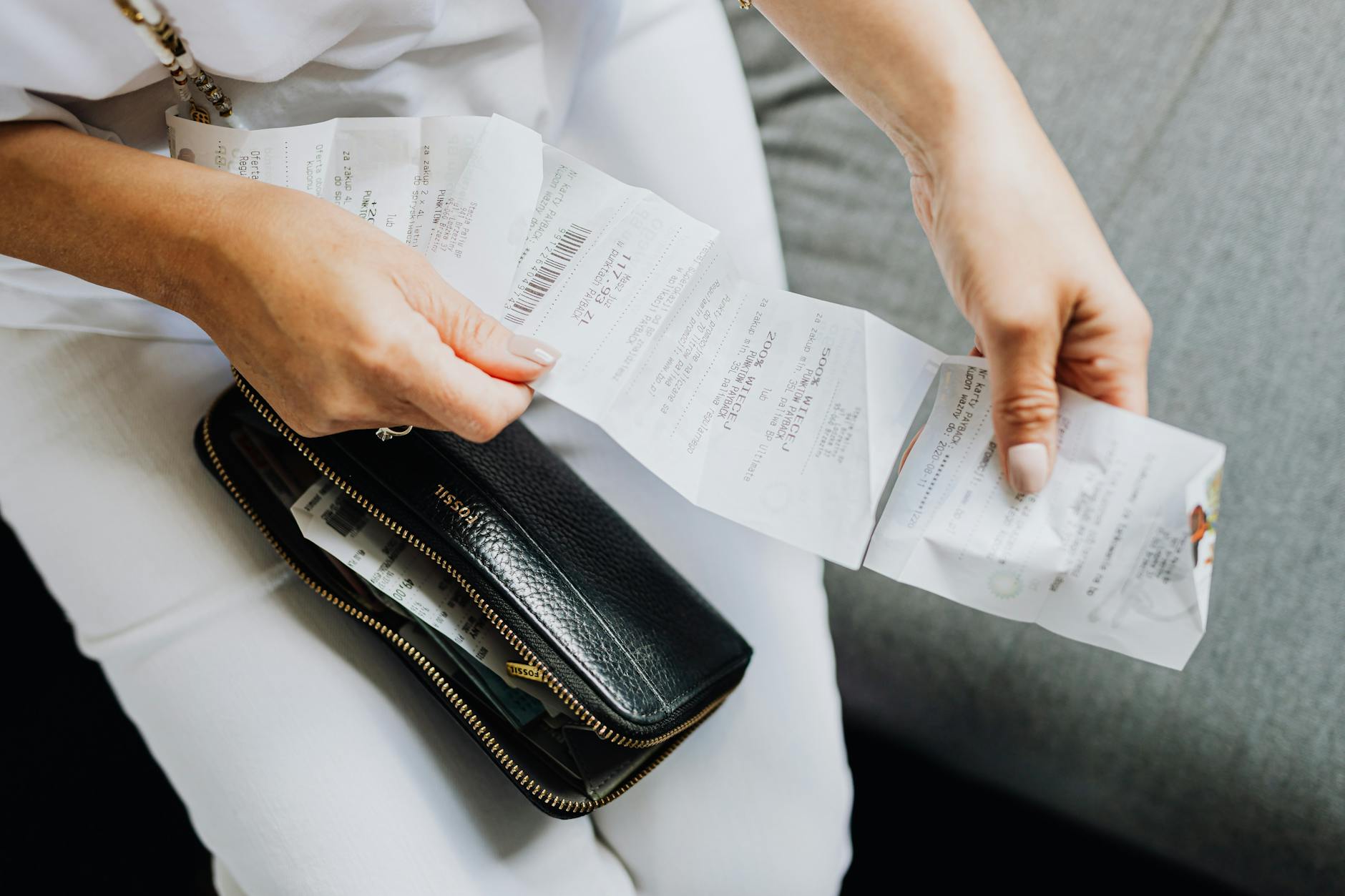
The biggest mistake new receipt app users make is downloading eight apps and spending twenty minutes after every grocery trip scanning, searching for offers, and manually entering items. The realistic sweet spot for most people is three apps: one brand-rebate app (Ibotta), one universal receipt scanner (Fetch Rewards), and your store’s own app for digital coupons. This combination captures the majority of available savings in under three minutes per shopping trip. Ibotta deserves the anchor position because it consistently offers the highest individual rebates, often between $0.50 and $5.00 per item, and has a $20 minimum cashout via PayPal or gift card. A family buying diapers, for example, can regularly find $2 to $3 Ibotta offers on Huggies or Pampers that stack with whatever the store loyalty price already is. Fetch Rewards takes the second slot because it requires zero effort beyond photographing the receipt.
Every receipt earns points regardless of what you purchased, with bonus points for buying partner brands. There is no clipping, no pre-selecting offers. You just scan. Checkout 51 or Shopkick can occupy the third slot for users who want to maximize, though the incremental return drops off noticeably after the first two apps. The people who burn out on receipt apps are almost always the ones who tried to use five or more apps simultaneously, spent time scrolling through offers before shopping, and then felt obligated to buy products they did not need just to earn a $0.25 rebate. Buy what you were going to buy anyway, scan the receipt in two or three apps, and move on. The savings accumulate in the background.

Stacking Digital Coupons With Paper Coupons and App Rebates
One of the more powerful but underused combinations involves layering a manufacturer paper coupon, a store digital coupon, the loyalty card price, and a receipt app rebate on the same item. Most grocery stores allow one manufacturer coupon and one store coupon per item per transaction. The loyalty card price is separate from both. And receipt app rebates operate entirely outside the store’s coupon system. Here is how this plays out at Kroger. Say toothpaste is priced at $4.99, marked down to $2.99 with Kroger Plus. You clip a $1.00 Kroger digital coupon in the app. You also have a $1.00 manufacturer coupon from the Sunday paper insert.
At checkout, you pay $0.99 plus tax. Then you scan the receipt in Ibotta, which has a $1.50 rebate on that toothpaste. You effectively got paid $0.51 to buy toothpaste. This is not hypothetical. Coupon bloggers document these scenarios weekly, and they happen most frequently with health and beauty items, cleaning supplies, and breakfast cereals where manufacturer promotional budgets are highest. The tradeoff is time. Finding and clipping paper coupons, matching them with digital offers, and checking Ibotta before you shop adds fifteen to thirty minutes of planning per trip. For a single person buying groceries for one, the dollar return on that time investment may be marginal. For a family of four spending $800 a month on groceries, the same effort can yield $60 to $100 in monthly savings, which starts to resemble a meaningful hourly rate for the planning time.
Why Some Receipt App Earnings Disappear and How to Avoid Common Traps
Receipt apps occasionally reject scans, and understanding why prevents frustration. The most common rejection reasons are: the receipt is older than the app’s submission window (usually seven to fourteen days), the photo is blurry or cut off, the item scanned does not match the offer exactly (wrong size, wrong variety), or the store is not a participating retailer for that specific offer. Ibotta, for instance, requires you to add offers to your list before purchasing at certain stores, though this requirement has relaxed for many retailers where they verify purchases through loyalty card linking. A subtler trap involves receipt apps that incentivize purchasing behavior through bonus structures. Fetch Rewards runs promotions like “scan 20 receipts this month and earn 5,000 bonus points.” This sounds appealing until you realize it can push you to make unnecessary small purchases just to hit a scan count.
Similarly, Ibotta’s “bonuses” for redeeming a certain number of offers in a month can lead people to buy products they do not need to unlock a $3 bonus. The math only works if you were buying those items regardless. The other limitation worth noting is payout thresholds and point devaluation. Fetch Rewards points have historically converted at a rate of roughly 1,000 points per dollar, but the company can change this rate at any time. Shopkick has devalued its kicks-to-dollar ratio multiple times over the years. Any savings strategy that depends on points rather than direct cash back carries the risk that the platform changes the conversion rate before you cash out.

Store-Specific Apps That Add a Hidden Layer of Savings
Several grocery chains run their own apps with rebate features that function like a built-in receipt app, adding yet another layer. Target Circle offers percentage-back deals on specific items that stack with manufacturer coupons and with Ibotta (when you scan the Target receipt separately). The Kroger app frequently loads “cash back” offers that credit your loyalty account, separate from the digital coupon function.
Albertsons and Safeway’s “for U” program periodically gives personalized pricing that goes below the advertised sale price based on your purchase history. The H-E-B app in Texas is particularly generous, offering digital coupons, points toward free items, and rotating “meal deal” bundles that already price well below competitors. A shopper stacking the H-E-B app deals with Ibotta and Fetch Rewards in a market where H-E-B’s base prices are already aggressive can achieve some of the lowest effective grocery costs in the country. The gap between shoppers who use these tools and those who do not can easily reach $150 to $200 per month for a family, depending on the store and region.
Where Grocery Stacking Is Headed as Apps Evolve
The trend in receipt apps is moving toward automatic verification through loyalty card linking rather than manual receipt scanning. Ibotta already connects directly with retailer loyalty accounts at Walmart, Kroger, and several other chains, meaning the rebate applies without any receipt photo at all. This removes the biggest friction point and makes stacking almost passive.
As more retailers integrate, the manual scan-and-submit model will likely become a fallback rather than the default. The risk in this evolution is consolidation. If Ibotta becomes the dominant platform and negotiates exclusive deals with major chains, competition among receipt apps could shrink, reducing the ability to stack multiple apps on the same purchase. For now, the landscape still favors the consumer willing to use two or three apps in parallel, but it is worth watching whether app consolidation or retailer exclusivity agreements start closing the stacking loopholes that make this strategy so effective.
Conclusion
The core method is simple enough to summarize in one sentence: use your store loyalty card for front-end discounts, clip digital coupons in the store app, and scan every receipt through Ibotta and Fetch Rewards for back-end rebates from different funding sources. Each layer pulls savings from a separate pool, so they do not conflict. The realistic monthly return for a typical family ranges from $30 to $80 with minimal effort, scaling higher for those willing to match paper coupons and chase bonus structures.
Start with just two apps and your store loyalty card. Do not overcomplicate it. Scan every receipt for a month and track what you earn before deciding whether to add more apps to the rotation. The people who sustain this habit long-term are the ones who kept it simple enough to be automatic, not the ones who turned grocery shopping into a part-time job.
Frequently Asked Questions
Can I scan the same receipt in multiple apps without getting banned?
Yes. Ibotta, Fetch Rewards, Checkout 51, and Shopkick all allow you to scan the same receipt. They each pull different data and are funded by different sources. Their terms of service do not prohibit using competing apps.
Do receipt apps work with grocery delivery services like Instacart?
It depends on the app and retailer. Ibotta works with Instacart for certain retailers when you link your account, but Fetch Rewards generally requires a physical or emailed receipt. Digital receipts from delivery services sometimes work in Fetch if you screenshot them, but results are inconsistent.
How long does it take to earn a meaningful payout from receipt apps?
Most users reach their first Ibotta cashout of $20 within three to six weeks of regular grocery shopping. Fetch Rewards accumulates more slowly, with a typical user earning a $10 gift card after two to three months. The speed depends entirely on how much you spend on groceries and whether you buy brands that have active offers.
Do store loyalty programs and receipt apps work together for non-grocery items like pharmacy or fuel?
Yes. Kroger fuel points earned through grocery loyalty purchases translate to gas discounts at Kroger fuel stations. Ibotta also offers rebates on pharmacy items, alcohol, and household goods at participating retailers. The stacking principle applies to any category the store loyalty program covers.
Is it worth using receipt apps if I shop mostly at Aldi or Trader Joe’s?
You will miss the loyalty card layer since neither store offers one, but you can still scan Aldi and Trader Joe’s receipts in Fetch Rewards for points. Ibotta has limited Aldi offers. The stacking potential is lower at these stores compared to Kroger or Safeway, so expect modest returns rather than dramatic savings.