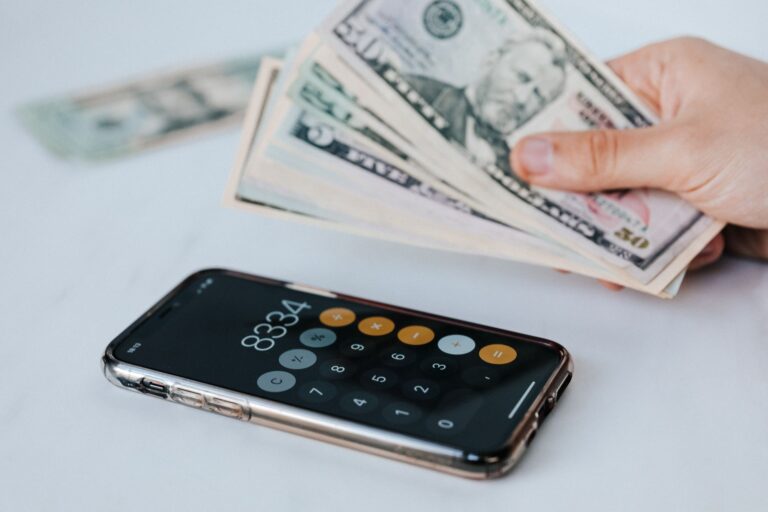

The answer is simpler than most people expect: by stacking three or four free apps on the phone you already own, you can realistically pull in over $1,000 this year without learning a new skill, building a website, or spending a dime upfront. A basic combination of Ibotta for grocery cashback, Rakuten for online shopping, Swagbucks for surveys and tasks, and Fetch for scanning receipts gets you to roughly $1,060 annually, according to reported user earnings across those platforms. That figure does not even include selling unused items through Mercari or Poshmark, which can pad the total further. This is not a get-rich-quick pitch. The amounts per app are modest on their own, often just a few dollars a week. But the strategy works precisely because the effort is small and the apps run on top of spending and habits you already have.
The cash back and rewards app market hit $3.5 billion in 2024 and is projected to reach $5.7 billion by 2032, which tells you that millions of people are already doing this quietly. What separates those who actually reach $1,000 from those who download an app and forget about it is stacking multiple apps and being consistent. In the sections ahead, we will break down exactly which apps pay what, how much time they actually require, where the real money is versus the hype, and a month-by-month plan for hitting that $1,000 mark. Research backs up the stacking approach. According to data from Visu Network, 78% of successful mobile earners use three to five apps simultaneously, averaging $50 to $300 per month. The key word there is “simultaneously.” No single app is going to hand you $1,000 for doing nothing. But layering a few of them into your existing routine, scanning a grocery receipt here, clicking through a cashback portal there, turns small amounts into a meaningful annual total.
Table of Contents
- Which Free Apps Actually Pay You $1,000 a Year on Your Phone?
- How Survey and Task Apps Fill the Gap Between Cashback and $1,000
- Selling What You Already Own Through Free Listing Apps
- Gig Economy Apps as the Accelerator You May Not Need
- The Pitfalls That Cause Most People to Quit Before Hitting $1,000
- The 90-Day Ramp-Up Plan That Actually Works
- Where the Free App Economy Is Heading
- Conclusion
- Frequently Asked Questions
Which Free Apps Actually Pay You $1,000 a Year on Your Phone?
Not all money-making apps are created equal, and the most important distinction is between apps that monetize things you already do and apps that require you to trade hours for dollars. The first category, cashback and receipt scanning apps, is where the strategy starts because the effort-to-reward ratio is the best. Ibotta, for example, reports that its average active user earns over $250 per year, with power users pulling in over $1,600 per year. American shoppers have collectively earned over $2.6 billion through the platform since 2012. If you do a weekly Walmart run, you can expect $8 to $15 in cashback per week just from activating offers before you shop. Rakuten works the same way for online purchases, covering over 3,500 retailers including Amazon, Macy’s, and Sephora. The platform has paid out over $4.6 billion in cash back since 1999 and currently offers a $30 sign-up bonus after a qualifying purchase.
Then there is Fetch, which is about as passive as it gets. You scan any receipt, from any store, and earn points. With 17 million monthly active users and over $1 billion in total rewards points distributed, Fetch is not a gimmick, but it is also not a goldmine on its own. You earn 25 base points per receipt with bonus points for partner brands, which translates to roughly $5 per month for most users. That sounds small until you remember it takes about ten seconds per receipt. In 2025, Fetch added digital wallet integration for faster redemption, which removed one of the main friction points people complained about. Here is how those three cashback apps stack up side by side for a typical household: | App | How It Pays | Estimated Monthly | Estimated Annual | |—|—|—|—| | Ibotta | Grocery cashback offers | $20 | $240 | | Rakuten | Online shopping cashback | $15 | $180 | | Fetch | Receipt scanning points | $5 | $60 | | **Combined** | | **$40** | **$480** | That is nearly half the $1,000 goal from cashback alone, and none of it requires you to change where or how you shop.
How Survey and Task Apps Fill the Gap Between Cashback and $1,000
Cashback apps get you close to halfway, but reaching $1,000 requires a second layer. Survey and task apps like Swagbucks and InboxDollars fill that gap by paying you for activities like answering surveys, watching videos, and completing game offers. Swagbucks is the heavyweight here. Average users report earning $20 to $100 per month, which works out to $240 to $1,200 per year. Daily earnings average $2 to $5, and surveys alone can generate $30 to $50 per month. The platform also has game offers that can earn $50 to $100 or more per month for patient gamers willing to grind through levels to hit specific milestones. However, there is an important caveat that most “best apps” listicles skip over: survey apps require real time. Swagbucks takes roughly 10 to 25 minutes per day to earn those $2 to $5 daily averages.
That is not a lot, but it is not nothing. If you are watching TV in the evening and can answer surveys during commercial breaks or while a show plays in the background, the time feels negligible. If you are trying to squeeze it in during a busy workday, it will feel like a chore, and you will stop within a month. InboxDollars is a reasonable alternative that pays real cash rather than points for surveys, watching videos, reading emails, and playing games. It is not going to replace a paycheck, but paired with Swagbucks, it adds another $10 to $20 per month for many users. The honest math: if you commit to about 15 minutes a day on Swagbucks at $40 per month, you add $480 per year. Combined with the $480 from cashback apps, you are now at $960, which means you need just $40 more from any other source to cross the $1,000 line. That is where selling a few unused items or scanning a handful of extra receipts pushes you over the top.
Selling What You Already Own Through Free Listing Apps
Almost everyone has at least $100 worth of stuff sitting in closets, drawers, and garages that they will never use again. Reselling apps have made it trivially easy to convert that clutter into cash, and the best ones are free to list. Mercari charges a flat 10% selling fee as of January 2025, which means if you sell a jacket for $30, you keep $27. One Mercari user documented over $30,000 in total sales, but you do not need anything close to that. Selling five to ten items over the course of a year at $10 to $30 each gets you $50 to $200 after fees with minimal effort. Poshmark is another strong option, especially for clothing and accessories, with a built-in buyer audience actively searching for deals. Their fee structure is slightly different: $2.95 for sales under $15, and 20% for sales of $15 or more.
For higher-value items like brand-name shoes or handbags, Mercari’s flat 10% usually works out better. For cheaper items, Poshmark’s flat $2.95 fee is the more favorable deal. And for anything large or heavy that would be expensive to ship, Facebook Marketplace remains the best option because local pickup sales carry zero fees. The strategic move is to do a single decluttering sweep early in the year. Spend a Saturday afternoon photographing and listing 15 to 20 items. Price them to sell, not to maximize profit. The goal is not to start a reselling business. It is to convert dead inventory into cash that counts toward your $1,000 target, then move on.

Gig Economy Apps as the Accelerator You May Not Need
If the passive and low-effort apps alone are not enough, gig economy apps can blow past the $1,000 goal in a matter of weeks. Instacart shoppers average $18.95 per hour plus $0.40 per hour in promotions, and you can sign up without a resume or interview. Uber Eats drivers report $13.49 to $17.74 per hour with peak-time bonuses. DoorDash pays base pay plus promotions plus 100% of customer tips, with average earnings across these platforms landing at $17 to $28 per hour. At even two hours per week at roughly $18 per hour, gig delivery adds about $1,800 per year on its own. The tradeoff is real, though. Unlike cashback and survey apps, gig work involves vehicle wear, gas costs, and actual time away from home.
After accounting for expenses, that $18 per hour can drop to $12 to $14 per hour depending on your car, your market, and how efficiently you batch deliveries. These apps are best used as a short-term accelerator rather than a permanent fixture. If you need to close a gap quickly, a few weekends of Instacart runs will do it faster than months of survey grinding. But if you can hit $1,000 through the passive stack alone, there is no reason to add gig work to your plate. The comparison comes down to what you value more: time or effort. The cashback-plus-surveys stack takes about 15 to 20 minutes a day of mostly passive activity and gets you to $1,000 over twelve months. A single month of part-time gig work at ten hours a week gets you there in roughly six weeks but demands real physical effort and vehicle costs. Most people are best served by starting with the passive stack and only adding gig work if they want to exceed the $1,000 target or reach it faster.
The Pitfalls That Cause Most People to Quit Before Hitting $1,000
The number one reason people fail to reach $1,000 with free apps is not that the apps do not pay. It is that they download six apps in a burst of motivation, use them intensely for two weeks, and then abandon all of them. Consistency beats intensity here. You are better off using two apps every day for a year than using eight apps every day for a month. Start with Ibotta and Swagbucks. Get those into your routine for two weeks. Then add Rakuten and Fetch. Build the habit before you expand the stack. The second pitfall is chasing low-value activities. Not all earning opportunities within these apps are worth your time.
A 45-minute survey on Swagbucks that pays $0.50 is objectively worse than spending that time on a game offer that pays $20 over a weekend. Similarly, Honeygain and Mistplay are real apps that pay real money, but the earnings are modest. Honeygain pays $0.10 per GB of shared internet bandwidth, which works out to $1 to $5 per month for most users. Mistplay, available only on Android, pays $5 to $30 per month in gift cards for playing games. These are fine as supplements, but building your strategy around them alone would take years to reach $1,000. The third pitfall is tax ignorance. If you earn more than $600 from any single platform in a calendar year, you will likely receive a 1099 form and owe taxes on that income. This does not mean you should avoid earning the money. It means you should not be surprised by a small tax bill in April. Cashback on purchases you would have made anyway is generally not taxable, but survey income and gig earnings are. Keep a simple spreadsheet tracking what you earn from each app so you are not scrambling at tax time.
The 90-Day Ramp-Up Plan That Actually Works
Rather than trying to launch everything at once, a phased approach over 90 days sets you up for a full year of consistent earning. In weeks one and two, download Ibotta and Fetch. Activate Ibotta offers before your next grocery trip and scan every receipt into Fetch. This alone should net you $10 to $15 in the first two weeks with almost no learning curve. In weeks three and four, add Rakuten as a browser extension and Swagbucks as a daily habit.
Set a timer for 15 minutes each evening dedicated to Swagbucks surveys or offers. In month two, do your decluttering sweep and list items on Mercari, Poshmark, or Facebook Marketplace. By month three, all your systems are running and you can evaluate whether you are on track for the $1,000 annual target or whether you want to add a gig app to accelerate. This phased approach works because it prevents the overwhelm that kills most attempts. Each app gets embedded into your routine before the next one arrives, which means none of them feel like extra work after the first few days.
Where the Free App Economy Is Heading
The rewards app market is growing at a compound annual growth rate of 7%, moving from $3.5 billion in 2024 toward a projected $5.7 billion by 2032. That growth means more competition among apps for your attention, which translates to better sign-up bonuses, higher cashback rates, and more earning opportunities for users. Fetch’s 2025 addition of digital wallet integration is one example of platforms reducing friction to keep users active. The trend also points toward greater consolidation.
Apps that once focused narrowly on one earning method are expanding into multiple categories. Ibotta now offers cashback for online purchases alongside its original grocery focus. Swagbucks has evolved from a survey site into a multi-activity platform with shopping, gaming, and discovery features. For users, this means the number of apps you need to reach $1,000 may shrink over time, but the fundamental strategy of stacking multiple income streams on your phone is not going anywhere.
Conclusion
Making an extra $1,000 this year with free phone apps is not a fantasy, but it is also not automatic. It requires choosing the right three to five apps, building them into your daily routine, and sticking with it for twelve months. The realistic breakdown is roughly $240 from Ibotta, $180 from Rakuten, $480 from Swagbucks, $60 from Fetch, and $100 or more from selling unused items, putting you over the $1,060 mark without gig work or any upfront investment. If you add even a few hours of Instacart or DoorDash deliveries, the total climbs considerably higher.
The best time to start is now, not because of urgency marketing, but because these earnings compound over time. The $20 you earn from Ibotta this month is $20 you did not have. Multiply that across four or five apps over twelve months, and you have a legitimate extra $1,000 that took less daily effort than scrolling social media. Download Ibotta and Fetch today, scan your next receipt, and the $1,000 clock starts ticking.
Frequently Asked Questions
Are cashback app earnings taxable?
Generally, cashback on purchases you would have made anyway is considered a rebate or discount, not income, and is not taxable. However, sign-up bonuses, referral bonuses, and survey income are typically considered taxable income. If any single platform pays you more than $600 in a year, expect a 1099 form.
How much time per day do I need to spend to reach $1,000 in a year?
About 15 to 20 minutes per day, mostly on Swagbucks surveys and activating Ibotta offers. Receipt scanning with Fetch takes about 10 seconds per receipt. Rakuten requires a single click through its browser extension before online purchases. The bulk of the “work” is the survey and task app portion.
Can I use multiple cashback apps on the same purchase?
Yes, and you should. Ibotta gives you cashback on grocery items, Fetch gives you points just for scanning the receipt, and if you ordered online through Rakuten first, you get cashback from all three on a single transaction. Stacking is the entire foundation of this strategy.
Do these apps sell my data?
Most cashback and survey apps collect data on your shopping habits, which they monetize by sharing aggregated insights with brands and retailers. That is how they afford to pay you. Read each app’s privacy policy, but understand that your purchase data is the product. If that is a dealbreaker, these apps are not for you.
What if I do not shop at major retailers like Walmart or Amazon?
Ibotta covers a wide range of grocery and retail stores beyond Walmart, and Rakuten partners with over 3,500 retailers. Fetch works with any receipt from any store. You may earn slightly less per transaction at smaller retailers, but the apps are broadly compatible. Swagbucks earnings are entirely independent of where you shop.
Are gig apps like DoorDash worth it after expenses?
It depends on your vehicle and market. Gross earnings of $17 to $28 per hour sound good, but gas, maintenance, and depreciation can reduce net pay to $12 to $14 per hour in some cases. If you drive a fuel-efficient car in a busy metro area, gig apps are solid. If you drive an older vehicle with poor gas mileage in a rural area, the math gets less favorable. Track your expenses for the first two weeks before committing.