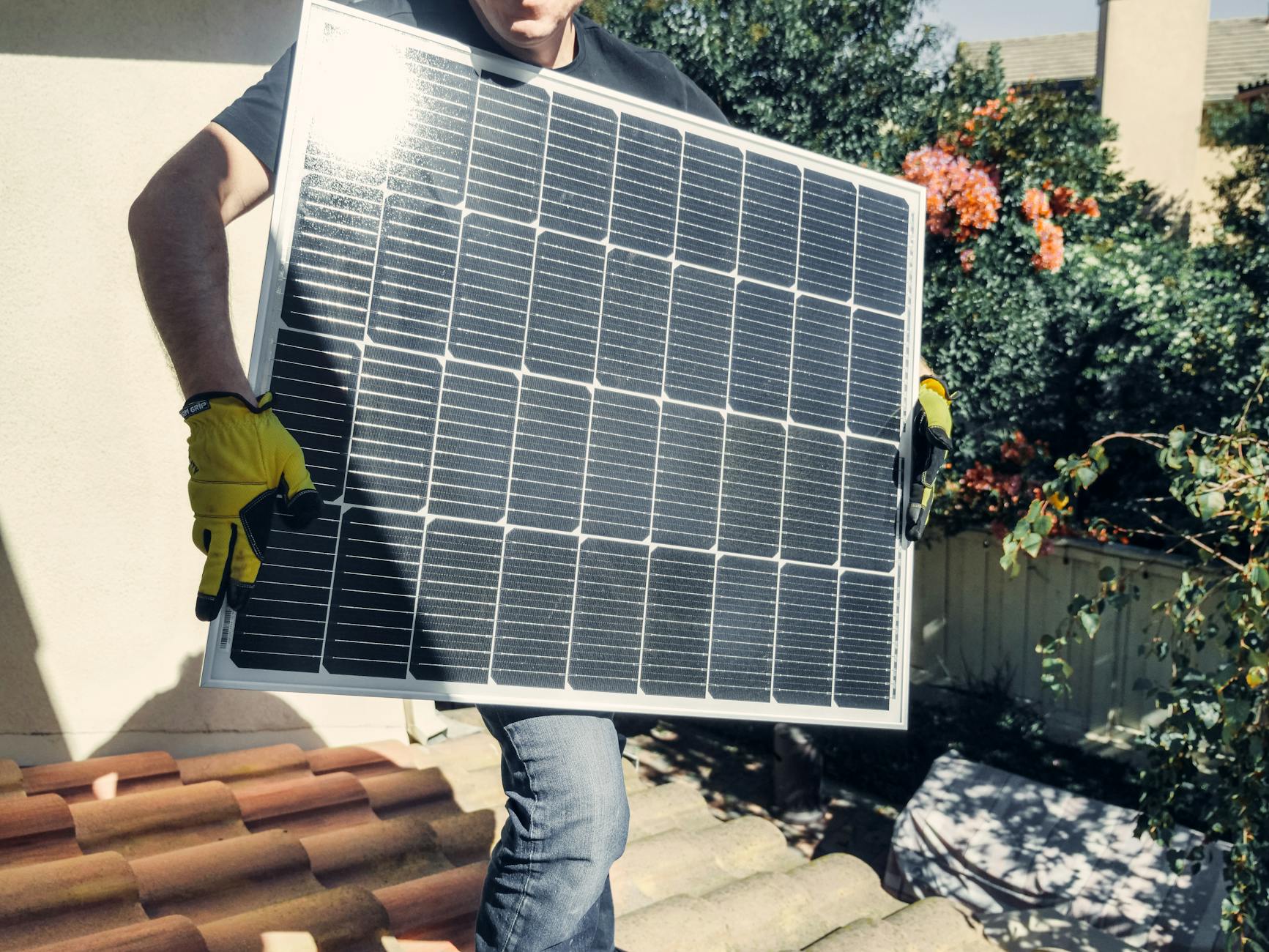

The federal solar tax credit, formally known as the Residential Clean Energy Credit, lets homeowners deduct 30 percent of the total cost of a solar panel system from their federal income taxes. For a typical residential installation running around $20,000, that translates to a $6,000 credit — and even modest setups in the $4,000 range can yield roughly $1,200 back at tax time. Unlike a deduction, this is a dollar-for-dollar reduction of what you owe the IRS, which makes it one of the most straightforward money-saving opportunities available to homeowners right now.
The credit applies to systems installed and operational between 2022 and 2032, after which it steps down to 26 percent in 2033 and 22 percent in 2034 before expiring entirely for residential customers in 2035 unless Congress extends it. To qualify, you need to own the system outright — leased panels and power purchase agreements do not count. This article breaks down exactly how to claim the credit, what expenses are eligible, common pitfalls that trip people up, and how state-level incentives can stack on top of the federal benefit.
Table of Contents
- How Do Solar Panel Owners Qualify for the $1,200-Plus Federal Tax Credit?
- What Costs Actually Count Toward the Solar Tax Credit
- How State and Local Incentives Stack With the Federal Credit
- Buying vs. Financing vs. Leasing — Which Gets You the Tax Credit
- Common Mistakes That Reduce or Delay Your Solar Tax Credit
- What Happens to the Tax Credit If You Sell Your Home
- The Future of Residential Solar Tax Credits Beyond 2032
- Conclusion
- Frequently Asked Questions
How Do Solar Panel Owners Qualify for the $1,200-Plus Federal Tax Credit?
The qualification rules are simpler than most people expect. You must own the solar energy system, it must be installed on a property you own in the United States, and the property must be your primary or secondary residence. Rental properties you own but do not live in do not qualify for the residential credit, though there is a separate commercial credit structure for those situations. The system must be new or being used for the first time — buying someone’s old panels off Craigslist and bolting them to your roof does not meet the requirements. You claim the credit by filing IRS Form 5695 with your federal tax return for the year the system was placed in service, meaning the year it was fully installed and generating electricity, not the year you signed the contract or made a deposit. For example, if you put down money in November 2025 but the installation is not completed until February 2026, you claim the credit on your 2026 return.
There is no income cap and no maximum credit amount, which is unusual for a tax incentive this generous. One detail that catches people off guard: this is a nonrefundable credit. If you owe $4,000 in federal taxes and your credit is $6,000, you only use $4,000 of it that year. The remaining $2,000 rolls forward to the following tax year. So you will eventually get the full amount, but not necessarily all at once.

What Costs Actually Count Toward the Solar Tax Credit
The 30 percent credit applies to more than just the panels themselves. Eligible expenses include the solar panels, inverters, mounting hardware, wiring, battery storage systems with a capacity of at least 3 kilowatt-hours, and the labor costs for installation. If you need structural improvements to your roof specifically to support the panels, those costs count too. Even sales tax on the equipment is included in the total eligible amount. However, if you replace your entire roof and happen to add solar panels at the same time, only the portion of the roof work directly related to the solar installation qualifies. The IRS is not going to let you write off a $15,000 roof replacement just because you added $8,000 worth of panels on top of it.
Your installer should be able to itemize the invoice so the solar-specific costs are clearly separated. If they cannot or will not do this, find a different installer, because a vague invoice is exactly the kind of thing that triggers scrutiny if you get audited. Battery storage is worth special attention. Since the Inflation Reduction Act took effect in 2022, standalone battery systems like the Tesla Powerwall or Enphase IQ Battery qualify for the 30 percent credit even if they are not paired with solar panels. The only requirement is the 3 kWh minimum capacity, which virtually every home battery on the market exceeds. A $10,000 battery installation nets you a $3,000 credit on its own.
How State and Local Incentives Stack With the Federal Credit
The federal credit is just the starting point. Most states offer their own solar incentives, and they can be combined with the federal credit in ways that dramatically reduce your out-of-pocket cost. In New York, the NY-Sun incentive provides an upfront rebate that can knock $2,000 to $5,000 off the installation price depending on your utility territory and system size. In Massachusetts, the SMART program pays you a per-kilowatt-hour rate for the electricity your panels produce over a 10- to 20-year term. Florida and Texas have no state income tax, so there is no state solar tax credit, but both states exempt solar equipment from property tax increases and sales tax. Here is a real-world example of how stacking works. A homeowner in Colorado installs a $22,000 solar system. The federal credit knocks $6,600 off their tax bill.
Colorado’s state credit adds another $2,000. Their utility offers a $1,500 rebate. The effective cost of the system drops to $11,900 before accounting for electricity savings. One important note: if you receive a state rebate that reduces your installation cost, the federal credit is calculated on the net amount only if the rebate is considered a purchase price reduction. If it is classified as a state tax credit or incentive payment, you still calculate the federal credit on the full cost. IRS guidance on this distinction is in their FAQ for Form 5695, and it is worth reading before you file. Net metering is another variable. In states with strong net metering laws — where your utility pays you retail rate for excess electricity you send back to the grid — the ongoing savings can effectively pay for the remaining cost of the system within seven to ten years. In states where utilities have gutted net metering, like Nevada and California under NEM 3.0, the payback period stretches considerably longer.

Buying vs. Financing vs. Leasing — Which Gets You the Tax Credit
If you purchase your solar system outright with cash, claiming the credit is straightforward. You own the system, you file Form 5695, and you get the credit. But most people do not have $20,000 sitting around, so the financing question matters. Solar loans preserve your eligibility for the tax credit because you still own the system. Whether you finance through a bank, credit union, or the installer’s lending partner, ownership is in your name and the full cost of the system, including financed amounts, counts toward the credit. Many homeowners use the tax credit refund to make a lump payment on the loan principal, which is a smart move that reduces interest costs. Just be cautious about dealer fees baked into solar loans.
Some lenders charge 15 to 30 percent in origination fees that get rolled into the loan balance, inflating the total cost well beyond the sticker price. A $20,000 system financed with a 25 percent dealer fee becomes a $25,000 loan, and while the credit is still based on the actual system cost, you are still paying interest on that inflated balance. Leases and power purchase agreements are the one path that disqualifies you entirely. Under a lease, the solar company owns the panels on your roof. They claim the tax credit, not you. They may pass some of the savings through in the form of lower monthly payments, but you are fundamentally giving up the most valuable financial benefit of going solar. If a salesperson tells you that you will get the tax credit with a lease, they are either misinformed or lying.
Common Mistakes That Reduce or Delay Your Solar Tax Credit
The most frequent error is claiming the credit in the wrong tax year. The credit goes on the return for the year the system is placed in service, which the IRS defines as when it is installed, connected, and capable of generating electricity. If your panels are on the roof but your utility has not approved the interconnection and turned on your meter, the system is arguably not in service yet. Most tax professionals recommend using the date your system received permission to operate from the utility as the placed-in-service date. Another common mistake is failing to account for the nonrefundable nature of the credit. People with low tax liability — retirees living on Social Security, for instance — may find that their federal tax bill is smaller than the credit they earned.
As mentioned earlier, the unused portion carries forward, but if your tax liability stays low year after year, it could take a long time to fully use the credit. In the worst case, someone with zero federal tax liability gets zero benefit from the credit unless their tax situation changes. This does not mean solar is a bad deal for retirees, but it means the tax credit should not be the primary reason they go solar if their income is mostly nontaxable. A third pitfall involves community solar programs. If you subscribe to a community solar farm and receive credits on your electric bill, you typically do not qualify for the federal tax credit because you do not own the panels. The tax credit is for property owners who purchase a system, not for subscribers to a shared array. Some community solar companies market their product with language that implies you get the tax benefits of ownership, so read the contract carefully.

What Happens to the Tax Credit If You Sell Your Home
Selling your house after installing solar panels does not trigger any clawback of the credit. If you claimed the full 30 percent credit in 2025 and sell the home in 2026, you keep the credit. The IRS does not require you to repay it and there is no minimum ownership period you need to satisfy after claiming it. This makes solar a rare case where you get a permanent tax benefit even if you do not stay long enough to fully recoup the investment through electricity savings.
The panels themselves typically add value to the home. A Lawrence Berkeley National Laboratory study found that home buyers are willing to pay a premium of roughly $15,000 for a home with a typical solar array. However, this premium varies significantly by market. In areas where electricity is cheap and net metering is weak, the premium shrinks. If you are selling, make sure your listing agent knows how to market the solar system and can provide buyers with documentation of its age, warranty, production history, and any remaining loan balance.
The Future of Residential Solar Tax Credits Beyond 2032
The current 30 percent credit is locked in through the end of 2032, giving homeowners a seven-year window of certainty. After that, the scheduled stepdown is 26 percent in 2033, 22 percent in 2034, and zero for residential systems starting in 2035. Whether Congress will extend or modify the credit depends entirely on the political landscape at the time, but the solar industry has a track record of successfully lobbying for extensions — the credit has been renewed or extended multiple times since it was first introduced in 2005. For anyone on the fence, the math favors acting sooner rather than later.
Panel prices have stabilized after years of decline, and installer labor costs are rising as demand grows. Locking in the 30 percent credit now, while equipment costs are relatively flat, captures the best combination of incentive value and hardware pricing. Waiting until 2033 or 2034 means accepting a smaller credit and potentially higher installation costs. That said, battery technology is improving rapidly, so homeowners who want storage might benefit from waiting a year or two for better battery options — just not so long that the credit percentage drops.
Conclusion
The federal solar tax credit at 30 percent is the single most impactful financial incentive available to homeowners considering solar. Whether your system costs $4,000 or $40,000, you get nearly a third of it back as a direct reduction of your federal taxes. Combined with state incentives, utility rebates, and net metering savings, the effective cost of going solar is lower now than at any point in the past decade.
The key requirements are simple: own the system, install it on a home you live in, and file Form 5695 the year it goes into service. The practical steps from here are to get quotes from at least three installers, verify that each quote itemizes equipment, labor, and any dealer fees separately, and consult a tax professional to confirm your federal tax liability is high enough to absorb the credit within a reasonable timeframe. Check the Database of State Incentives for Renewables and Efficiency at dsireusa.org for a complete list of state and local programs that apply to your zip code. The window of maximum benefit is open now — the only real risk is waiting until it narrows.
Frequently Asked Questions
Can I claim the solar tax credit if I installed panels on a vacation home?
Yes. The credit applies to your primary residence and secondary or vacation homes, as long as you own the property and the solar system. The only residential properties that do not qualify are rental properties where you do not live.
Do I need to itemize deductions to claim the solar tax credit?
No. The Residential Clean Energy Credit is just that — a credit, not a deduction. You claim it on Form 5695 regardless of whether you take the standard deduction or itemize. This is a common misconception that causes some homeowners to mistakenly skip the credit.
What if my tax liability is less than the credit amount?
The unused portion of the credit rolls forward to future tax years. There is no expiration on the carryforward as long as the credit was properly claimed in the year the system was placed in service. However, if your tax liability stays low for many years, it could take a long time to fully benefit.
Does the credit apply to solar water heaters?
Yes. Solar water heating systems qualify for the same 30 percent credit, provided the system is certified by the Solar Rating and Certification Corporation. The one exception is if the system heats a swimming pool or hot tub — those are explicitly excluded.
Can I claim the credit if I do the installation myself?
You can claim the credit on the cost of the equipment and materials, but not on your own labor. If you hire an electrician for the electrical work and do the mounting yourself, the electrician’s labor counts but your time does not.
Is the solar tax credit available for mobile homes or manufactured housing?
Yes, as long as the home is your primary or secondary residence and you own both the home and the solar system. The property must be located in the United States.