

The markdown meat strategy is straightforward: you buy meat that grocery stores have discounted 30 to 40 percent because it is nearing its sell-by date, then you freeze it immediately in meal-sized portions. Do this consistently and pair it with a dedicated chest freezer, and you can realistically save over $1,000 a year on one of the most expensive line items in your grocery budget. One family profiled by The Kitchn reported saving well over $1,000 annually after purchasing a second chest freezer specifically for markdown meat purchases. With ground beef hitting $6.75 per pound in January 2026, the highest price on record and a 22 percent jump from the year before, that kind of savings is no longer a nice-to-have. It is a genuine financial strategy.
But this is not as simple as grabbing whatever discounted pack of chicken thighs you spot on a random Tuesday. The $1,000 figure requires a system: learning your store’s markdown schedule, shopping at the right times, knowing how to repackage and freeze properly, and understanding the sale cycles that govern meat pricing at most major chains. Shopping markdowns casually, say twice a month without much planning, will save you closer to $133 a year. The difference between that number and $1,000 is discipline and knowledge. This article covers exactly how to build that system, from figuring out when your store marks down meat to using apps that predict discounts before they happen.
Table of Contents
- How Does the Markdown Meat Strategy Actually Save You $1,000 a Year?
- When Do Grocery Stores Mark Down Meat and How Do You Find Out?
- The Freezer Strategy That Makes This Work Long-Term
- How to Use Meat Sale Cycles to Stack Savings on Top of Markdowns
- Apps and Tools That Predict Markdowns Before You Even Get to the Store
- The Three Spots in Every Store Where Markdown Meat Hides
- What Rising Meat Prices in 2026 Mean for This Strategy Going Forward
- Conclusion
- Frequently Asked Questions
How Does the Markdown Meat Strategy Actually Save You $1,000 a Year?
The math is not complicated, but it does require context. The average American household spends roughly $5,000 to $7,000 a year on groceries, and meat is typically the single largest category within that budget. When ground beef costs $6.75 a pound and boneless chicken breast runs $4.17 a pound, as they did in January 2026 according to Bureau of Labor Statistics data, even modest percentage discounts translate into real dollars. A 30 percent markdown on a $6.75 pound of ground beef saves you about $2.00. Buy ten pounds a month at that discount and you are saving $240 a year on ground beef alone. Scale that across chicken, pork, and the occasional steak, and the numbers add up fast. The key variable is consistency. Families who hit the $1,000 mark are not occasionally picking up a discounted roast. They are shopping markdown sections weekly, buying in bulk when prices drop, and freezing everything they cannot use within a day or two.
They treat markdown shopping like a recurring errand with a schedule attached to it. The USDA’s Economic Research Service projects beef and veal prices will climb another 5.5 percent in 2026, which means the gap between regular price and markdown price is only going to widen. The strategy becomes more valuable precisely when prices are at their worst. There is an important caveat here. If you do not have freezer space, this strategy caps out quickly. You can only buy what you can store, and a standard refrigerator freezer compartment holds maybe two weeks of extra meat at best. That is why the freezer component is not optional for reaching the $1,000 threshold. It is the multiplier that turns occasional savings into annual savings.
When Do Grocery Stores Mark Down Meat and How Do You Find Out?
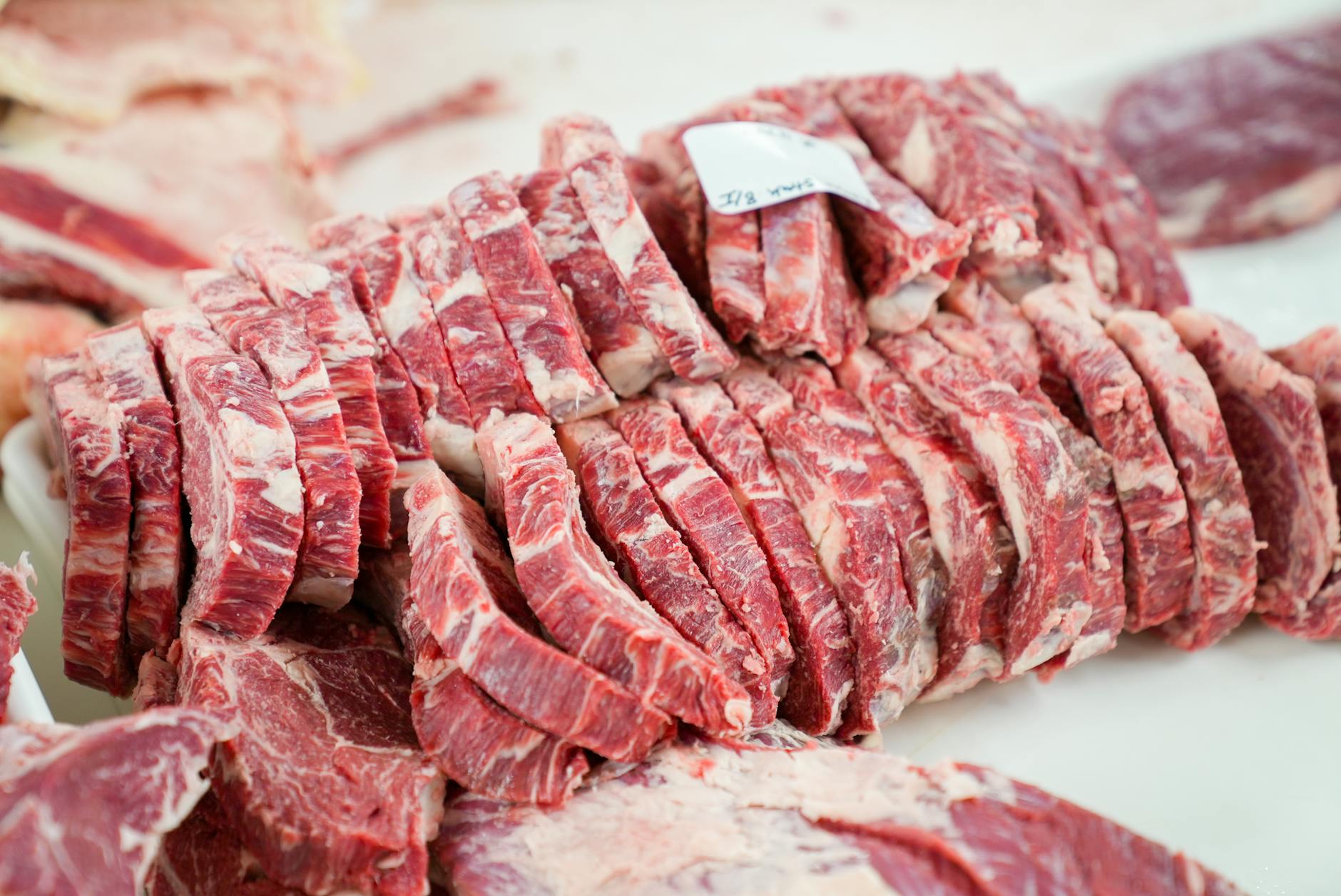
Every grocery store has a markdown schedule, but almost none of them advertise it. The timing depends on the chain, the location, and sometimes the individual department manager. That said, patterns exist. Many supermarkets mark down meat on Wednesday evenings. Others discount items one to two hours before closing each night. Some stores do their biggest markdowns early in the morning, pulling product that hit its sell-by threshold overnight and repricing it before the first shoppers arrive. The single best way to find out your store’s schedule is to ask. Walk up to the butcher counter and say, “What day and time do you usually mark down meat?” Employees will almost always tell you. This is not a secret they are trying to keep.
The store wants that product sold, not thrown away. At Kroger, look for red and yellow discount tags and the “Zero Waste Zero Hunger” sections, which are typically near the back of the store. At Target, marked-down meats are usually in a dedicated clearance cooler within the meat department. Other chains have similar setups, but the location varies. However, if you only shop at one store, you are leaving savings on the table. Markdown schedules vary enough between chains that checking two or three stores in your area, even if you only do it biweekly, dramatically increases the odds of catching deep discounts. The tradeoff is time. If you are driving twenty minutes out of your way to save three dollars on chicken, the economics start to break down. The sweet spot is finding two stores within your normal driving routine that mark down on different days.
The Freezer Strategy That Makes This Work Long-Term
buying markdown meat without a freezer plan is like clipping coupons and leaving them on the counter. The savings exist in theory but evaporate in practice. The approach that actually works is immediate repackaging. When you get home, portion the meat into meal-sized quantities, wrap them tightly to prevent freezer burn, label them with the date, and freeze them right away. Most meats stay good for up to 12 months in a standard home freezer, which gives you an enormous window to use what you buy. A dedicated chest freezer is the piece of equipment that separates casual markdown shoppers from people saving four figures annually. A decent 7-cubic-foot chest freezer costs between $200 and $350 and uses roughly $30 to $50 of electricity per year.
If it enables even $500 in annual meat savings, it pays for itself within the first year. The family featured in The Kitchn’s report bought a second chest freezer specifically for this purpose and credited it as the single biggest factor in their savings. You do not need anything enormous. A mid-size unit holds enough meat for a family of four to rotate through several months of protein. For those willing to go further, buying bulk subprimal cuts offers even steeper savings. Vacuum-sealed rib-eyes, whole pork loins, or beef top rounds purchased from a warehouse store or directly from a butcher can cut your per-pound cost in half compared to retail, according to Don’t Waste the Crumbs. The catch is that you need to break them down yourself, which requires a sharp knife, a cutting board, and about fifteen minutes of YouTube education. It is not difficult, but it is a skill most people have never been asked to develop.
How to Use Meat Sale Cycles to Stack Savings on Top of Markdowns
Meat at most grocery stores runs on a six to eight week sale cycle. This means that if boneless chicken breast is on sale this week for $2.99 a pound, it will probably be at or near that price again in about six to eight weeks. The strategy is to buy enough during each sale cycle to last until the next one, then supplement with markdown finds in between. This stacking approach, combining sale prices with markdown discounts, is how experienced frugal shoppers push their savings well past what either method would achieve alone. The comparison is worth spelling out. If you only buy meat at regular price, you are paying full retail, which in 2026 means $6.75 a pound for ground beef. If you only buy during sales, you might pay $4.50 to $5.00, saving 25 to 35 percent.
If you buy markdown meat during a sale week, you might get that same ground beef for $3.00 to $3.50 a pound, a 45 to 50 percent discount from regular price. Over a year, the difference between the full-price shopper and the markdown-plus-sale-cycle shopper can easily exceed $1,000 for a family of four. The tradeoff is flexibility. You cannot be picky about cuts when you shop markdowns. If the store has marked down pork shoulder but you wanted pork chops, you take the shoulder. Building a meal plan around whatever is cheapest that week, rather than buying the ingredients for a specific recipe, is a fundamental shift in how most people shop. It works well for households that are comfortable with batch cooking and flexible menus. It works poorly for people who plan every meal in advance and shop from a rigid list.
Apps and Tools That Predict Markdowns Before You Even Get to the Store
Technology has caught up to the markdown shopper. In 2026, AI-powered apps like Flashfood, Basketful, and Revolut Shopper use machine learning to forecast markdowns based on local inventory and pricing trends. Flashfood is the most directly useful of the three for meat shoppers because it partners with grocery stores to sell near-expiry items at steep discounts directly through the app. You can browse available deals at your local store, claim them in the app, and pick them up at a designated area near the front of the store. The limitation is coverage. Flashfood is not available at every chain or in every region. If your nearest participating store is thirty minutes away, the app is not going to help you.
Basketful and Revolut Shopper take a different approach, aggregating pricing data to help you identify trends, but they do not guarantee that a specific markdown will be available when you show up. These tools are best used as supplements to your own knowledge of store schedules, not replacements for it. The person who knows their Kroger marks down meat every Wednesday at 7 PM and also checks Flashfood before heading out is going to do better than someone relying on either method alone. There is also a privacy consideration. These apps collect data on your shopping habits, location, and purchasing patterns. For most people, the savings justify the tradeoff. But if you are uncomfortable with that level of tracking, the old-fashioned method of showing up at the right time and checking the clearance cooler works just as well. It just requires more legwork.

The Three Spots in Every Store Where Markdown Meat Hides
Not all markdown meat ends up in the same place, and missing one of the three common locations means missing deals. The first and most obvious is the meat department itself, where marked-down packages are either mixed in with regular inventory with a discount sticker or placed in a separate clearance cooler. The second is a grocery cart or shelf near the back of the store, often unlabeled, where the meat department stages discounted items that did not fit in the main display.
The third, and the one most people miss entirely, is near the produce section, where some stores place markdown protein alongside ready-to-cook meal kits or pre-marinated items. Checking all three spots adds maybe two minutes to your shopping trip, but it can double the number of markdowns you find. One shopper profiled by WCPO in Ohio described finding markdown deals at all three locations in a single trip to her local store, something she only learned to do after weeks of missing discounts that were sitting ten feet from where she was already shopping.
What Rising Meat Prices in 2026 Mean for This Strategy Going Forward
The economics of markdown meat shopping are directly tied to retail prices, and those prices are not coming down anytime soon. The USDA projects beef and veal prices will rise another 5.5 percent in 2026, on top of the 22 percent increase ground beef already saw between January 2025 and January 2026. Chicken prices are climbing too, with boneless breast up from $3.97 to $4.17 per pound over the same period. When prices rise, the dollar value of a 30 to 40 percent markdown rises with them. A 35 percent discount on $5.00 ground beef saved you $1.75.
That same 35 percent on $6.75 ground beef saves you $2.36. The strategy becomes more powerful the worse the price environment gets. Looking ahead, the combination of rising input costs for producers and continued consumer demand for affordable protein suggests markdown shopping will only become more competitive. More shoppers are catching on, which means the best deals will go faster. The advantage will belong to people who have systems in place: a known schedule, a stocked freezer, apps running in the background, and the willingness to adjust their meals around what is available rather than what sounds good on a Tuesday afternoon.
Conclusion
The markdown meat strategy is not a hack or a gimmick. It is a systematic approach to buying the most expensive recurring item in your grocery budget at 30 to 40 percent less than retail. The core elements are simple: learn when your store marks down meat, show up at the right time, buy in bulk, freeze immediately, and supplement with sale cycle awareness and technology tools like Flashfood. Families who commit to this approach consistently report saving $1,000 or more per year, and with 2026 meat prices at record highs, the potential savings have never been larger.
If you are starting from scratch, begin with one step: ask your store’s butcher when markdowns happen. Go once, see what is available, and freeze whatever you buy. Add a second store the following week. Within a month, you will have a rhythm, a freezer starting to fill up, and a grocery bill that is noticeably lower. The $1,000 figure is real, but it is earned through consistency, not luck.
Frequently Asked Questions
Is markdown meat safe to eat?
Yes. The sell-by date is a guideline for the store, not an expiration date for the consumer. Meat that is at or near its sell-by date is still safe to cook or freeze. The USDA confirms that freezing meat on the sell-by date preserves it safely for months. If the meat smells off or has an unusual texture, skip it, but color changes alone, particularly slight browning on ground beef, do not indicate spoilage.
How much freezer space do I need to make this strategy work?
A 5 to 7 cubic foot chest freezer is enough for most families of two to four. That gives you room to store roughly 175 to 245 pounds of meat, far more than you will accumulate in a typical month of markdown shopping. If you are a single person or couple, you may be able to get by with just your refrigerator’s freezer compartment, though your savings ceiling will be lower.
What types of meat get marked down the most?
Ground beef, chicken thighs, pork chops, and family-sized packs of any cut are the most commonly marked down because they have the shortest shelf life and stores stock them in the highest volume. Premium cuts like ribeye and filet mignon get marked down less frequently but offer the highest dollar savings per pound when they do.
Do all grocery stores mark down meat?
Nearly all conventional supermarkets do. Kroger, Walmart, Target, Safeway, Publix, and most regional chains all have markdown programs. Discount grocers like Aldi and Lidl mark down less frequently because their baseline prices are already low. Whole Foods and other premium grocers mark down as well, though their discounted prices may still exceed regular prices at conventional stores.
Can I refreeze meat that was previously frozen and then thawed?
The USDA says you can safely refreeze meat that was thawed in the refrigerator, though there may be some loss of quality due to moisture lost during thawing. If you thawed meat in the microwave or in cold water, cook it before refreezing. For markdown meat specifically, if you are unsure whether it was previously frozen, ask the butcher or check the packaging for a “previously frozen” label.