

The simple answer is this: some home improvements return most or all of their cost when you sell, while others drain your bank account with no payback. A garage door replacement costs about $4,672 but adds $12,526 in resale value—that’s a 268% return on your investment. Meanwhile, a luxury kitchen remodel that might cost $80,000 adds only about $40,000 back, leaving you $40,000 poorer for the privilege of cooking in a marble-and-stainless-steel showroom. The pattern is clear once you look at the data: exterior and mid-range interior projects crush luxury renovations in return on investment, and understanding which projects fall into which category can save you tens of thousands of dollars.
The difference comes down to what buyers actually care about. They want a home that functions well, looks maintained, and doesn’t need immediate repairs. They don’t want to subsidize your taste in expensive appliances or custom finishes. As home renovation spending approached $524 billion across the U.S. in 2026, homeowners were learning this lesson the hard way—many pouring money into projects that looked impressive but returned 40 to 50 cents on every dollar spent.
Table of Contents
- Which Home Improvements Return the Most Value?
- Why Exterior Work Beats Interior Work—And What That Means for Your Budget
- Kitchen and Bathroom Projects That Actually Make Financial Sense
- The Upscale Kitchen and Bathroom Trap—Why Luxury Loses Money
- How to Think About Home Improvement ROI Without Getting Stuck
- The 2026 Market Context—What’s Driving These Numbers
- Making the Right Call on Your Next Home Improvement Project
- Conclusion
Which Home Improvements Return the Most Value?
The highest-returning home improvements are almost always on the exterior. A garage door replacement, the current champion of ROI at 268%, costs $4,672 and returns $12,526—nearly triple your investment. A steel entry door with glass sidelights hits 216% ROI, turning a $2,435 investment into $5,270 in added value. Manufactured stone veneer comes in at 208% ROI, while fiber-cement siding replacement delivers 114% and vinyl siding 97%. These aren’t small gains with rounding errors; these are consistent, measurable returns that financial advisors actually talk about. Why do exterior projects perform so dramatically better than interior ones? The answer is visibility and perception.
Buyers walk up to your house before they walk inside. A dated, worn exterior screams “this house needs work,” while a fresh garage door, new entry door, and updated siding signal “this owner maintains their property.” Buyers will cut you slack on outdated kitchen appliances—those are personal preference—but they’re far less forgiving of a sagging gutter, rotting siding, or a broken garage door. The exterior improvements also tend to address durability concerns that buyers worry about, while interior luxury finishes address wants, not needs. The 2025 data showed these exterior projects gaining momentum too. Garage door replacement ROI climbed 74% compared to 2024, steel entry doors rose 28%, and stone veneer jumped 55%. This suggests that as homes age and the cost of materials goes up, the relative value of refreshing key exterior elements becomes even more pronounced in the buyers’ minds.

Why Exterior Work Beats Interior Work—And What That Means for Your Budget
The performance gap between exterior and interior work isn’t subtle—it’s dramatic. While a steel entry door hits 216% ROI, even a midrange kitchen remodel that costs $28,458 and adds $32,141 in value only reaches 113% ROI. That’s less than half the return of a $2,435 door replacement. A midrange bathroom remodel sits at 80% ROI, meaning for every dollar you spend, you get about 80 cents back. These aren’t bad returns—they’re actually solid for any home improvement—but they’re a world away from what garage doors and siding can deliver. The limitation here is important: interior projects do add value, but the cost curve is brutal. Midrange bathroom and kitchen work make financial sense.
Upscale bathroom remodels, however, drop to 42% ROI, and major upscale kitchen remodels fall to 38 to 51% ROI. You’re not just seeing diminishing returns; you’re seeing a cliff. The difference between a $26,000 midrange bathroom and a $60,000 luxury bathroom is not a 2x value increase—it’s closer to a break-even or loss. High-end buyers shopping for expensive homes have different expectations, but if you’re selling to a typical homebuyer, luxury finishes are mostly for you, not your future buyer. The practical lesson is that the interior project sweet spot exists at the “midrange” level—good quality, updated finishes, functional improvements, but not designer-level custom work. A new sink, solid countertops, fresh tile, and good lighting will return most of its cost. Adding heated floors, custom cabinetry, and luxury fixtures will not.
Kitchen and Bathroom Projects That Actually Make Financial Sense
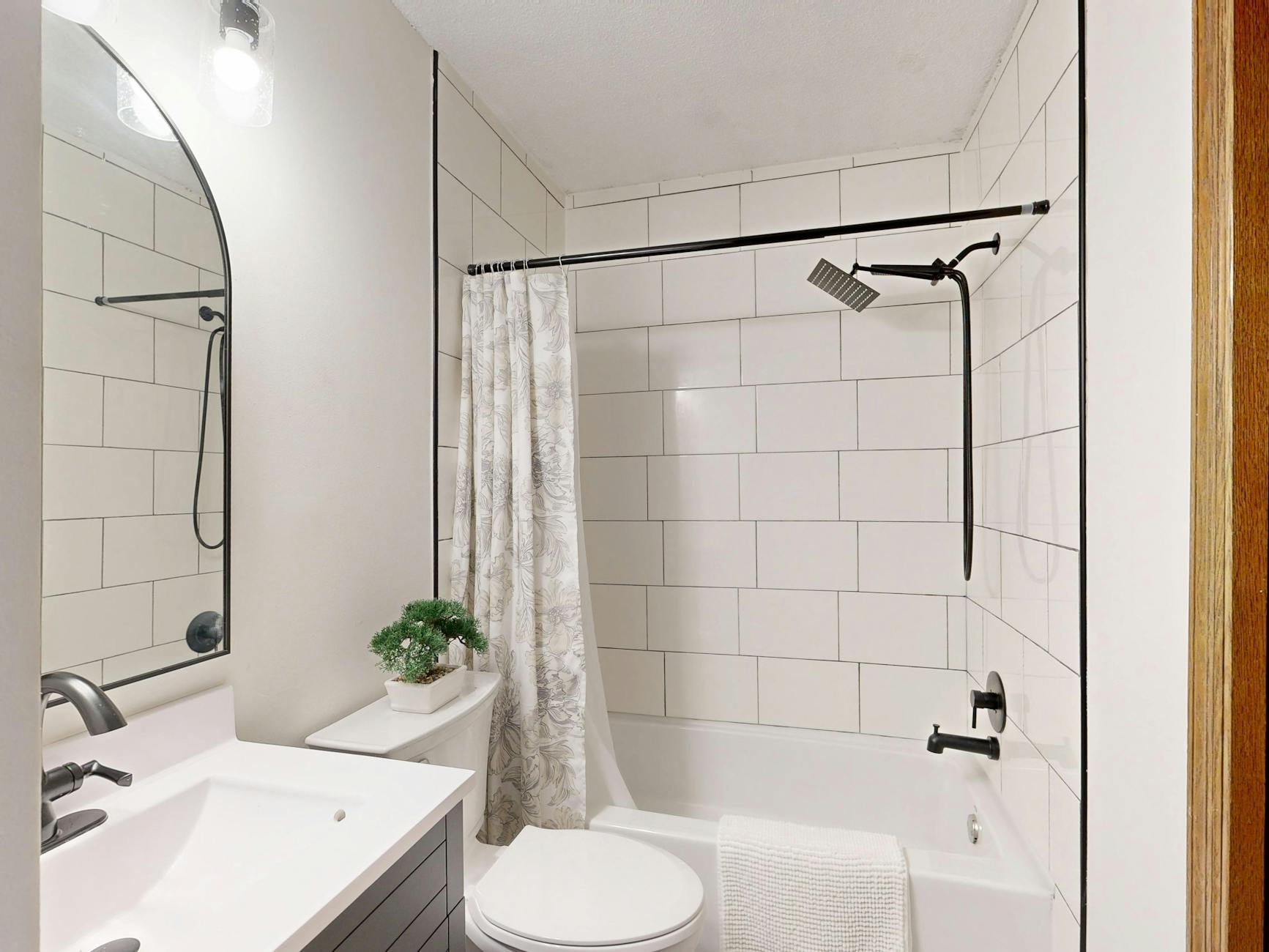
If you’re planning kitchen or bathroom work, the numbers tell a clear story: minor kitchens and midrange bathrooms are where your money goes furthest. A minor kitchen remodel, averaging $28,458, returns $32,141 and delivers 113% ROI in 2025. That’s a return you can feel good about. It’s enough to justify the project even if you’re not selling—you’re not losing money on it. Add the fact that you get to use the improved space for years before selling, and the project starts to feel worthwhile from both a lifestyle and financial perspective. A midrange bathroom remodel at 80% ROI follows a similar logic. For every $26,138 you invest, you can expect $20,910 back in added home value.
Again, that’s not a windfall, but it’s solid performance. You’re recouping most of your cost while enjoying an updated bathroom for however many years you live there. The warning here is to resist the temptation to “go upscale.” The jump from midrange to luxury bathrooms (42% ROI) is a financial cliff. Buyers won’t pay $60,000 for a bathroom they could have gotten in another home for $30,000, no matter how much Italian marble you use. There’s also the universal design bathroom remodel, which achieves 61% ROI. This category includes accessibility-focused updates like grab bars, wider doorways, curbless showers, and first-floor bathrooms. These projects often appeal to aging-in-place homebuyers, which is a real market segment, but the ROI is lower than straight midrange work. You’re making a lifestyle choice—or an accessibility choice—rather than a purely financial one.
The Upscale Kitchen and Bathroom Trap—Why Luxury Loses Money
Here’s where many homeowners go wrong: they see their home as an opportunity for a dream kitchen or dream bathroom and end up destroying their home’s financial return in the process. An upscale kitchen remodel underperforms a midrange kitchen by a staggering margin. Major upscale kitchen work returns only 38 to 51% of its cost, meaning if you spend $100,000, you might see $38,000 to $51,000 back. You’ve lost $49,000 to $62,000 on that single project. An upscale bathroom is even worse proportionally—42% ROI means you lose 58 cents on every dollar spent. The reason is simple: most homebuyers don’t care about the difference between a $40,000 bathroom and a $20,000 bathroom.
They care about whether the bathroom is clean, functional, and not offensive to look at. A heated marble floor might make you happy, but it’s not going to make a buyer pay an extra $30,000 for your home. That buyer already found seventeen other homes with perfectly nice bathrooms. The warning here is that home improvement magazines and showrooms are designed to sell you dreams, not financial sense. The kitchen designs you see in magazines are showpieces built by contractors who want to display their best work and charge premium prices. They’re not designed for ROI; they’re designed for magazines. If you’re spending your own money expecting to recoup it later, you need a completely different mindset: focus on function, durability, and broad appeal, not luxury and uniqueness.
How to Think About Home Improvement ROI Without Getting Stuck
ROI for home improvements should be calculated as: (Value Added – Cost) / Cost × 100. A $10,000 project that adds $13,000 in value has a 30% ROI. But here’s the critical thing most people miss: ROI only matters if you’re going to sell. If you’re planning to stay in your home for 10 more years, recouping 80% of your kitchen remodel cost through eventual sale value is only part of the equation. You also got to use that kitchen for 10 years. The financials change entirely. The limitation of thinking purely in ROI terms is that it ignores quality of life.
If you hate your bathroom and you’re going to live in that home for another 10 years, then a midrange bathroom remodel at 80% ROI is actually a great investment in your own happiness, even if the financial numbers alone wouldn’t justify it. But if you’re in a house you might sell in three years and you’re considering a $75,000 luxury kitchen remodel with 45% ROI, you need to acknowledge that you’re spending $40,000 on personal enjoyment with no financial return. That’s not an investment; that’s a luxury purchase. There’s nothing wrong with that, but be honest about what you’re doing. The industry average for most home renovations ranges from 60 to 80% ROI, which means the majority of projects return more than half their cost. That’s the baseline. Anything above that (like your garage door at 268%) is beating the market. Anything below that (like luxury kitchens at 38-51%) is underperforming, and you should have a good personal reason for doing it anyway.

The 2026 Market Context—What’s Driving These Numbers
U.S. home renovation spending is projected to reach $524 billion in 2026, which tells you how much Americans are investing in their homes. Within that massive budget, homeowners are learning through trial and error which projects work and which don’t. The 2025 data showed some interesting shifts from 2024: garage door ROI jumped 74%, stone veneer gained 55%, steel entry doors improved 28%, fiber-cement siding rose 26%, and vinyl siding increased 17%.
These aren’t random fluctuations—they’re reflecting what buyers actually value as homes age and the market matures. The data suggests that buyers are paying a premium for homes with clearly maintained and updated exteriors. In 2026, a home that looks tired on the outside is a tough sell, no matter how nice the kitchen is. This is the inverse of the luxury kitchen trap: spending to address visible wear and obvious maintenance needs consistently outperforms spending to impress with finishes. A fresh entry door costs $2,435 and signals “someone takes care of this property.” A designer kitchen signals “someone has money,” which doesn’t necessarily mean the buyer thinks the home is well-maintained.
Making the Right Call on Your Next Home Improvement Project
When you’re planning your next project, ask yourself two questions: How long will I live here, and am I doing this because buyers care or because I care? If you’re staying 10+ years, the ROI matters less because you’ll enjoy the benefits. If you’re selling in three years, ROI should be your primary focus. Steel entry doors, garage doors, and quality siding are almost always smart choices. Minor kitchen remodels and midrange bathroom updates make sense if you’re keeping the home or want to recoup most of your cost. Luxury finishes should only happen if you’ve genuinely decided you don’t care about getting your money back—because you won’t.
One final practical note: the highest-ROI projects are also the ones that fix visible problems. A dated garage door, a cheap-looking front entrance, or worn siding are problems that prevent buyers from imagining themselves in your home. Fixing these issues gives you returns that beat the market. An updated kitchen that still has the same footprint and functionality? You’re paying for personal enjoyment. Both are valid choices, but they’re not the same financially.
Conclusion
The question isn’t whether home improvements are worthwhile—it’s which ones are financially worthwhile and which are personal investments in your own quality of life. A garage door replacement returning 268% of its cost is a financial slam dunk. A luxury kitchen remodel returning 40% of its cost is a luxury purchase that happens to also improve your home’s resale value slightly.
Neither is wrong; they’re just different decisions. As you plan your next project, use the data: prioritize exterior improvements, consider midrange interior work, and approach upscale finishes with eyes wide open about what they’ll cost you at sale time. The best renovations are the ones where the financial return and personal enjoyment align—and knowing the numbers helps you find that intersection instead of wasting money in the luxury zone where buyers simply won’t meet your expectations.