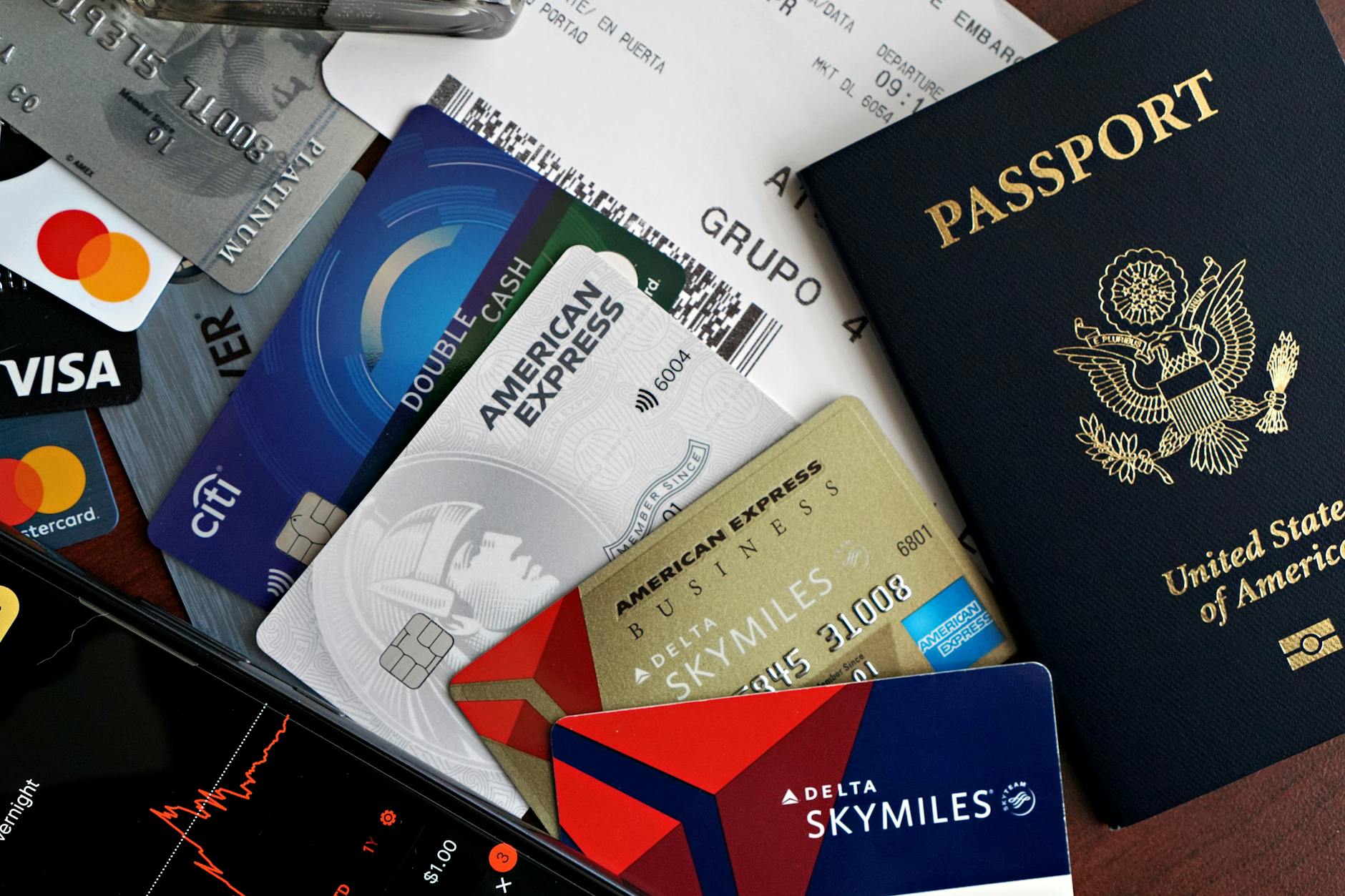

Most credit card holders already have travel insurance coverage they’ve never used—and it’s costing them money when they buy standalone policies or skip travel protection altogether. Your credit card issuer likely includes trip cancellation, baggage delay, emergency medical, and evacuation insurance as automatic cardholder benefits, often without requiring you to pay an extra premium. The coverage is simply included in your card membership, though the specific benefits vary significantly depending on which card you carry and which card you use to book your travel.
The catch is that virtually nobody reads the fine print about these benefits, so they remain invisible. A family booking a $3,000 vacation could have $2,500 in trip cancellation protection already waiting for them in their Visa account, yet they’ll purchase a separate travel insurance policy for $150 out of ignorance. Understanding what your card already covers means you can travel with real protection without redundant premiums, or you’ll know exactly where gaps exist and whether supplemental coverage is actually worth buying.
Table of Contents
- What Credit Card Travel Insurance Actually Covers
- Understanding Coverage Limits, Exclusions, and Gaps
- How to Activate Your Credit Card Travel Insurance
- Comparing Card Travel Insurance to Standalone Policies
- Common Claims Denials and How to Avoid Them
- Checking Your Specific Card’s Benefits
- Optimizing Your Travel Insurance Strategy
- Conclusion
What Credit Card Travel Insurance Actually Covers
credit card travel insurance typically bundles four main types of protection: trip cancellation and interruption, baggage delay and loss, emergency medical and dental, and emergency evacuation. Trip cancellation insurance reimburses your prepaid, nonrefundable travel expenses if you need to cancel before departure due to a covered reason like illness, injury, or death of a family member. Trip interruption coverage works backward—it compensates you if you have to return home mid-trip for one of those same qualifying reasons. Baggage coverage falls into two categories on most cards. Baggage delay reimbursement pays for essential items like toiletries, clothing, or medications if your luggage arrives more than 12–24 hours late on your final destination.
Baggage loss or damage coverage (sometimes called baggage protection) reimburses you for lost, stolen, or damaged baggage and personal items up to a stated limit per item and per claim. Emergency medical and dental benefits cover unexpected medical or dental expenses incurred while traveling outside your home country, which is especially valuable for travelers without comprehensive travel health insurance or those traveling to countries where their domestic insurance may not apply. Emergency evacuation insurance is the least glamorous but potentially most expensive benefit. If you become seriously ill or injured while traveling to a remote location, this coverage pays for emergency transportation—often by helicopter or private aircraft—to the nearest adequate medical facility. A single emergency evacuation from a hiking accident in a developing country can easily cost $50,000 to $100,000, making this protection genuinely life-changing for adventurous travelers or those visiting remote regions.

Understanding Coverage Limits, Exclusions, and Gaps
The real challenge with credit card travel insurance isn’t understanding what it covers—it’s understanding the limits and exclusions that often render coverage useless. Most cards cap trip cancellation coverage at $5,000–$10,000, which might cover a weekend trip to Miami but falls short if you’re booking a multi-week family vacation to Europe or a destination wedding with expensive flights. Additionally, most cards exclude cancellations due to financial hardship, pre-existing medical conditions, weather, airline schedule changes, and acts of war or terrorism. A trip cancelled due to a hurricane warning often won’t qualify, nor will a cancellation because you lost your job last month. Another critical limitation: the expense must typically be paid with your credit card to qualify for coverage. If you book your hotel on a different card or pay out-of-pocket, the coverage doesn’t apply.
Some card issuers require that you were the one who charged the ticket or reservation; others extend coverage to immediate family members booked on the same reservation. This technicality has left countless travelers without reimbursement because they didn’t know the payment method mattered. Baggage and emergency coverage have their own gaps. Baggage protection usually excludes high-value items like electronics, jewelry, and cash, and it caps reimbursement per item (often $500–$2,500) and per claim. Emergency medical coverage only applies while traveling outside your home country, meaning a medical emergency in your home country is unprotected, and some cards exclude risky activities like mountaineering or professional sports. You may discover your “comprehensive” emergency evacuation coverage doesn’t apply to pre-existing medical conditions or situations where you ignored medical advice not to travel.
How to Activate Your Credit Card Travel Insurance
Contrary to what many cardholders assume, most credit card travel insurance requires no activation or enrollment—it’s automatic once you have an eligible card and meet the triggering conditions. However, this passive benefit often comes with a critical requirement: you must use your credit card to purchase or prepay a portion of the covered expense. Booking your flight with cash and then calling the airline to ask if they accept card payments later won’t work; the card payment must happen at purchase, before any cancellation claims arise. Some card benefits programs do require registration or notification before you travel. American Express, for instance, allows you to register your trip online through their Benefits Portal, which helps establish a paper trail and confirms your coverage before you leave. While not always mandatory, this registration is highly advisable because it simplifies the claims process and ensures the card issuer has a record that you knowingly had the protection.
Without it, the burden falls on you to prove you were eligible and meeting all coverage requirements when you file a claim later. A practical example: suppose you book a $4,000 cruise on your Capital One Venture card, which includes up to $10,000 in trip cancellation coverage. You pay the full cruise fare with your Venture card. Two weeks before departure, you’re diagnosed with a condition requiring surgery that your doctor recommends against travel to recover from. You contact the cruise line for a refund, which they deny because you’re outside their cancellation window. You then file a claim with Capital One, providing the receipt showing you paid with your card, a doctor’s letter detailing your diagnosis and treatment, and proof that the cruise line wouldn’t refund you. That’s a straightforward claim that should be approved.

Comparing Card Travel Insurance to Standalone Policies
Credit card travel insurance is genuinely useful, but it’s not a replacement for standalone travel insurance in every situation, and comparing the two reveals where your credit card benefit genuinely shines and where it falls short. A standalone travel insurance policy through a company like Squaremouth, Travel Guard, or World Nomads often provides higher limits (up to $20,000–$30,000 for trip cancellation), broader coverage reasons, and no requirement that you pay with a specific card. These policies cost money—typically 4–8% of your total trip cost for comprehensive coverage—but they cover scenarios your credit card explicitly excludes. The real advantage of credit card coverage is that it’s essentially free if you’re already paying an annual fee for the card. If you carry a premium card like the American Express Platinum ($695/year) or Chase Sapphire Reserve ($550/year), you’re already paying for travel benefits, and the insurance is bundled in. For a one-time, low-risk trip, credit card coverage is likely sufficient and will save you the cost of a standalone policy.
For a high-value trip where cancellation would be financially devastating, a solo international adventure to a risky region, or a trip that includes specifically excluded circumstances (you have a pre-existing condition, for example), standalone coverage becomes a reasonable added investment. Many smart travelers do both: they rely on their credit card coverage for basic protection and purchase a standalone policy that covers the gaps or higher limits. A typical example would be someone booking a $15,000 destination wedding overseas. Their Sapphire Reserve provides up to $10,000 in trip cancellation coverage and emergency medical while abroad. For an additional $120–$180, they purchase a travel insurance policy that covers the remaining $5,000 in costs and adds coverage for their pre-existing anxiety disorder, which the credit card explicitly excludes. This layered approach costs less than a comprehensive standalone policy and ensures no uncovered gaps.
Common Claims Denials and How to Avoid Them
The most frequent reason credit card travel insurance claims get denied is that the triggering event doesn’t qualify as a “covered reason” under the card’s terms. You had to cancel your trip because your flight was overbooked and the airline rebooked you to a different date? That’s not a covered reason on most cards—the card covers illness, injury, or death of a family member, not inconvenience from airline operations. Your travel companion got cold feet and withdrew from the trip? Cold feet isn’t covered, even if it means you’ll lose money on a couples’ package deal. Another common denial stems from the payment requirement issue mentioned earlier. You booked your hotel through Expedia and paid with your Chase Sapphire card, then booked your flights directly with the airline but couldn’t use your card (they wanted a different payment method) and paid with a wire transfer. If you cancel and try to claim the full trip cost, Chase will cover the hotel portion but may deny the flights because they weren’t charged to your Sapphire card.
The policy language often says “prepaid travel arranged with funds from your card,” and the hotel counts but the flights don’t, leaving you with a partial claim and the burden of arguing over semantics. Pre-existing condition exclusions are particularly tricky. If you were diagnosed with a health condition more than 60–90 days before your trip and knew about it, most cards won’t cover trip cancellation if you later cancel due to worsening of that condition. However, if your condition dramatically worsens within 14–30 days of travel (card-dependent), suddenly making travel dangerous, many cards will cover it as a new qualifying event. Similarly, if your spouse is diagnosed with a serious illness and you need to stay home to care for them, this may qualify as an eligible family member’s illness, but only if the card defines “family member” to include spouses, which most do. Check your specific card’s terms before assuming your scenario is covered.

Checking Your Specific Card’s Benefits
The only way to know what travel insurance your credit card actually includes is to look it up directly. Most card issuers make this information available through an online benefits guide, usually found in your account portal or by calling the customer service number on the back of your card. For Visa cards, there’s a Visa Concierge service available to cardholders, and Visa’s website has a benefits directory organized by card. MasterCard cards typically have MasterCard Concierge access and published benefit guides.
American Express makes benefits very prominent in cardholder materials, with detailed documentation of coverage limits and exclusions. When you look up your benefits, write down the specific dollar limits for each benefit (trip cancellation, baggage delay, emergency medical) and the list of covered reasons for cancellation or interruption. Look for the exclusion list as well—it’s usually buried in smaller type but contains the crucial information about what scenarios won’t be covered. For example, your card might cover trip cancellation up to $8,000 if you cancel due to illness of a family member, but the exclusion might specify “family member” as spouse, children, parents, or siblings—meaning your cancellation because your grandparent died may not qualify, depending on how the card defines the relationship.
Optimizing Your Travel Insurance Strategy
As travel becomes increasingly unpredictable, more travelers are taking a strategic approach to insurance by choosing which card to use for bookings specifically to leverage the best benefits. If you have multiple premium credit cards, comparing their travel insurance benefits and using the most comprehensive card for your next trip is a simple optimization. The Amex Platinum and Chase Sapphire Reserve both offer premium travel benefits, but Platinum includes some coverages Sapphire doesn’t, and vice versa.
Deliberately choosing which card to pay with is free optimization if you’re already approved for both. Another forward trend is the integration of insurance benefits with travel loyalty programs and comprehensive trip management services. Some newer premium cards are layering travel insurance with concierge services that help you understand and file claims if something goes wrong. As travel becomes more complex and trips become more expensive, having that human support—not just buried policy language—is becoming increasingly valuable for travelers who plan expensive or risky trips.
Conclusion
Credit card travel insurance is real, often substantial, and almost universally overlooked. If you carry a premium credit card, you’re likely paying for comprehensive travel protection that you’ve never even read the details on. The first step is identifying what your specific card covers, which takes 15 minutes of digging through your card’s benefits guide, a call to customer service, or a visit to your card issuer’s website. Writing down your specific limits and exclusions takes another 5 minutes but transforms the information from abstract to immediately useful.
The second step is understanding that credit card travel insurance is a starting point, not always a complete solution. For routine trips, it’s likely sufficient and saves you hundreds in premium purchases. For expensive trips, trips to risky regions, or trips involving specific circumstances like pre-existing conditions, supplemental standalone insurance remains a reasonable investment. By understanding what you already have, you’ll make smarter decisions about what additional protection is worth buying, and you’ll never pay for duplicate coverage you didn’t know was already in your wallet.
You Might Also Like
- Audible Free Trial Warning 2026: The Charges That Start After You Forget to Cancel and How to Stop Them
- PINCHme Legit Check 2026: Why Free Sample Boxes Don’t Always Arrive and What Users Say About Delivery
- Venmo Buyer Protection Exposed 2026: What Coverage You Actually Have, Where It Fails, and What to Know Before Sending Money