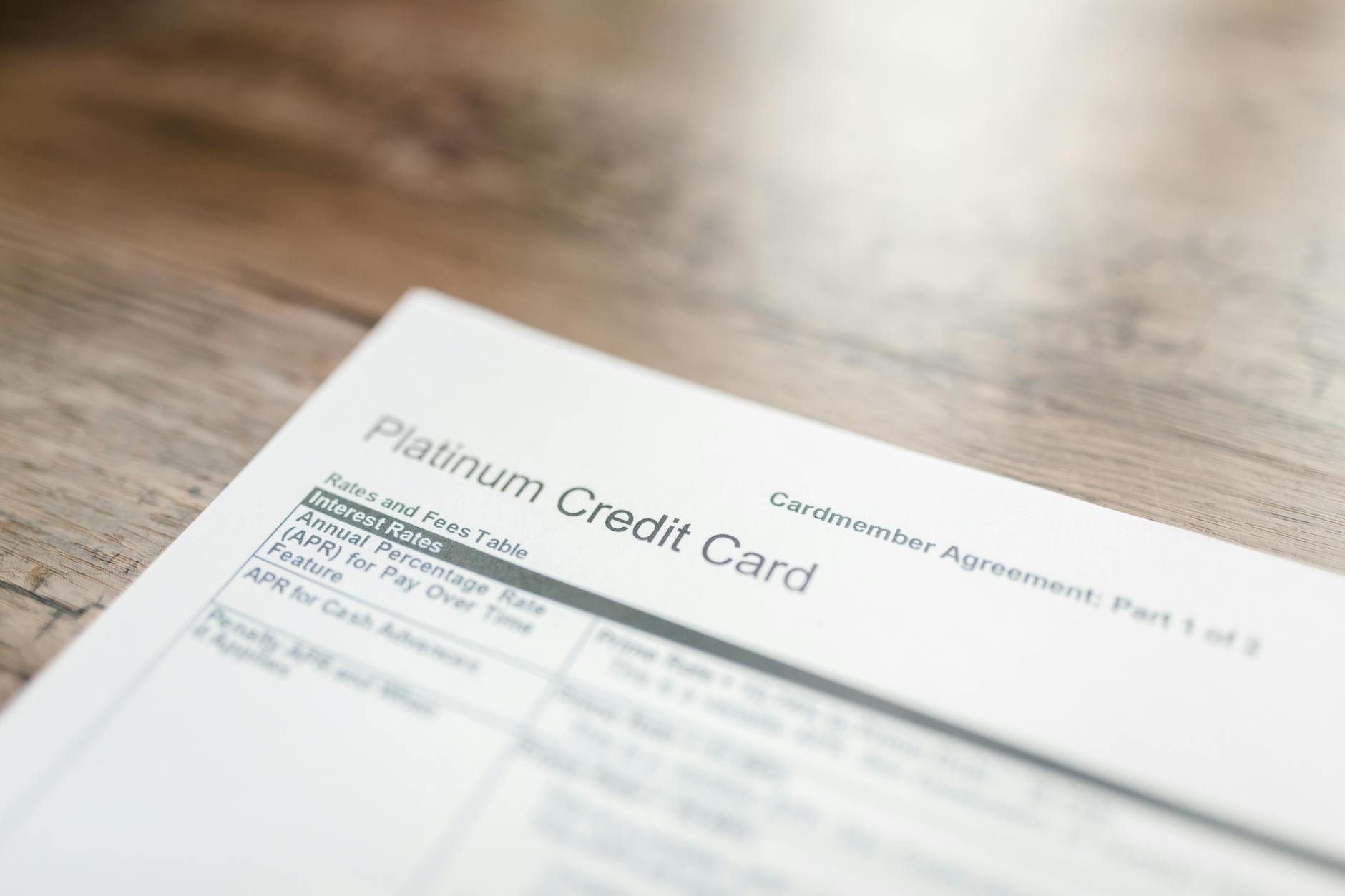

To pay zero interest on credit cards while earning rewards, you need to combine two card strategies: using a 0% APR introductory offer to avoid interest charges, and selecting a card with strong cashback or points rewards on your spending categories. The most effective approach is to apply for a card with a lengthy 0% APR period on purchases or balance transfers, then use the card strategically during that window to earn rewards on everyday expenses you’d pay for anyway—groceries, gas, utilities—without paying any interest. For example, if you open a card offering 0% APR for 18 months and earn 2% cashback, you’re getting free financing plus a 2% return on all spending, which compounds to meaningful savings when applied to regular purchases like a monthly mortgage payment or large home improvement project.
The key is understanding that while the 0% APR period lasts, the rewards you earn are pure gain since they’re not offset by interest payments. This strategy works best for people with existing debt they want to consolidate, upcoming large purchases, or consistent monthly spending. However, it requires discipline: once the promotional period ends, the card reverts to a regular APR, typically 18-28%, so you must either pay off the balance before then or transfer the remaining balance to another 0% card.
Table of Contents
- Which Cards Offer the Best 0% APR and Rewards Combination?
- The Hidden Costs and Limitations of 0% APR Strategies
- Real-World Example: Using a 0% Card for Debt Consolidation and Rewards
- Strategic Steps to Maximize Your 0% APR and Rewards
- Common Pitfalls: What Goes Wrong and How to Avoid Them
- Rewards Points vs. Cashback on 0% Cards
- The Future of 0% APR Offers and Planning Long-Term
- Conclusion
- Frequently Asked Questions
Which Cards Offer the Best 0% APR and Rewards Combination?
Not all cards with 0% APR are created equal, and the best option depends on whether you’re transferring existing debt or financing new purchases. Cards like the Citi Double Cash offer 0% APR for 18 months on balance transfers with a 3% transfer fee, plus 1% cashback on all purchases and 1% when you pay—effectively 2% total. Other cards like the Chase Sapphire Preferred provide 0% APR for 15 months on purchases with a $95 annual fee, but offer 3x points on dining and travel, 1x on everything else. The trade-off is that premium cards often charge annual fees that eat into rewards gains unless you’re spending $1,500+ per month to offset that cost.
When comparing cards, calculate the total value you’ll receive during the promotional period. If a card charges a $95 annual fee but gives you 3x points on $2,000 monthly dining spend (6,000 points worth $60-90), you’re likely coming out ahead. However, a card with no annual fee and modest 1% cashback might be smarter if your spending is around $500-1,000 per month—it avoids the fee trap many people fall into by overestimating their future spending. The longest 0% APR offers currently available are typically 18-21 months on balance transfers and 12-15 months on purchases, offered by Chase, Citi, and American Express products.

The Hidden Costs and Limitations of 0% APR Strategies
While 0% APR sounds free, there are real limitations that constrain how much you can optimize. Most cards charging fees for balance transfers charge 3-5% of the transferred amount upfront, which is paid immediately from your available credit. This means if you transfer $5,000 with a 3% fee, you lose $150 in available credit just to get started. The 0% period only applies to the transferred balance or new purchases, not future cash advances—and cash advances typically carry a 2-5% fee plus immediate interest. This is where cardholders often slip up: they assume the entire card is interest-free and end up with unexpected charges.
Another critical limitation is the credit requirements: most 0% APR cards require good to excellent credit (scores above 670, ideally 740+). If your credit is below 670, you’ll either be declined or offered cards with shorter promotional periods and higher regular APR. Additionally, once the 0% period ends, the APR jumps dramatically. If you still have a balance after month 18, you suddenly owe interest at 22% APR on whatever remains—this catch makes it essential to have a payoff plan before the promotion expires. The rewards themselves, while valuable, are capped by the card’s earning rate: even a 3x cashback card only returns 3 cents per dollar spent, so massive rewards don’t exist—you’re looking at $30-50 in cashback per month for typical household spending.
Real-World Example: Using a 0% Card for Debt Consolidation and Rewards
Consider someone with $8,000 in credit card debt across multiple cards, each charging 18-22% APR, accumulating roughly $120 in monthly interest. They apply for a balance transfer card offering 0% APR for 18 months, 3% transfer fee, and 2% cashback. They transfer the full $8,000, paying a $240 upfront fee (charged to the card), giving them an $8,240 total balance. Over 18 months with no interest, they pay $8,240 ÷ 18 = $458 monthly.
Meanwhile, they use this same card for all monthly spending—$2,000 across groceries, gas, utilities, and subscriptions—earning 2% cashback ($40/month). After 18 months, they’ve paid off the debt, earned $720 in cashback, but spent $240 upfront on the transfer fee. Net gain: $480 in savings compared to staying on the original cards (where they’d have paid $2,160 in interest). If they’d kept their original strategy, they’d owe that interest plus the principal; by moving to 0% APR and earning rewards, they flipped a debt situation into a slight net gain. The critical part was discipline: they didn’t add new purchases to the card mid-payoff, and they set a calendar alert for month 17 to confirm the balance was zero before the APR reset.

Strategic Steps to Maximize Your 0% APR and Rewards
To execute this strategy effectively, start by calculating whether you’ll actually benefit from a card’s annual fee. Add up your predicted monthly spending, multiply the bonus categories by the rewards rate, and subtract the annual fee. If the math shows you’ll earn $200+ above the fee cost, the card makes sense. If not, stick with no-fee cards at 1-1.5% cashback.
Next, set a specific payoff deadline that’s 2-3 months before the 0% period ends—this gives you a buffer if an emergency expense pops up, rather than scrambling to pay off interest in month 18. Once you have the card, segregate it mentally from your other cards: this is your 0% card, not your regular spending card. Only charge expenses to it that you’re confident you can pay off within the promotional window, or use it exclusively for the category bonuses (3x dining, 2x groceries, etc.) and use other cards for random one-time purchases. Set up automatic payments of a fixed amount each month—for instance, if your balance is $4,000 and your period is 16 months, automate $250 monthly—so you stay on track without thinking about it. Many people benefit from putting the card away physically once it’s paid off to resist the temptation to use a $0-balance card “just for rewards,” which often leads to overspending.
Common Pitfalls: What Goes Wrong and How to Avoid Them
The most frequent mistake is missing the APR reset deadline. Someone pays off 90% of their balance but forgets about a small remaining amount, and suddenly they’re paying 24% APR on $200—they lose $100 in interest over a year just because they didn’t track it. The fix is to set calendar alerts at month 16, not month 18, and pay the card in full completely. Another pitfall is applying for multiple 0% cards too quickly: each application triggers a hard inquiry on your credit, and multiple inquiries in a short window can lower your credit score by 5-10 points and can make future applications harder to approve. Most people should space card applications 3-6 months apart if they’re planning a strategy that involves multiple cards.
A third common issue is lifestyle inflation. Someone transfers $5,000 in debt to a 0% card with rewards, then celebrates by charging new purchases to it because “I’m getting rewards now.” This turns a debt-elimination strategy into a debt-expansion plan. The card only works if you’re disciplined about the underlying goal: eliminating that $5,000 in debt plus earning a bit on the side, not treating it as a ticket to more spending. Finally, people often ignore the spending categories. A card might offer 3% cashback on dining but only 1% on groceries, and if you’re grocery-heavy, it’s a poor fit. Match your spending patterns to the card’s bonus categories, not the other way around.
Rewards Points vs. Cashback on 0% Cards
Rewards points cards differ from cashback in one key way: points usually have variable redemption values. A dining card offering 3x points might let you redeem those points for $0.01 each (1% value) to $0.02 each (2% value) depending on how you redeem them. Cashback is simpler—2% cashback is always worth 2% of your spending, no guessing. For 0% APR strategies, cashback cards are generally more transparent, especially if you’re new to the rewards game.
For instance, a 2% cashback card on everything is easier to track than a card with 3x points on category A, 2x on category B, and 1x elsewhere, where you have to calculate total value redemption. That said, premium points cards like Chase Sapphire Preferred can be worth it during a 0% APR period if you’re spending heavily in the bonus categories and redeeming points at high value. The 0% period gives you time to accumulate 10,000-20,000 points without interest pressure, and you can then redeem those for travel or transfers to airline partners at potentially 2-3x cent value. The trade-off is complexity: if you want simplicity and guaranteed value, cashback is easier.
The Future of 0% APR Offers and Planning Long-Term
The 0% APR market is tightening. In 2024-2025, the longest 0% offers were 21 months on balance transfers; several issuers have already shortened their offers to 15-18 months as interest rates remain elevated. This trend suggests that future 0% offers might be shorter, which means the window to use this strategy effectively is narrowing.
If you’re considering this approach, now is a better time than planning to do it in 2-3 years when offers might be 12 months or less. The combination of 0% APR and rewards will likely remain available, but probably for higher-credit-score applicants only, as issuers tighten eligibility. If you have decent credit now, it’s worth acting; if your credit needs improvement, focus on that first because even a 10-point score improvement can mean the difference between qualifying for an 18-month 0% offer or a 12-month one.
Conclusion
Paying zero interest on credit cards while earning rewards is achievable by combining a 0% APR promotional offer with a card that earns cash back or points on your spending. The strategy works best for debt consolidation or planned large purchases during the promotional window, and it requires discipline to avoid overspending, missing the deadline, or racking up new debt. Start by calculating whether a card’s annual fee is worth its rewards, secure the longest 0% period you can qualify for, set automatic payments to ensure you pay off the balance before interest kicks in, and avoid the trap of treating the 0% period as permission to spend more.
Your next step is to review your current credit score (you can check for free via annualcreditreport.com) and identify whether you have existing debt to consolidate or upcoming planned spending. If your score is 720+, start researching the current longest 0% offers; if it’s lower, consider whether paying down existing debt to improve your score first might position you for better card terms six months from now. The math is simple: if you can avoid interest and earn rewards, you’re not just saving money—you’re being paid a small amount to borrow, which is the closest thing to a financial free lunch that exists.
Frequently Asked Questions
Can I earn rewards on a balance transfer?
Yes, but only if your card explicitly offers bonus categories that include balance transfers, which is rare. Most cards earn 2% or less on all purchases including balance transfers, not bonus rates. Check your card’s terms to confirm.
What happens if I don’t pay off the balance by the end of the 0% period?
Any remaining balance reverts to the card’s regular APR, typically 18-28%, and interest accrues immediately. This is why setting a deadline 2-3 months before the promo ends is critical.
Can I use a 0% APR card immediately after opening it?
Yes, the 0% period usually starts the day the account opens (or the day the first balance transfer posts). However, new purchases and balance transfers sometimes have different promotional periods, so check your cardholder agreement.
Is it worth paying the balance transfer fee?
Usually yes, if the 0% period saves you more in interest than the fee costs. For example, $5,000 with a 3% fee ($150) saves you roughly $600-900 in interest over 18 months compared to paying interest at 20% APR, so the fee is worthwhile.
How many 0% cards can I have at once?
Legally, there’s no limit, but practically, having multiple open cards can impact your credit score due to multiple inquiries and increased credit utilization. Most experts recommend 2-3 maximum at once, spaced 3-6 months apart in applications.
What if I can’t pay it off before the 0% ends—can I transfer the balance again?
Yes, but the second balance transfer card also charges a fee (typically 3-5%), and your credit score will be dinged by another hard inquiry. This extends your debt payoff timeline and adds more fees. It works only if the fee is lower than the interest you’d otherwise pay.