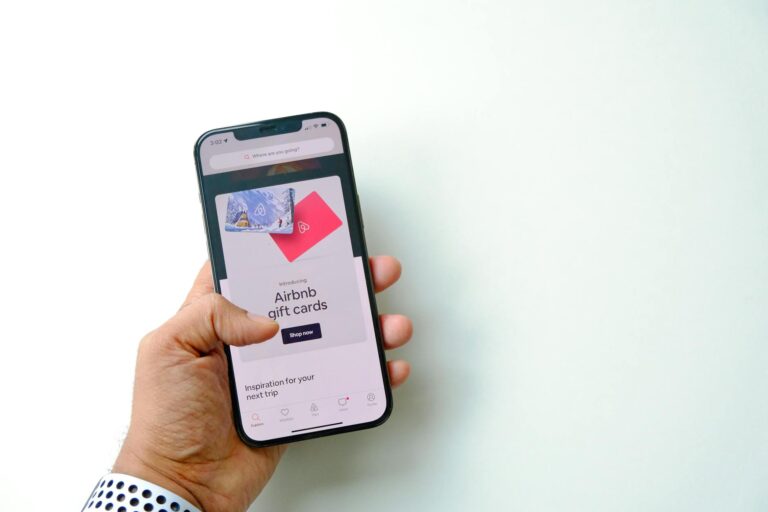

Mistplay is legit in the sense that it actually pays out real gift cards for playing mobile games, having distributed over $150 million to users since launching in 2015. But whether it is worth your time depends entirely on how you define “worth it.” Independent testing from multiple sources puts realistic earnings somewhere between $0.50 and $4.29 per hour, with most users landing closer to the low end of that range after initial bonuses dry up. If you are looking for anything resembling a side hustle that moves the needle on your finances, Mistplay is not it. That said, writing it off entirely misses the point for a specific type of user.
If you already spend an hour or two each day on mobile games and would be doing so regardless of any reward, Mistplay turns dead time into a slow trickle of gift cards. One long-term user reported earning $175 over eight months, which is not going to cover rent but does amount to a few free Amazon orders. The difference between “scam” and “not worth it” matters here, and Mistplay falls clearly into the second category for most people while being a modest win for a narrow audience. This article breaks down the real numbers behind Mistplay’s earnings, how its point system and redemption thresholds actually work, what the major complaints are, and how it compares to other ways you could spend that same time. Everything here is based on verified data from independent tests, user reviews across multiple platforms, and Mistplay’s own disclosures.
Table of Contents
- Is Mistplay a Legitimate App or Just Another Gaming Rewards Scam?
- How Much Money Can You Realistically Earn on Mistplay?
- How Mistplay’s Points, Redemptions, and Gift Cards Actually Work
- Mistplay vs. Other Ways to Earn During Downtime
- Common Complaints and Red Flags to Watch For
- Tips to Maximize Your Mistplay Earnings If You Decide to Use It
- Where Mistplay Is Headed and What It Means for Users
- Conclusion
- Frequently Asked Questions
Is Mistplay a Legitimate App or Just Another Gaming Rewards Scam?
Mistplay has been operating out of Montreal, Canada since 2015, backed by Growth Curve Capital since 2021. With over 10 million downloads on Google Play and a 4.5-star rating across more than 620,000 reviews, it has a user base and track record that most scam apps never come close to achieving. On Trustpilot, it holds a 4.1 out of 5 rating, with 61 percent of its 4,000-plus reviewers giving it 5 stars. The company recently made a $5.3 million acquisition of Mobivity Holdings Corp.’s Connected Rewards platform in January 2026, which is not the kind of business move a fly-by-night operation makes. However, the picture is not uniformly rosy. Mistplay holds an F rating with the Better Business Bureau, driven primarily by account suspension complaints and unresolved payout disputes.
On PissedConsumer, 477 reviews have been logged, many of them detailing frustrating experiences with accounts being placed on hold right around redemption time. The pattern that emerges is a company that is genuinely paying out millions but also has real customer service gaps that leave some users feeling burned. This is not unusual for rewards apps at scale, but it is worth knowing before you invest hours into building up a balance. The strongest evidence that Mistplay is legitimate is simply the math. Over $150 million paid out across eight-plus years of operation, with no major fraud allegations, puts it in a fundamentally different category than the countless “get paid to play” apps that quietly disappear after collecting your data. Mistplay makes money by connecting game publishers with players who test and engage with their games. You are the product, which is not ideal, but at least the transaction is transparent.

How Much Money Can You Realistically Earn on Mistplay?
This is where the honest numbers matter more than the marketing. FinanceBuzz ran a hands-on test and earned $15 in roughly 3.5 hours, which works out to about $4.29 per hour. that sounds almost reasonable until you look at the other independent tests. BountyCore earned just $10 over 18 hours of gameplay, coming in at approximately $0.56 per hour. TheBudgetDiet reported $5 for 8 hours of effort, or about $0.63 per hour. The spread between best and worst case is enormous, and the difference likely comes down to which games were played, what multiplier bonuses were active, and whether the tester was a new account receiving introductory reward boosts.
The FinanceBuzz result appears to be an outlier, likely reflecting optimal game selection and new-user bonuses. For sustained use, the consensus across reviewers is that most people should expect somewhere around $0.50 to $2.00 per hour. A long-term user tracked by SideHustleNation earned $175 over eight months, which, assuming even moderate daily play, works out to well under a dollar per hour over the full period. Earnings also tend to decline over time as those initial bonuses expire and the games you have been playing offer diminishing returns in points. There is also a daily earning cap to consider. Mistplay limits GXP-earning gameplay to a maximum of two hours per game per day, which means you cannot simply grind one game for hours on end and expect linear returns. This cap is presumably designed to keep the economics sustainable for Mistplay, but it also means your earning ceiling on any given day is structurally limited regardless of how much free time you have.
How Mistplay’s Points, Redemptions, and Gift Cards Actually Work
Mistplay uses a unit-based system where you accumulate points through gameplay, then redeem them for gift cards from a fairly broad selection of retailers. Available options include Amazon, Visa, Google Play, Walmart, Target, Starbucks, PlayStation, Nintendo, Xbox, GameStop, eBay, AMC, Spotify, and Taco Bell, among others. The variety is genuinely better than many competing rewards apps, which often lock you into a single store or force you into gift cards you do not actually want. The minimum redemption threshold is where things get interesting. Amazon gift cards start at just $0.50 for 400 units, giving new users a quick psychological win early on. Other gift cards start at $5 for 1,800 units, which takes meaningfully longer to reach.
The low Amazon threshold is smart design on Mistplay’s part because it lets users verify that the app actually pays out before they have invested significant time. If you are skeptical, redeeming that first $0.50 Amazon card is a low-commitment way to confirm the system works. However, the redemption economics have been moving in the wrong direction for users. In late 2025, Mistplay increased the cost of PayPal redemptions from 3,000 points for $10 to 3,700 points, a 23 percent increase that effectively devalued every unit users had already earned. This kind of unilateral change is one of the inherent risks of any points-based system. You are accumulating a currency that the company controls, and they can change the exchange rate whenever they want. There is no guarantee that the points you earn today will be worth the same amount when you go to cash them out.

Mistplay vs. Other Ways to Earn During Downtime
The fundamental question is not whether Mistplay pays, but whether it pays enough to justify choosing it over alternatives. At $0.50 to $2.00 per hour for most users, Mistplay falls well below federal minimum wage and is not competitive with virtually any other form of side income that requires active effort. Completing surveys on Swagbucks or InboxDollars typically yields $1 to $3 per hour. Selling items on Facebook Marketplace or eBay converts clutter into cash at a far higher effective hourly rate. Even cashback apps like Ibotta or Rakuten generate passive returns on spending you were already going to do without requiring you to sit and play a game. Where Mistplay does hold a narrow advantage is in the specific scenario where you are going to play mobile games anyway. If your evening routine already includes 30 to 60 minutes of casual gaming, Mistplay redirects that time toward a small reward without requiring any additional effort.
The comparison then is not Mistplay versus working, but Mistplay versus playing the exact same type of game without earning anything. In that framing, even $0.50 per hour is found money. The tradeoff is that Mistplay chooses the games for you. The titles available through the app are ones whose publishers are paying Mistplay for user engagement, which means you are unlikely to find your favorite indie game on the platform. You are essentially agreeing to play whatever games Mistplay’s advertising partners want tested, in exchange for a small cut of what those advertisers are paying. If you enjoy the types of games offered, great. If you are particular about what you play, the reward may not offset the friction of playing something you would not have chosen on your own.
Common Complaints and Red Flags to Watch For
The most consistently reported issue across negative reviews is accounts being suspended or placed on hold when users attempt to redeem their accumulated points. Multiple reviews on PissedConsumer describe a pattern where users play for weeks or months, build up a meaningful balance, and then find their account flagged without a clear explanation of which specific terms of service were violated. Whether these suspensions are triggered by legitimate fraud detection or overly aggressive automated systems, the result is the same for the affected user: lost time and no payout. Reports also surface periodically about accumulated points disappearing after app updates. These complaints appear on Trustindex and other review aggregators, though it is difficult to determine how widespread the issue is versus how often it gets amplified by a small number of vocal users. Regardless, the risk is real, and the practical advice is to redeem your points frequently rather than stockpiling them.
There is no benefit to hoarding a large balance, and every day your points sit unredeemed is a day they are exposed to potential devaluation, account issues, or technical glitches. One limitation that catches many potential users off guard is platform availability. Mistplay is primarily an Android app. Despite years of users asking about an iPhone version, multiple sources as recently as 2026 still describe it as Android-only, with iOS availability remaining limited or unclear. If you are an iPhone user who stumbled across this article hoping to start earning, you are likely out of luck for now. This is a significant gap considering iOS users tend to spend more on apps and in-app purchases, which suggests the economics of supporting Apple’s platform may not work in Mistplay’s favor.
Tips to Maximize Your Mistplay Earnings If You Decide to Use It
Focus on games with active multiplier bonuses and high GXP-per-minute rates, which Mistplay surfaces within the app. New games added to the platform frequently offer boosted earnings for early adopters, so checking the app regularly for fresh titles can help you stay on the higher end of the earnings range. Since there is a two-hour daily cap per game, spreading your play across multiple titles rather than fixating on one can also help maximize total points earned in a session.
Redeem early and often. Given the documented risks of account holds, point devaluation, and the late-2025 PayPal redemption cost increase, sitting on a large unredeemed balance is an unnecessary gamble. Start with that $0.50 Amazon card to verify the system works, then set a routine of cashing out whenever you hit the minimum threshold for your preferred gift card. Treat every unredeemed point as money that is not yet real.
Where Mistplay Is Headed and What It Means for Users
Mistplay’s January 2026 acquisition of Mobivity’s Connected Rewards platform for $5.3 million signals a strategic shift beyond pure mobile gaming rewards. The deal is designed to expand Mistplay’s LoyaltyPlay business, bridging digital gaming rewards with real-world brand engagement. In practical terms, this could mean future opportunities for users to earn rewards through interactions with physical retail brands, restaurant chains, and other brick-and-mortar businesses, not just by playing mobile games. Whether this expansion translates into better earnings for users or simply more profitable partnerships for Mistplay remains to be seen.
The company’s trajectory suggests it views itself less as a consumer rewards app and more as a loyalty and engagement platform that happens to use gaming as one of its hooks. For current users, the near-term implication is that Mistplay is likely to stick around and continue operating, which addresses the most basic concern about legitimacy. But do not confuse corporate growth with improved per-user payouts. The $150 million paid out over eight years sounds impressive until you divide it across 10 million downloads and realize the average user has earned about $15 total.
Conclusion
Mistplay is a real company that really pays out real gift cards. It is not a scam, and the $150 million in total payouts, 4.5-star Google Play rating, and eight-plus years of continuous operation put that question to rest. But legitimacy and value are different things. At a realistic earning rate of $0.50 to $2.00 per hour for most users, with a daily cap per game and documented risks around account suspensions and point devaluation, Mistplay is best understood as a minor perk for existing mobile gamers rather than a meaningful financial tool.
If you already play casual mobile games on Android and do not mind letting Mistplay choose the titles, downloading the app and redeeming small gift cards here and there is a reasonable move. If you are looking at Mistplay as a way to make extra money to help with bills, groceries, or debt payoff, your time is almost certainly better spent on any number of alternatives that pay closer to actual wages. The honest answer to “is it worth it” depends entirely on what you would be doing with that time otherwise. For pure downtime you were going to spend gaming anyway, Mistplay turns zero dollars into a few dollars. For time you could spend on anything else productive, the math does not work.
Frequently Asked Questions
Is Mistplay available on iPhone?
As of early 2026, Mistplay remains primarily an Android app. Multiple current sources still describe it as Android-only, and iOS availability is limited or unclear. iPhone users looking for a similar rewards experience will need to explore alternatives.
How long does it take to earn your first gift card on Mistplay?
You can redeem a $0.50 Amazon gift card at 400 units, which most users can reach within a few hours of play. Reaching the $5 threshold for other gift cards at 1,800 units typically takes considerably longer, potentially a week or more of regular play.
Why does Mistplay have an F rating on the BBB?
The F rating from the Better Business Bureau is driven primarily by unresolved complaints about account suspensions and payout disputes. Users report accounts being placed on hold at redemption time without clear explanations of specific violations. The BBB rating reflects complaint resolution practices rather than outright fraud.
Can you actually make minimum wage using Mistplay?
No. Independent tests show earnings ranging from about $0.56 per hour to $4.29 per hour, with most sustained users earning under $2.00 per hour. The federal minimum wage of $7.25 per hour is well above what Mistplay delivers for the vast majority of users.
Has Mistplay reduced its payouts over time?
Yes. In late 2025, Mistplay increased the points required for a $10 PayPal redemption from 3,000 to 3,700 points, a 23 percent effective pay cut. Multiple users also report that earning rates tend to decline after initial new-user bonuses expire.
What happens if my Mistplay account gets suspended?
Account suspensions can result in loss of accumulated points with limited recourse. Mistplay’s support channels handle disputes, but BBB and PissedConsumer reviews suggest resolution rates are inconsistent. The best protection is to redeem points frequently rather than building up large balances.