
Your car insurance premium climbs even when you have a spotless driving record because insurers do not price your policy based solely on your personal claims history. They factor in the collective cost of covering everyone in your risk pool — and right now, those costs are surging. Repair bills, replacement parts, catastrophic weather losses, and vehicle theft all feed into the math that determines what you pay at renewal. So even if you have not filed a single claim in a decade, you are still absorbing the financial shockwaves of a market where car insurance rose 46 percent from 2022 to 2024, according to Insurify and The Zebra. Consider a concrete example: a driver in New Jersey with a clean record and good credit renews her full-coverage policy in early 2026.
She has never filed a claim. Yet her premium jumps from $2,400 to $2,700 a year because New Jersey experienced some of the steepest rate increases nationwide, driven by high litigation costs, dense traffic patterns, and a local risk profile that worsened for everyone in her ZIP code. Her personal behavior was irrelevant to the increase. The average full-coverage premium nationally now sits around $2,500 to $2,920 per year, depending on driver profile and source, per Experian, Bankrate, and MoneyGeek. This article breaks down the eight major reasons your rate keeps climbing without any fault of your own — from skyrocketing repair costs and new tariffs on imported parts to natural disasters, vehicle theft trends, credit score shifts, and the increasingly granular way insurers price risk by geography and demographic. More importantly, it covers what you can actually do about it.
Table of Contents
- Why Do Repair Costs Keep Pushing Car Insurance Premiums Higher?
- How Tariffs on Auto Parts Are Making Your Insurance More Expensive in 2026
- How Natural Disasters Raise Everyone’s Rates — Even If You Live Nowhere Near the Damage
- What Can You Actually Do to Lower Your Car Insurance Premium?
- How Your ZIP Code and Driving Demographics Can Quietly Inflate Your Premium
- Vehicle Theft Is Declining but Still Costing You Money
- Where Car Insurance Rates Are Headed in 2026 and Beyond
- Conclusion
- Frequently Asked Questions
Why Do Repair Costs Keep Pushing Car Insurance Premiums Higher?
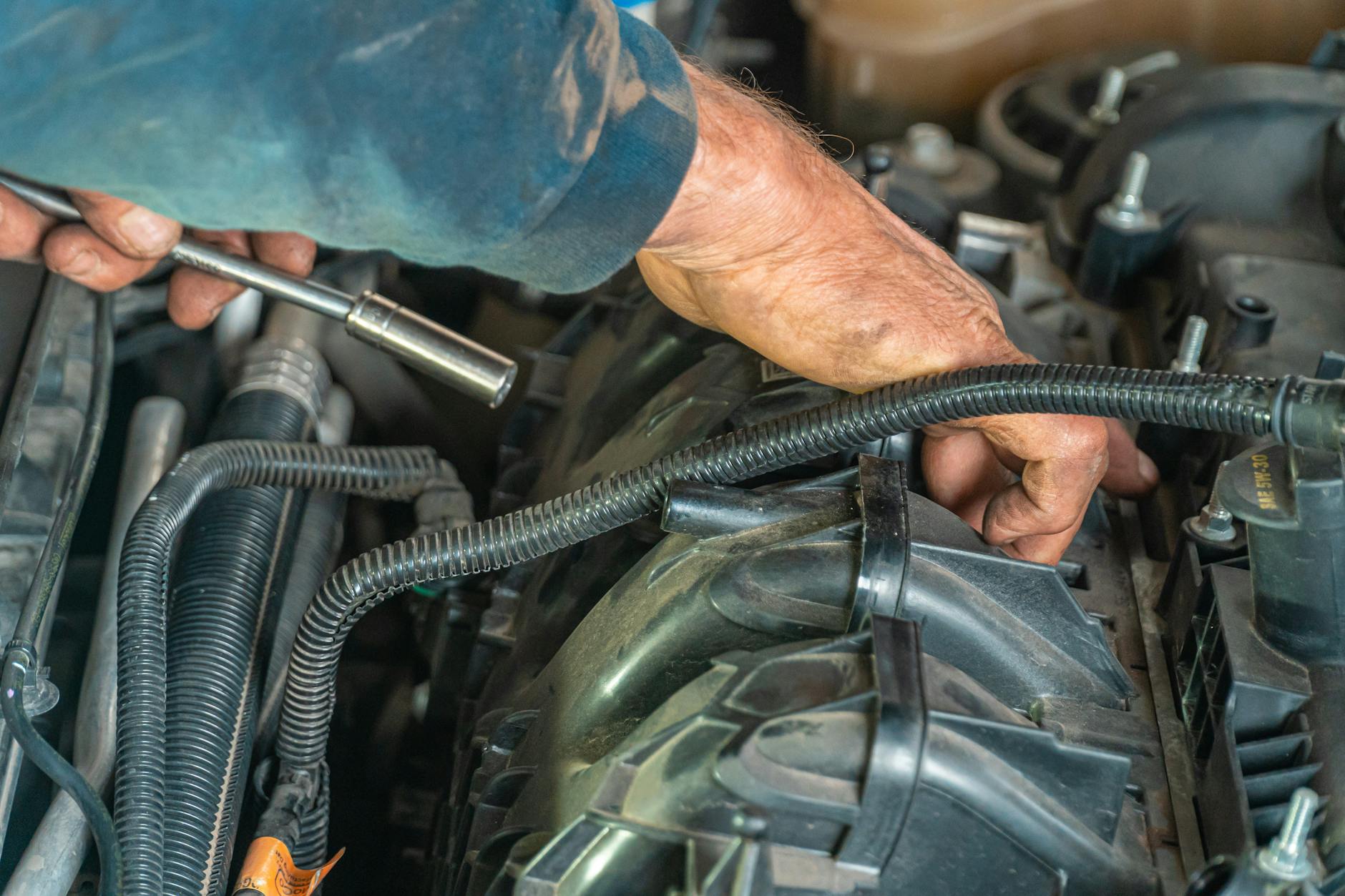
The single biggest driver of rising premiums is the cost of fixing cars after an accident. Vehicle repair costs increased more than 36 percent from 2021 to 2025, according to Freeway insurance and AgencyHeight. That is not because mechanics are suddenly charging more per hour on a whim — it is because the cars themselves have become dramatically more expensive to repair. A modern bumper is not just a piece of painted metal anymore. It houses parking sensors, cameras, radar modules for adaptive cruise control, and other advanced driver-assistance system components. A fender-bender that would have cost $800 to fix in 2015 can now easily run $3,000 or more when you factor in recalibrating all that technology. Replacement costs tell an even starker story.
According to Inszone Insurance, the cumulative increase in vehicle replacement costs over the past four years hit 45 percent — roughly three times faster than overall U.S. inflation of about 15 percent during the same period. When insurers pay out more on every claim, they raise premiums across the board to keep the math working. This is not a targeted penalty against you; it is the insurance pool adjusting to a new cost reality. Even if you personally never need a bumper replaced, you are paying into a system where every bumper replacement now costs significantly more than it used to. For frugal drivers trying to keep costs down, this dynamic is especially frustrating because there is no behavioral change that offsets it. You cannot drive more carefully to counteract the fact that a replacement headlight assembly for a 2024 Honda CR-V costs twice what it did for a 2018 model. The technology embedded in modern vehicles has fundamentally changed the economics of collision repair, and every policyholder shares that burden.
How Tariffs on Auto Parts Are Making Your Insurance More Expensive in 2026
Starting in 2025 and extending into 2026, new tariffs on imported goods have added another layer of cost pressure to car insurance. About 60 percent of auto replacement parts used in U.S. repair shops are imported from Mexico, Canada, and China, according to Insurify. That means the majority of the parts your mechanic installs after an accident are now subject to tariff surcharges that did not exist a few years ago. The projected impact is significant. Replacement part costs are expected to increase 15 to 25 percent due to these tariffs, directly inflating the cost of collision and comprehensive claims, per reporting from Insurify, CNBC, and Kiplinger.
If those higher costs pass through to claims payouts — which they almost certainly will — Insurify projects an additional 3 percentage-point increase in 2026 premiums, potentially pushing the national average from a 1 percent increase to a 4 percent increase. That may sound modest in percentage terms, but on a $2,700 annual policy, even a few extra percentage points translate to real money over time. However, there is a timing lag worth understanding. According to Wawanesa Insurance, tariff-driven increases typically take 12 to 18 months to show up in your premium at renewal. So if tariffs were imposed in mid-2025, you might not see the full effect until late 2026 or even early 2027. This delay can create a false sense of security — your renewal might look stable right now, only to spike later when the tariff costs finally work through the claims data. If you are shopping for a new policy, it is worth asking your agent whether the quoted rate already reflects anticipated tariff impacts or whether you should expect a correction at your next renewal.
How Natural Disasters Raise Everyone’s Rates — Even If You Live Nowhere Near the Damage
You might think that if you live in, say, suburban Ohio, the wildfires in Los Angeles should not affect your car insurance. But insurance does not work that way. In 2024, the United states experienced 28 separate billion-dollar weather disasters according to NOAA, with $117 billion in U.S. insured natural catastrophe losses reported by the Insurance Information Institute. The first half of 2025 was even worse on a global scale, with insured losses hitting $80 billion in just six months — the second-costliest first half on record, per Insurance Journal. The L.A. wildfires alone accounted for roughly $40 billion in insured losses.
Insurers spread catastrophe losses across all policyholders in affected regions, and increasingly across broader geographic pools. When a major insurer takes a $5 billion hit from wildfire claims in California, that loss does not stay neatly contained within California premiums. The company’s overall loss ratio worsens, reinsurance costs climb, and rate adjustments ripple outward. The year 2025 marked the sixth consecutive year with global insured losses topping $100 billion, according to Insurance Journal. That kind of sustained catastrophe spending forces structural premium increases industry-wide. For budget-conscious households, this is one of the most maddening dynamics in insurance pricing. You cannot control the weather, and you cannot opt out of subsidizing weather-related losses. The only practical lever you have is choosing an insurer with less exposure to catastrophe-prone regions, though even that offers limited insulation. If you live in a state that has been relatively spared by recent disasters, you may still benefit from shopping around — some regional insurers with lower catastrophe exposure may offer more stable pricing than national carriers absorbing billion-dollar loss years.

What Can You Actually Do to Lower Your Car Insurance Premium?
The most effective tool you have is your credit score, and most people do not realize how much it matters. According to Bankrate and NPR, a one-tier credit score improvement can reduce premiums by an average of 17 percent. Conversely, even a modest credit dip can raise your rate significantly — with zero claims on your record. Only four states — California, Hawaii, Massachusetts, and Michigan — ban credit-based insurance pricing. If you live anywhere else, your credit profile is quietly influencing what you pay every six months. The tradeoff here is real. Paying down a credit card balance or correcting an error on your credit report might save you more on car insurance in a single year than switching to a higher deductible would. A driver paying $2,800 annually who improves their credit tier could save roughly $475 a year — money that compounds over time and requires no reduction in coverage.
Compare that to raising your deductible from $500 to $1,000, which might save you $150 to $200 annually but leaves you exposed to a higher out-of-pocket cost if you do eventually file a claim. For someone on a tight budget, the credit score approach is almost always the better long-term play. Beyond credit, shop aggressively at every renewal. The era of loyalty discounts rewarding long-term customers is largely over. Get quotes from at least three carriers, and do not ignore regional or smaller insurers. Bundle home and auto if you can. Ask about discounts for low mileage, defensive driving courses, or paying your premium in full rather than monthly installments. None of these actions will eliminate the macro forces pushing rates up, but stacking several small advantages can meaningfully blunt the impact.
How Your ZIP Code and Driving Demographics Can Quietly Inflate Your Premium
Insurers price by ZIP code based on local accident rates, theft rates, weather exposure, and litigation trends, according to CarInsurance.com and U.S. News. If your neighborhood’s risk profile worsened — maybe a new highway interchange increased local accident frequency, or vehicle thefts spiked in your area — your rate rises regardless of your personal record. The four states with the biggest 2025 cost increases were New Jersey, Washington D.C., Rhode Island, and Michigan, per Insurify, and those states also carried some of the highest premiums nationwide. Living in an expensive insurance state compounds every other factor working against you. There is also the matter of demographic-based pricing that catches people off guard. Insurers are increasingly shifting from broad rate hikes to targeted risk-based pricing, according to The Zebra.
Drivers with a DUI saw a 35 percent increase in 2026 projections. Teen drivers saw 17 percent increases. But even something as mundane as aging into a new demographic bracket — turning 25 and losing the “young driver” surcharge, or turning 65 and entering a higher-risk age group — can trigger a rate adjustment. The warning here is that these bracket shifts are not always communicated clearly. You might assume your rate dropped because you aged out of one category, only to find it climbed because other risk factors in your profile or ZIP code changed simultaneously. If you have recently moved, even across town, request a re-quote. A different ZIP code — sometimes just a few miles away — can produce a meaningfully different premium. This is one of the few areas where a small logistical change in your life can translate directly into savings.

Vehicle Theft Is Declining but Still Costing You Money
Vehicle thefts fell 17 percent in 2024, dropping below one million for the first time since 2021, and declined another 23 percent in the first half of 2025 — the largest annual decrease in 40 years, according to the National Insurance Crime Bureau. That sounds like good news, and it is. But theft levels remain elevated compared to pre-pandemic norms, and the financial damage from stolen vehicles continues to weigh on premiums. The impact is not evenly distributed.
Drivers of the five most-stolen vehicle models pay 14 percent more for full coverage, per Insurify. Some insurers have gone further — outright refusing to cover 2011 to 2021 Kia and Hyundai models due to their well-documented theft vulnerability involving a lack of engine immobilizer technology. If you own one of these vehicles, you may face not just higher premiums but difficulty finding coverage at all. Average used car prices in 2025 were still roughly 23 percent higher than in 2019, according to Freeway Insurance, which means every total-loss theft claim pays out more than it would have a few years ago. That elevated payout cost gets distributed across the entire policyholder base.
Where Car Insurance Rates Are Headed in 2026 and Beyond
After two brutal years of double-digit increases — roughly 15 percent in 2023 and 10 percent in 2024, per the Insurance Information Institute — the pace of rate hikes has moderated. Premiums rose about 7 percent in 2025, and Insurify projects a 1 to 4 percent increase in 2026 depending on how tariff costs materialize. A 6 percent national drop in 2025 offered a brief reprieve, but the structural forces pushing costs upward — technology-laden vehicles, climate-driven catastrophe losses, and global supply chain pressures on parts — are not going away. The shift toward more granular, targeted risk-based pricing may actually benefit careful, claim-free drivers in the medium term.
As insurers get better at segmenting risk, the broad rate hikes that punish everyone equally should give way to more differentiated pricing. If you maintain good credit, drive a vehicle that is not on the most-stolen list, live in a relatively low-risk ZIP code, and continue your claim-free streak, you are positioning yourself on the favorable side of that segmentation. The rates may still go up, but ideally by less than the headline averages. The key is staying proactive — review every renewal, shop competitors, and understand that the number on your bill reflects a complicated web of factors, most of which have nothing to do with how well you drive.
Conclusion
Your car insurance premium is not a report card on your driving. It is a reflection of a vast, interconnected system where repair costs, tariffs, natural disasters, theft trends, vehicle values, credit scores, ZIP code risk profiles, and demographic pricing all converge into a single number on your bill. The 46 percent increase from 2022 to 2024 was not caused by everyone suddenly becoming worse drivers — it was caused by the cost of insuring vehicles becoming dramatically more expensive across every dimension that matters to an actuary. The practical takeaway for anyone managing a household budget is to treat car insurance as an active line item, not a set-it-and-forget-it expense.
Check your credit report before your renewal. Get competing quotes every six months. Ask about every discount you might qualify for. Understand that your ZIP code and vehicle choice are silently shaping your premium. And accept that some portion of the increase is genuinely beyond your control — but the portion you can influence is larger than most people realize.
Frequently Asked Questions
Can I negotiate my car insurance rate directly with my insurer?
Not in the traditional haggling sense, but you can call your insurer before renewal and ask them to review your policy for available discounts, adjust your coverage levels, or apply any credits you may qualify for. Mentioning competitive quotes from other carriers sometimes prompts retention offers.
Does a clean driving record guarantee my rate will not increase?
No. A clean record helps keep your individual risk score low, but your premium also reflects pool-wide costs like catastrophe losses, repair inflation, and regional risk changes. You can do everything right and still see a 5 to 10 percent increase in a bad year for the industry.
How much can my credit score really affect my car insurance premium?
Significantly. A one-tier improvement in credit score can lower your premium by an average of 17 percent, according to Bankrate. In most states, credit-based insurance scoring is legal and widely used. Only California, Hawaii, Massachusetts, and Michigan prohibit it.
Will tariffs on auto parts affect my insurance even if I drive a domestic vehicle?
Yes. Even domestically assembled vehicles use imported components, and repair shops source about 60 percent of replacement parts from Mexico, Canada, and China. Tariff-driven cost increases of 15 to 25 percent on parts will flow through to claims costs regardless of where your car was built.
Should I switch insurers every year to get the best rate?
Shopping around is one of the most effective ways to save, but switching is not always necessary. Sometimes your current insurer will match or beat a competitor’s quote if you ask. The important thing is to check at every renewal rather than auto-renewing without comparing options.