
Every time you walk into a grocery store, you are navigating a carefully engineered environment designed to separate you from your money. Between impulse purchases, strategically placed premium brands, shrinkflation, and psychological pricing tricks, the average American household loses roughly $500 or more per year without ever noticing a single extra charge on their receipt. The average household already spends $6,224 annually on groceries according to the Bureau of Labor Statistics, and with the USDA projecting another 2.3 to 2.5 percent price increase in 2026, that number is only climbing. The tricks outlined here are not theoretical. They are deployed in every major chain, backed by decades of consumer psychology research, and they work precisely because most shoppers never think to question them.
This article breaks down eight specific tactics grocery stores use to inflate your spending, from the layout of the aisles to the numbers on the price tags to the emerging use of artificial intelligence to charge different customers different prices for the same box of cereal. More importantly, each section includes concrete steps you can take to fight back. Some of these fixes are as simple as looking at a different shelf. Others require a small shift in how you plan your weekly shopping trip. None of them require couponing for hours or giving up the foods you actually want to eat.
Table of Contents
- How Do Grocery Stores Trick You Into Spending $500 More Per Year?
- Why Eye-Level Shelf Placement Is the Most Expensive Trick You Never Notice
- How Shrinkflation Quietly Steals From Your Pantry
- Practical Ways to Beat Impulse Buys and Store Layout Tricks
- Charm Pricing, BOGO Deals, and the Psychology of Fake Savings
- How AI-Powered Dynamic Pricing Is Changing What You Pay
- What Grocery Shopping Will Look Like as These Tricks Evolve
- Conclusion
- Frequently Asked Questions
How Do Grocery Stores Trick You Into Spending $500 More Per Year?
The short answer is that they attack on multiple fronts simultaneously, and no single trick accounts for the full $500. It is the accumulation of small overcharges and unnecessary purchases that adds up. Impulse buying alone is staggering in scale. Americans spend an average of $314 per month on spontaneous purchases across all categories, and food and groceries account for 70 percent of impulse purchases made in physical stores. Impulse purchases make up as much as 62 percent of all supermarket sales, and in some product categories, that figure reaches 80 percent. When nearly two-thirds of what ends up in your cart was not on your list, the math gets ugly fast. The remaining tricks are subtler. Eye-level product placement steers you toward items priced 20 to 30 percent higher than comparable alternatives sitting just one shelf lower.
Shrinkflation means you are paying the same price for 14.8 percent less product on average. Charm pricing, where everything ends in .99, exploits a cognitive bias that makes $4.99 feel meaningfully cheaper than $5.00 even though the difference is a single penny. Each of these tactics shaves a few dollars here and there, but across 52 weeks of shopping, a household easily crosses the $500 threshold. For families buying 20 or more shrinkflation-affected products monthly, the losses climb considerably higher. The compounding effect is what makes these tricks so effective. You do not notice any single instance because each one feels insignificant in isolation. Grabbing a $3.49 candy bar at checkout, choosing the name brand pasta at eye level instead of the store brand two shelves down, buying four yogurts on a buy-one-get-one deal when you only needed one. Each decision costs you a dollar or two. Multiply that by three or four times per shopping trip, 50-plus trips per year, and the total lands squarely in the hundreds.
Why Eye-Level Shelf Placement Is the Most Expensive Trick You Never Notice
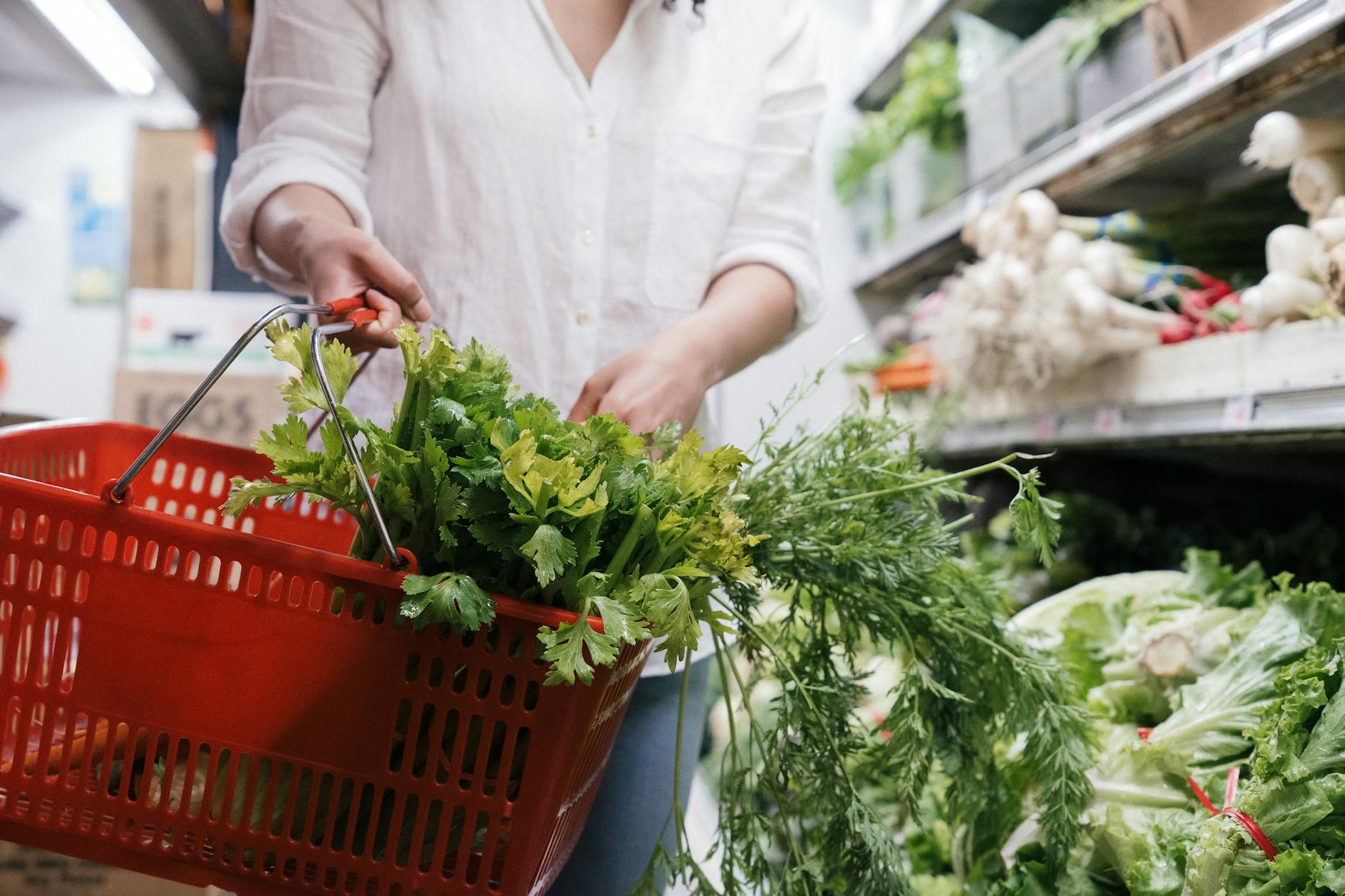
Walk into any grocery store and look straight ahead. The products at your natural line of sight, roughly 1.5 to 1.7 meters from the floor, are almost certainly the most expensive options in that category. This is not a coincidence. Brands pay millions of dollars for this prime shelf real estate, and those costs get passed directly to you through higher retail prices. Products placed at eye level are typically priced 20 to 30 percent more than comparable items stashed on the bottom shelf or above your head. The fix sounds almost too simple: look down. Store brands and generic equivalents are almost always placed on the lowest shelves, where manufacturers do not pay placement premiums. The quality difference is often negligible because many store-brand products are manufactured in the same facilities as the name brands.
According to industry analyses, switching to store-brand equivalents for just three dinners a week could save a family of four more than $500 per year on its own. That single habit change, reaching for the lower shelf instead of the eye-level shelf, can offset the entire cost of every other trick on this list. However, this does not apply universally. Some categories, like infant formula or specific dietary products, have meaningful formulation differences between brands. And in certain stores, the house brand is placed at eye level precisely because it carries the highest margin for the retailer. The principle still holds: compare unit prices rather than trusting whatever is easiest to grab. Most grocery stores are required to display unit pricing on shelf tags. Use it. The few seconds it takes to compare cost per ounce will save you more over a year than almost any coupon strategy.
How Shrinkflation Quietly Steals From Your Pantry
Shrinkflation is the practice of reducing a product’s size or quantity while keeping the price the same or even raising it. It has accelerated dramatically in recent years, and consumers have noticed. Seventy-five percent of Americans say they have spotted shrinkflation at their grocery store. Among selected national grocery brands analyzed in 2025, the average reduction was 14.8 percent less product for the same price. Some brands have been far more aggressive. One cupcake brand shrank its package by 36.7 percent, dropping from 12.7 ounces to 9.26 ounces. A powdered drink mix cut its packet count in half, going from six packets to four. For a practical example of what this means for a household budget, consider a family that regularly buys 20 products affected by shrinkflation each month. That family is receiving 8 to 12 percent less product volume for the same total cost.
Spread over a year, they are effectively paying full price for roughly 10 to 11 months of product while receiving only about 9 to 10 months worth. The missing product has to be replaced eventually, meaning additional trips and additional spending. Consumer backlash has been significant. According to a U.S. Government Accountability Office report, 48 percent of shoppers have abandoned a brand entirely because of shrinkflation. The challenge with shrinkflation is that it is genuinely difficult to track in real time. You are unlikely to notice that your orange juice went from 52 ounces to 46 ounces unless you happen to remember the old size. The best defense is to shop by unit price rather than package price. If the shelf tag shows a unit price of $0.08 per ounce on one brand and $0.06 per ounce on another, that difference is real and measurable regardless of how the packaging has changed. Some shoppers have started photographing shelf tags to compare over time, which may sound excessive until you realize the alternative is absorbing a 15 percent stealth price hike without complaint.

Practical Ways to Beat Impulse Buys and Store Layout Tricks
Grocery stores place staples like milk, bread, and eggs at the back of the store for one reason: to force you to walk past as many aisles of higher-margin products as possible. Grocery store profit margins on staples are razor-thin, often just 1 to 3 percent, so the real money comes from the impulse items you grab along the way. This layout is not accidental. It is specifically engineered to capture impulse revenue from shoppers who walked in planning to buy three items and leave. Thirty-two percent of shoppers now shop with only a loose idea or no plan at all, which is exactly the behavior stores are banking on. The most effective countermeasure is a written list, and it needs to be specific. Not “snacks” but “one bag of pretzels, store brand, 16 oz.” A 2023 Slickdeals survey found that 36 percent of Americans say the majority of their purchases are unplanned.
A specific list eliminates the browse-and-grab pattern that stores depend on. The tradeoff is that rigid list shopping can occasionally mean missing a genuinely good deal or passing up a seasonal item you would have enjoyed. The compromise is to allow yourself one or two unplanned items per trip with a hard dollar cap, say $5 total, so you retain some flexibility without opening the floodgates. Checkout aisles deserve special mention. The candy, magazines, gum, and small gadgets placed at the register are the final impulse trap, positioned precisely where you are standing idle with nothing to do but look at products. Combined with the 62 percent impulse purchase rate in supermarkets, this last-minute gauntlet adds meaningfully to the total bill. If you shop with kids, this zone becomes even more costly. Using self-checkout or a delivery service eliminates this particular pressure point entirely, though delivery services carry their own fees and markups that can offset the savings if you are not careful.
Charm Pricing, BOGO Deals, and the Psychology of Fake Savings
Charm pricing, the practice of ending prices at .99, is one of the oldest tricks in retail and it still works remarkably well. Research shows that prices ending in .99 increase sales by an average of 24 percent compared to rounded price points. The mechanism is called left digit bias. Your brain processes $1.99 as being closer to $1 than to $2, even though the actual difference from the round number is a single cent. Across an entire cart of 30 to 50 items, this bias adds up. You are consistently underestimating what you are spending because every price looks slightly cheaper than it is. Buy-one-get-one and multi-buy promotions present a different kind of trap.
These deals convince you to buy multiples of an item when you originally planned to buy one. The math seems favorable, but the store is not losing money on these promotions. They are carefully structured to minimize margin impact while increasing your total basket size. If you buy two boxes of crackers on a BOGO deal when you only needed one, you have spent more total dollars even though the per-unit price dropped. The only scenario where BOGO genuinely saves you money is when you were already planning to buy that exact quantity of that exact product and the deal happens to coincide with your need. For perishable items, the extra unit often goes to waste, which means you paid full price for one item and threw the other away. The limitation here is obvious: BOGO works for non-perishable staples you will definitely use. It almost never works for fresh produce, dairy, or bakery items unless your household is large enough to consume the extra volume before it spoils.

How AI-Powered Dynamic Pricing Is Changing What You Pay
A newer and more troubling development is the rise of AI-powered dynamic and personalized pricing. A Consumer Reports investigation found that Instacart has been running AI-enabled pricing experiments that charge different customers up to 23 percent different prices for identical products based on their shopping profiles. In brick-and-mortar stores, the infrastructure for this is arriving quickly. Walmart plans to install digital shelf labels in 2,300 stores by 2026, and Kroger already has them in 500 stores. These electronic tags can change prices in real time, opening the door to demand-based pricing similar to what airlines and ride-sharing apps already use.
Loyalty card data is central to this shift. Every purchase you make with a store loyalty card feeds a profile that retailers can use to adjust pricing. Frequent shoppers, who are less likely to comparison shop, may face higher prices than occasional buyers. The legislative response is still catching up. Bills have been introduced in at least eight states in 2026, including Arizona, Florida, Hawaii, Maryland, Nebraska, New York, Tennessee, and Washington, that would restrict personalized pricing, though most proposed laws exempt loyalty program discounts. For now, the best defense is to compare prices across multiple stores and be skeptical of “personalized deals” that may be calibrated to your maximum willingness to pay rather than your actual benefit.
What Grocery Shopping Will Look Like as These Tricks Evolve
The trajectory is clear: grocery stores are getting more sophisticated, not less. Digital shelf labels will make real-time price adjustments seamless and invisible. AI will continue refining personalized pricing models to extract maximum revenue from each individual shopper. Shrinkflation will persist as long as consumers respond more negatively to visible price increases than to invisible quantity decreases.
The stores are not going to stop because these tactics work. The counterweight is consumer awareness and regulatory pressure. The state-level bills targeting dynamic pricing, the 48 percent brand abandonment rate triggered by shrinkflation, and the growing market for price-comparison apps all suggest that shoppers are pushing back. The households that will fare best in this environment are the ones that treat grocery shopping less like a casual errand and more like a financial decision: list in hand, unit prices compared, and a healthy skepticism toward any deal that seems too good to question.
Conclusion
These eight grocery store tricks, impulse buying traps, eye-level premium placement, shrinkflation, loss leader store layouts, charm pricing, BOGO promotions, AI-powered dynamic pricing, and checkout aisle impulse zones, collectively drain $500 or more per year from the average household. None of them involve raising a visible price tag. Instead, they work by manipulating your attention, your perception of value, and increasingly your individual purchase data to extract money you never consciously decided to spend. The fixes are not complicated. Shop with a specific list.
Compare unit prices instead of package prices. Look at the bottom shelf before grabbing what is at eye level. Be skeptical of multi-buy deals for items you did not plan to purchase. Monitor your grocery spending monthly to catch creeping increases. None of this requires extreme couponing or sacrificing the foods you enjoy. It requires paying attention, which is the one thing every grocery store in America is specifically designed to prevent you from doing.
Frequently Asked Questions
How much does the average American household spend on groceries per year?
According to the Bureau of Labor Statistics Consumer Expenditure Survey for 2024, the average American household spends $6,224 per year on groceries, which works out to roughly $519 per month. With the USDA projecting grocery prices to rise another 2.3 to 2.5 percent in 2026, that figure will continue climbing.
What is shrinkflation and how much product are consumers losing?
Shrinkflation is when manufacturers reduce the size or quantity of a product while keeping the price the same. Among selected national grocery brands analyzed in 2025, the average reduction was 14.8 percent less product. Some brands have been far more extreme, with one cupcake brand shrinking its package by 36.7 percent and a powdered drink mix cutting its count from six packets to four.
Can grocery stores really charge different customers different prices?
Yes, and it is already happening. A Consumer Reports investigation found that Instacart ran AI-enabled pricing experiments charging different customers up to 23 percent different prices for identical products. With Walmart installing digital shelf labels in 2,300 stores and Kroger already using them in 500 locations, real-time price adjustments are coming to physical stores as well.
How much can I save by switching to store brands?
Switching to store-brand equivalents for just three dinners per week could save a family of four more than $500 per year. Eye-level name brand products are typically priced 20 to 30 percent higher than comparable store brands placed on lower shelves.
Do BOGO deals actually save money?
Only if you were already planning to buy that quantity of that specific product. Buy-one-get-one deals are designed to increase your total basket size, not reduce your spending. For perishable items especially, the extra unit often goes to waste, meaning you effectively paid full price for one item and got nothing from the second.
Are there any laws against personalized grocery pricing?
Legislation is emerging but still limited. As of 2026, bills have been introduced in at least eight states including Arizona, Florida, Hawaii, Maryland, Nebraska, New York, Tennessee, and Washington that would restrict personalized pricing practices, though most proposed laws exempt traditional loyalty program discounts.