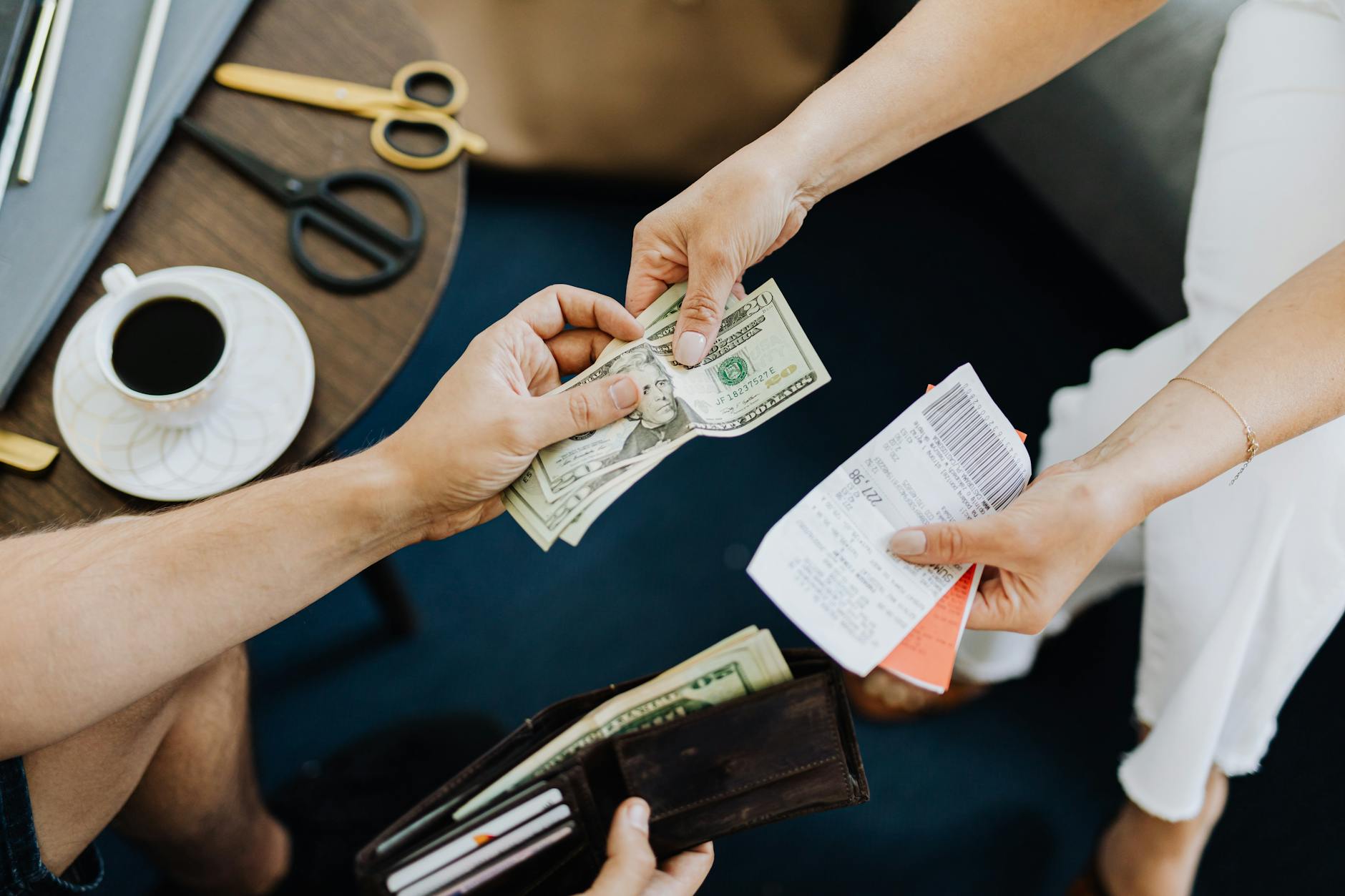

Yes, there are legitimate apps that will pay you real money just for scanning the grocery receipts you already have sitting in your wallet or crumpled at the bottom of a shopping bag. The biggest names — Fetch Rewards, Ibotta, Receipt Hog, CoinOut, and ReceiptPal — each work slightly differently, but the core idea is the same: you snap a photo of your receipt, and the app gives you points or cash in return. Used casually on their own, most of these apps pay roughly five to fifteen dollars a month. But here is where it gets more interesting: because several of these apps track different data and do not conflict with each other, you can scan the same receipt across multiple platforms.
An independent six-month test found that stacking just three apps — Rakuten, Ibotta, and Fetch — earned a combined $259 without any extreme couponing or special effort. The catch, of course, is that no single app is going to replace a paycheck. The realistic annual range for a consistent user scanning every receipt across two or three apps is somewhere between $50 and $150 per year. That is not life-changing money, but it is money you are currently leaving on the table for purchases you are making anyway. This article breaks down exactly how each major app works, what they actually pay based on verified data, which ones you can stack together, and the specific pitfalls that cause most people to earn less than they should.
Table of Contents
- How Do Receipt Scanning Apps Actually Pay You for Grocery Receipts?
- What Each Major App Pays and Where the Fine Print Bites
- The Smaller Apps That Round Out a Receipt Stacking Strategy
- How to Stack Multiple Apps on Every Receipt Without Conflicts
- Why Most People Earn Less Than Expected and How Habits Fall Apart
- Who Actually Benefits Most From Receipt Scanning Apps
- Where Receipt Scanning Apps Are Headed
- Conclusion
- Frequently Asked Questions
How Do Receipt Scanning Apps Actually Pay You for Grocery Receipts?
These apps make money by collecting consumer purchase data — what you buy, where you buy it, and how often. Brands and retailers pay for this aggregated, anonymized data to understand shopping patterns. Some apps, like Fetch Rewards, keep the model simple: scan any receipt from any store, earn a base of 25 points per receipt, and collect bonus points when you happen to buy from one of their 300-plus partner brands. There is no need to activate offers or plan your shopping list around the app. Others, like Ibotta, work differently.
Ibotta requires you to activate specific cashback offers before you shop, meaning the rewards are tied to particular brand-and-product combinations rather than the receipt itself. The distinction matters more than most people realize. Fetch’s no-activation model means you will earn something on every single receipt with zero planning. Ibotta’s model means you earn nothing if you forget to check the app beforehand, but the per-item payouts tend to be significantly higher when you do activate offers. In a six-month head-to-head comparison, Ibotta earned $89 compared to Fetch’s $43 — roughly double — but that gap required the tester to actually engage with the app before each shopping trip. If you are the kind of person who will not remember to activate offers, Fetch’s passive approach will likely net you more in the long run simply because you will actually use it.
What Each Major App Pays and Where the Fine Print Bites
Fetch Rewards operates on a points system where 1,000 points equals approximately one dollar. The minimum cashout is 3,000 points, or three dollars, but redemption is limited to gift cards only — there is no PayPal or direct bank deposit option. Casual users typically earn five to fifteen dollars per month, and a documented six-month independent test yielded $43, which works out to about seven dollars monthly. One critical detail: your points expire after 90 days of inactivity. If you stop scanning receipts, stop playing in-app games, and stop redeeming for 90 days straight, your balance disappears. Ibotta has paid out over $1.8 billion in total cashback rewards and has 50 million registered users. The company says users who engage monthly earn over $130 per year, and power users who combine Ibotta with store loyalty programs report earning $50 to $100 or more per month.
Unlike Fetch, Ibotta lets you cash out via bank deposit, PayPal, or gift cards, which is meaningfully more flexible. However, Ibotta’s offer-activation requirement is a real friction point. If you are shopping at a store with few active Ibotta offers, you might scan the receipt and earn nothing, which is a frustrating experience that Fetch’s model avoids entirely. Amazon Shopper Panel takes a different approach as an invite-only program where you upload receipts from non-Amazon purchases. It previously paid a clean one dollar per receipt up to ten per month, but as of May 31, 2025, the pay structure shifted to $0.70 for some stores and just $0.10 for others. You can still earn up to $10 per month, or $120 per year at maximum, plus additional rewards from surveys and ad verification tasks. The program is available in the US, UK, Canada, Germany, France, Spain, and Japan, but you must be 18 or older and either receive an invitation or join the waitlist.
The Smaller Apps That Round Out a Receipt Stacking Strategy
Receipt Hog lets you scan any receipt and includes a slot machine bonus game for extra coins, which adds a gambling-lite element that either motivates or annoys depending on your personality. The realistic earning expectation is about $25 per year with steady, active use. You can cash out coins via PayPal or Amazon gift cards. That $25 per year sounds underwhelming on its own, but Receipt Hog’s value is not as a standalone app — it is as an additional layer on a receipt you are already scanning into Fetch or Ibotta. CoinOut similarly accepts any receipt from any store for any product with no brand restrictions. Each coin earned equals $0.001, and active users earn up to approximately three dollars per month, or $36 per year. ReceiptPal follows the same scan-anything model with each receipt worth roughly six cents, translating to $10 to $25 per year depending on how frequently you shop.
None of these apps will impress you individually. But consider the math when stacked: if you are already scanning a receipt into Fetch (your primary earner), adding Receipt Hog, CoinOut, and ReceiptPal takes maybe 90 extra seconds and collectively adds another $70 to $85 per year. That is real money for very little incremental effort. The one app that outperformed everything in independent testing was Rakuten, which earned $127 over six months — the highest of 15 cashback apps tested. Rakuten is primarily an online cashback portal, but it also offers in-store cashback through linked cards. The company has paid out over $3.7 billion to members since its founding in 1997. The limitation is that Rakuten is not a receipt scanning app in the traditional sense, so it complements rather than competes with the others.

How to Stack Multiple Apps on Every Receipt Without Conflicts
The key insight that separates people earning five dollars a month from those earning thirty to fifty dollars is stacking. Fetch Rewards, Receipt Hog, CoinOut, and ReceiptPal all accept the same receipt because they are tracking different data points and operating under different business models. Scanning your grocery receipt into all four does not violate any terms of service and does not reduce your earnings on any individual platform. Ibotta sits in a slightly different category because its rewards are offer-based rather than receipt-based, but it still does not conflict with scanning the same receipt elsewhere. A practical stacking order might look like this: activate any relevant Ibotta offers before you shop, then after checkout, scan the receipt into Ibotta first since it has the strictest requirements for receipt clarity and timeliness.
Next scan into Fetch Rewards, then Receipt Hog, then CoinOut or ReceiptPal. The whole process takes two to three minutes per shopping trip. If you also use Rakuten for linked-card in-store deals or online grocery orders, that operates entirely in the background with no receipt scanning required. The tradeoff is obvious — you are spending a few minutes per shopping trip managing multiple apps and keeping them updated. Some people find this perfectly reasonable for an extra $30 to $50 per month. Others would rather just use Fetch and call it done for $7 per month with 30 seconds of effort.
Why Most People Earn Less Than Expected and How Habits Fall Apart
The single biggest reason people underperform on receipt scanning apps is inconsistency. Points expiring after 90 days of inactivity on Fetch Rewards is not a hypothetical risk — it is the primary way the company manages its liability. You go on vacation, get busy at work, forget to scan for three months, and your accumulated balance vanishes. Ibotta has a similar problem in reverse: users download the app, forget to activate offers before shopping a few times, earn nothing on those trips, and conclude the app does not work. The apps are designed with enough friction to ensure a large percentage of users eventually lapse. There is also an expectations problem. People read headlines about earning hundreds of dollars and assume that is the passive, do-nothing baseline.
It is not. Ibotta’s figure of $130 per year for monthly users is an average that includes power users who are strategically combining app offers with store loyalty programs and manufacturer coupons. The median casual user earns considerably less. If you download one app, scan receipts when you remember, and check in every couple of weeks, five dollars a month is a realistic expectation. Getting to the $30 to $50 per month range requires genuine consistency across multiple platforms, and most people simply do not maintain that discipline past the first few weeks. Another limitation worth noting: most of these apps are heavily skewed toward grocery and retail receipts. Restaurant receipts, online order confirmations, and service invoices often earn nothing or substantially reduced rewards depending on the platform. If you do most of your spending at restaurants and on subscription services, receipt scanning apps will disappoint you.
Who Actually Benefits Most From Receipt Scanning Apps
The demographics of Ibotta’s user base reveal who finds these apps most worthwhile: 72.38 percent of Ibotta’s users are female, and 56 percent fall in the 25 to 54 age range. This skews heavily toward people doing regular household grocery shopping — buying for families, shopping weekly or more, and generating a steady stream of receipts. A single person buying groceries once a week at one store will earn modestly.
A household running two or three grocery and household shopping trips per week across different stores generates three times the receipt volume and correspondingly higher earnings. The Amazon Shopper Panel is particularly interesting for people who already shop at a variety of brick-and-mortar stores, since the program specifically wants receipts from non-Amazon purchases. If you are already an Amazon-centric shopper who rarely sets foot in physical stores, the program offers less value. It is available across seven countries but remains invite-only, so it functions more as a bonus if you get in rather than a strategy you can count on.
Where Receipt Scanning Apps Are Headed
The receipt scanning app market has matured considerably. Ibotta went public and reported $367.3 million in total revenue for 2024, a 15 percent year-over-year increase, with redemption revenue specifically growing 27 percent to $308.8 million. The company now reaches 91 percent of US households through its various partnerships and integrations, with over 200 million consumers having engaged with the platform. This is no longer a niche corner of the app store — it is a legitimate segment of the retail advertising ecosystem.
The trend is toward tighter integration with retailer loyalty programs rather than standalone receipt scanning. Ibotta’s browser extension and card-linked offers are already reducing the need to manually photograph receipts. Fetch has moved in a similar direction with digital receipt connections. For consumers, this likely means less manual work over time but also potentially less ability to stack apps if platforms negotiate exclusivity with retailers. The window for earning from multiple apps on the same receipt is open now, but it may not stay that way indefinitely.
Conclusion
Receipt scanning apps are not a hustle, a side gig, or a path to meaningful income. They are a small, legitimate way to recover some value from purchases you are already making. The math is straightforward: one app used casually yields roughly five to fifteen dollars per month, while stacking two or three apps on every receipt with genuine consistency can push annual earnings into the $50 to $150 range. An independent six-month test confirmed this, with Rakuten earning $127, Ibotta $89, and Fetch $43 when used side by side.
The practical next step is to start with one or two apps rather than all of them at once. Fetch Rewards is the lowest-friction starting point because it requires no pre-shopping activation and pays you something for every receipt. Add Ibotta if you are willing to check offers before each trip, and layer in Receipt Hog or CoinOut for marginal extra earnings with minimal additional effort. Set a weekly reminder to scan your receipts if you tend to forget, and remember that the 90-day inactivity expiration on Fetch points is the most common way people lose what they have earned. The money is small but it is real, and the only cost is a few minutes of your time each week.
Frequently Asked Questions
Can I really scan the same receipt into multiple apps?
Yes. Fetch Rewards, Receipt Hog, CoinOut, and ReceiptPal all accept the same physical receipt because they track different data and operate under separate business models. Scanning one receipt across multiple platforms does not violate terms of service on any of them.
How much can I realistically earn per month from receipt scanning apps?
Using a single app casually, expect roughly $5 to $15 per month. Stacking multiple apps on every receipt with consistent use can yield $30 to $50 per month, though most people settle somewhere in between depending on how many receipts they generate and how disciplined they are about scanning.
Do Fetch Rewards points expire?
Yes. Fetch points expire after 90 days of inactivity, meaning no receipt scans, no in-app games, and no redemptions for a full 90-day period. Any activity within that window resets the clock.
Is Ibotta free to use?
Yes, Ibotta is free. It makes money from brand advertising and data partnerships, not from user fees. However, it does require you to activate cashback offers before shopping, which means you need to engage with the app ahead of each store visit to earn rewards.
How do I get into the Amazon Shopper Panel?
The Amazon Shopper Panel is invite-only. If you have not received an invitation, you can join the waitlist through the Amazon Shopper Panel app. The program is available in the US, UK, Canada, Germany, France, Spain, and Japan, and you must be at least 18 years old.
Are receipt scanning apps worth the time?
That depends on your threshold. If spending two to three minutes after each shopping trip scanning a receipt into a couple of apps feels reasonable for an extra $50 to $150 per year, then yes. If that sounds tedious for that amount of money, a single low-friction app like Fetch — which takes about 30 seconds per receipt — might be the better fit.