
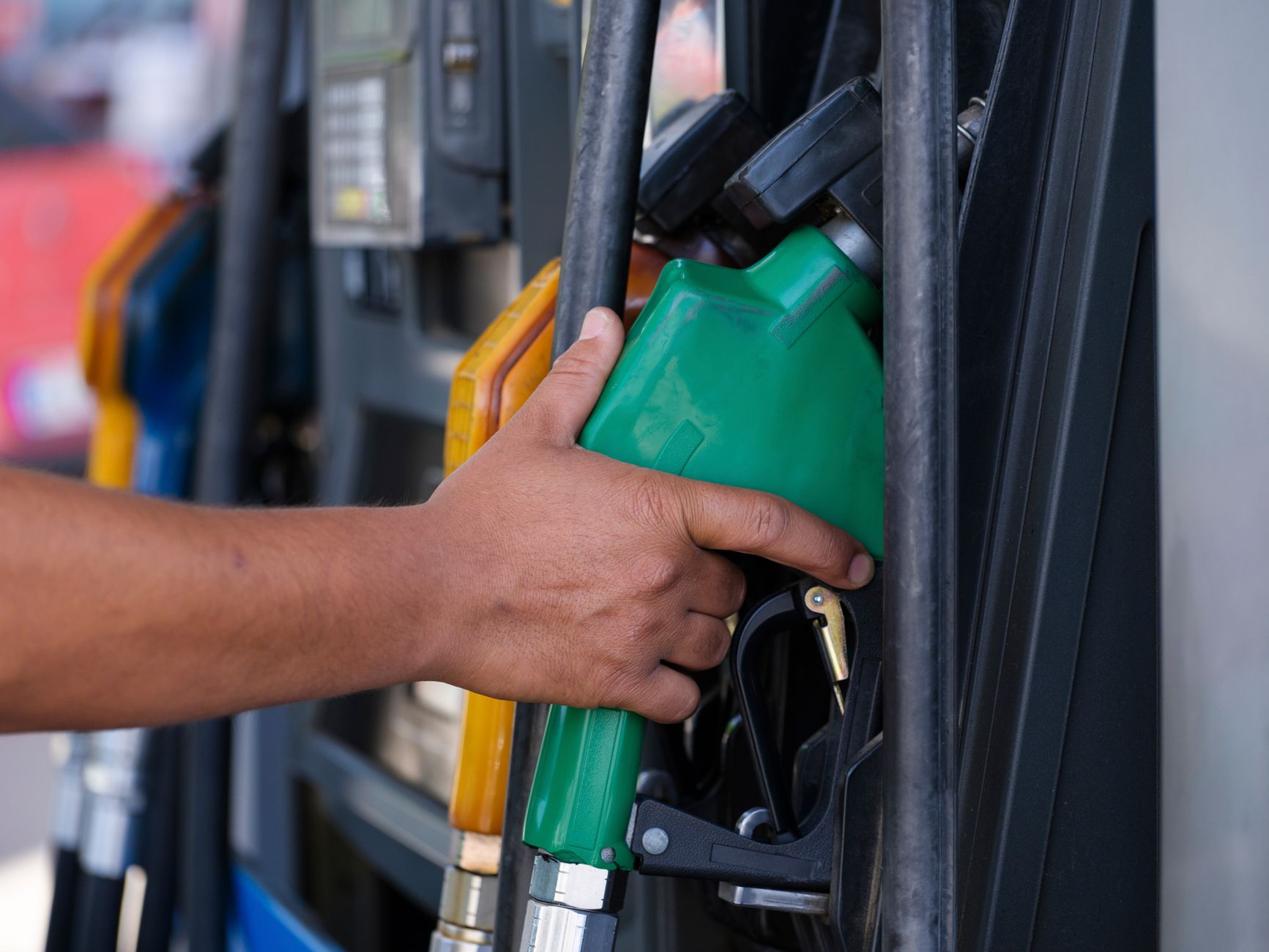

Diesel averaged $6.2787 a gallon nationwide on October 13, according to AAA, just below the all-time record of $6.5276 it set on Sept. 22. If you drive a diesel pickup, van or work truck, the best ways to save money on diesel right now are the ones you control yourself: how you drive, how long you idle, how you maintain the vehicle and where you buy.
Where it stands: The Energy Information Administration (EIA) forecast on October 6 that retail diesel prices “will remain above $6/gal in October” before easing gradually. On October 13, GasBuddy’s Patrick De Haan wrote on X that “$6/gal diesel may be here to stay for now,” NBC News reported, as diesel futures rose 5% by midday.
The tips below come from federal sources, mainly fueleconomy.gov, run by the Department of Energy and the EPA. We give their percentages rather than dollar figures, because the government prices its savings in gasoline, not diesel. It also warns that its speed estimates, built mostly on tests of gasoline vehicles, “will likely be less accurate for diesels.” Treat the numbers as a guide, not a promise.
Why diesel costs so much right now
Short version: the war with Iran, Iran’s near-shutdown of Hormuz shipping and lost diesel exports from the Gulf and Russia have squeezed supply, and diesel has carried a premium over gasoline since 2004 for reasons of tax, refining cost and demand. Our explainer on why diesel is more expensive than gas walks through each piece.
Do not plan your budget around the Russian diesel deal announced on October 9. Neil Atkinson, once in charge of oil industry and markets work at the International Energy Agency, said in an Al Jazeera interview that the promised volumes “don’t really move the needle very much” on prices, since daily U.S. diesel use runs about 3.7 million barrels.
How to save money on diesel behind the wheel
Driving habits are free to change and carry the biggest numbers in the federal guidance.
| Habit | Effect on mileage, per fueleconomy.gov |
|---|---|
| Aggressive driving (speeding, hard acceleration and braking) | 15% to 30% worse on the highway; 10% to 40% worse in stop-and-go |
| Driving above 50 mph | Mileage usually drops rapidly |
| Idling | Burns a quarter to a half gallon per hour |
| Extra 100 pounds of cargo | About 1% lower MPG |
| Large roof-top cargo box | 6% to 17% lower on the highway |
| Under-inflated tires | About 0.2% lower for every 1 psi drop |
Smooth it out. Gentle starts and early braking carry the largest percentages in the federal guidance. Those ranges come mostly from gasoline-vehicle data, so a diesel’s results may differ, but easing off costs nothing to try.
Slow down on the highway. Every vehicle has its own sweet spot, but the government says mileage “usually decreases rapidly at speeds above 50 mph.” On long highway runs, cruise control helps you hold a steady speed and, in most cases, saves fuel.
Lighten the load. Work trucks tend to collect tools and gear. Every extra 100 pounds costs about 1% in MPG, and a big blunt cargo box on the roof costs far more at highway speeds. Take off what you do not need for the trip.
Cut idling time
Idling is pure loss: zero miles for the fuel burned. According to fueleconomy.gov, a parked engine left running goes through a quarter to a half gallon an hour, more or less with engine size and AC, while starting it again uses only about 10 seconds worth of fuel. The Department of Energy’s Alternative Fuels Data Center says U.S. vehicles burn more than 6 billion gallons of diesel and gasoline a year without moving at all.
For long-haul trucking, Argonne National Laboratory, cited by the DOE, estimates that over one million long-haul rigs sit idling every day through the rest breaks federal rules require. If you are parked and waiting, shut the engine off unless you need heat, cooling or power for safety or cargo.
Maintenance that actually helps a diesel
Check tire pressure. Keeping tires at the recommended pressure improves mileage by 0.6% on average and up to 3% in some cases, according to fueleconomy.gov. The right number is usually on a sticker inside the driver’s door jamb or in the owner’s manual; the maximum printed on the sidewall is not your target.
Use the right oil. The manufacturer’s recommended grade of motor oil can improve mileage by 1% to 2%, the guidance says.
Skip the air-filter upsell for mileage. fueleconomy.gov says replacing a clogged air filter on diesel engines “does not improve fuel economy.” It can help acceleration, so replace it on schedule, but do not expect a fuel saving. Our guide to car maintenance you can do yourself covers the basic checks.
Where you fill up matters
Try truck stops. The EIA says high-volume truck stops that serve large commercial vehicles “tend to sell diesel fuel at lower prices than smaller-volume service stations.” If your route passes one, it is worth comparing.
Compare stations near you. The EIA notes that even stations close to each other can have different costs and sources of supply, so it pays to compare prices nearby. A price-comparison app makes that quick; we compared several in our roundup of gas apps that find the cheapest fuel. A fuel rewards program or card can also trim the cost; see our look at gas rewards programs before you sign up for one.
Know your region. Areas farthest from the Gulf Coast, which supplies about half of U.S. diesel production, tend to pay more, according to the EIA. The agency’s weekly survey for October 5 shows the spread:
| Region (EIA, week of Oct. 5) | Diesel, dollars per gallon |
|---|---|
| Gulf Coast | 5.819 |
| East Coast | 5.951 |
| U.S. average | 6.199 |
| Midwest | 6.286 |
| West Coast | 7.229 |
| California | 8.082 |
If you travel across regions, fill up on the cheaper side of the line when you can.
A note on the dyed-diesel order
You may have heard about tax-free diesel. FleetOwner reported that an executive order signed on October 5 lets fleets and truck drivers run on tax-free dyed diesel through the end of 2026. The truckers’ group OOIDA told the publication it expects the change to provide “minimal relief.” The order is aimed at fleets and truck drivers, so if you think it covers you, confirm the rules with your fuel supplier or tax adviser before you put dyed diesel in a road vehicle.
For the longer view, the EIA’s October outlook puts next year’s average retail diesel price at about $4.50 a gallon.
Frequently Asked Questions
What is the fastest way to save money on diesel?
Change how you drive. Federal fuel economy guidance says hard driving can lower mileage 15% to 30% on the highway and 10% to 40% in city stop-and-go, and that efficiency usually falls off quickly above 50 mph. Easing off costs nothing.
Does idling a diesel engine waste fuel?
Yes. The Department of Energy says an idling engine burns between one-quarter and one-half gallon every hour, varying with the engine and AC use, while a restart takes only about 10 seconds worth of fuel.
Is diesel cheaper at truck stops?
Often. The EIA says high-volume truck stops that serve large commercial vehicles tend to sell diesel at lower prices than smaller service stations. Prices still vary from station to station, so compare before you fill up.
Will a new air filter improve my diesel mileage?
No, according to fueleconomy.gov. Replacing a clogged air filter on a diesel engine does not improve fuel economy, though it can help acceleration. Tire pressure and the right motor oil grade are the maintenance items with measured mileage gains.
When will diesel prices go down?
The EIA projects retail diesel above $6 a gallon through October and a gradual decline after that, with the 2027 average at about $4.50 per gallon. That is a forecast, and it can change.
Sources
- Driving More Efficiently — U.S. Department of Energy and EPA, fueleconomy.gov, accessed October 13, 2026
- Keeping Your Vehicle in Shape — U.S. Department of Energy and EPA, fueleconomy.gov, accessed October 13, 2026
- Idle Reduction — U.S. Department of Energy, Alternative Fuels Data Center, accessed October 13, 2026
- Heavy-Duty Truck Idle Reduction Technologies — U.S. Department of Energy, Alternative Fuels Data Center, accessed October 13, 2026
- Factors affecting diesel prices — U.S. Energy Information Administration (Energy Explained), accessed October 13, 2026
- Gasoline and Diesel Fuel Update — U.S. Energy Information Administration, Diesel Fuel Release Date: October 6, 2026
- Short-Term Energy Outlook: Petroleum Products — U.S. Energy Information Administration, October 2026 STEO (released October 6, 2026)
- Short-Term Energy Outlook — U.S. Energy Information Administration, Release Date: October 6, 2026
- AAA Fuel Prices — AAA, Price as of 10/13/26
- Diesel futures signal higher prices to come, despite Trump moves — NBC News, October 13, 2026
- Diesel prices fall as experts weigh impact of Trump’s fuel order for trucking — FleetOwner, October 7, 2026
- Why is US turning to Russia for diesel despite sanctions? — Al Jazeera, October 10, 2026
This article is general consumer information, not financial advice. Fuel prices and policy are changing week to week; figures are as reported by the sources cited on the dates shown.