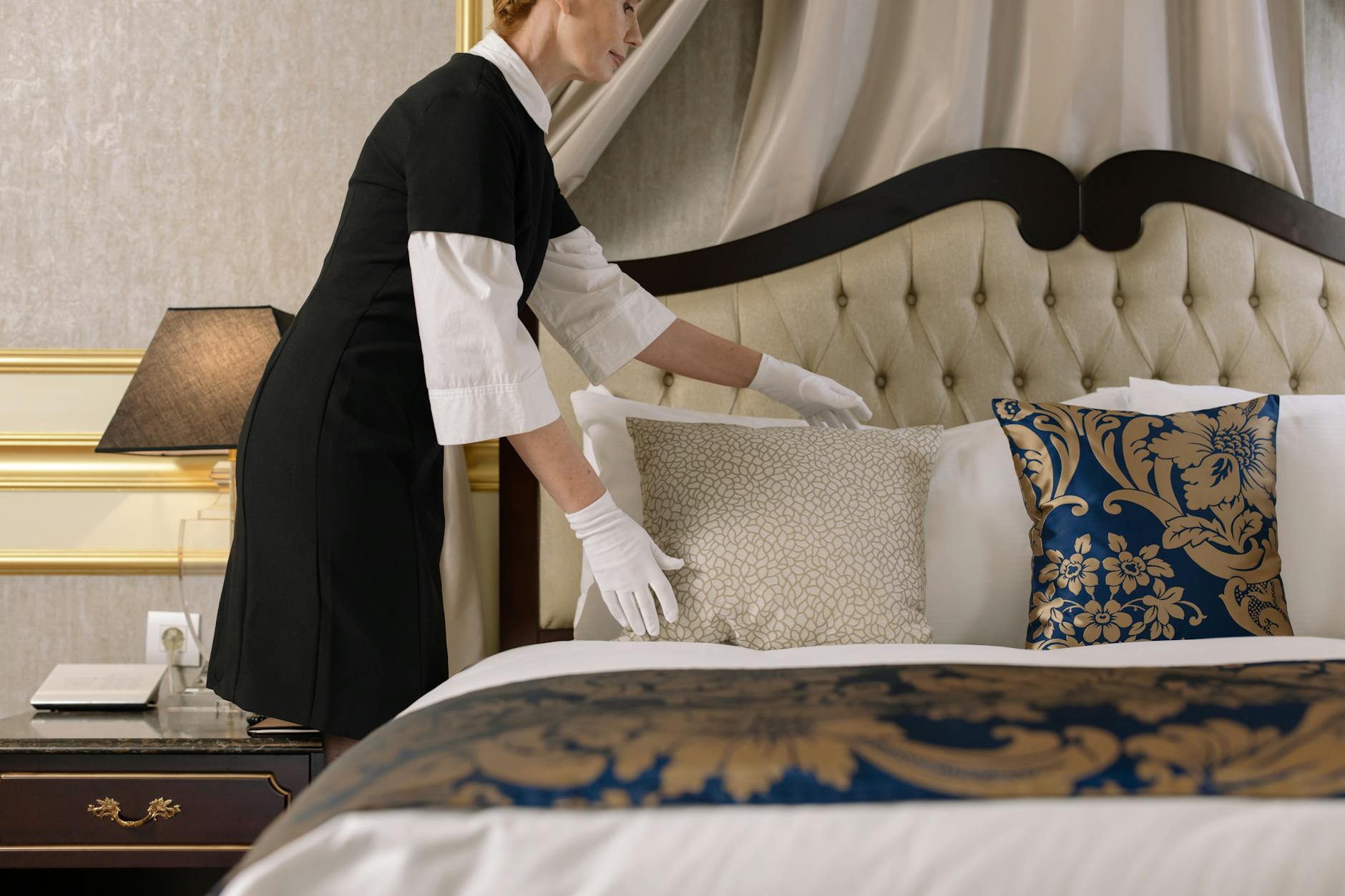

Yes, you can consistently get free hotel room upgrades—and the data backs it up. Hotels routinely offer complimentary upgrades to guests, especially on shorter stays of one to two nights, where success rates reach 80% according to hotel loyalty experts. The key isn’t luck or status alone, but understanding how hotels operate, when they have inventory to give away, and what specific actions trigger upgrade consideration. A guest who arrives for a two-night stay at a mid-range Hilton, has Gold status from just 25 annual nights (down from the previous 40-night requirement as of 2025), and sends a polite pre-arrival email asking about upgrade availability might walk into a complimentary suite instead of their booked standard room—saving $100 to $300 depending on the property and location. This matters financially because hotels typically consume 40 to 60 percent of most vacation budgets.
By stacking three to four upgrade-related tactics—combining loyalty status, direct property contact, strategic room selection, and timing—travelers can achieve 30 to 50 percent in total trip savings. Free upgrades represent the most accessible chunk of that savings because they require no additional spending, just knowledge and timing. The catch: upgrade availability depends heavily on occupancy rates and property type. You’re far more likely to score an upgrade on a Tuesday night in March than on a Saturday in July. But once you understand the variables, securing upgrades becomes a repeatable process rather than a gamble.
Table of Contents
- What Really Determines Your Odds of Getting an Upgrade?
- How Hotels Price Room Types and Why Upgrades Cost Them Almost Nothing
- Loyalty Program Changes and Your Fastest Path to Upgrade Eligibility
- The Pre-Arrival Email Strategy That Hotels Actually Respond To
- Occupancy Rates and Seasonality: The Variables You Can’t Control
- Chain-Specific Upgrade Strategies That Work Right Now
- What’s Changing in Hotel Loyalty and What to Expect
- Conclusion
What Really Determines Your Odds of Getting an Upgrade?
The 80 percent success rate cited by travel experts applies specifically to shorter stays of one to two nights. The longer your reservation, the lower your odds—a full week at a property drops your chances significantly because hotels have fewer incentives to give away occupied inventory when they can count on your booking for seven consecutive nights. Occupancy rates drive everything. A property running at 60 percent capacity has empty suites and is happy to move a guest up. A property at 95 percent occupancy has no room to spare, literally. Your room tier matters more than most people realize.
Booking a standard room at a three-star Hilton and requesting an upgrade to a suite works better than booking a suite and expecting a penthouse. Hotels show far more willingness to upgrade from mid-tier inventory than from already-premium tiers. This creates a strategic advantage: you pay the lowest rate for your category, then benefit from the upgrade psychology that follows. A guest who books a queen standard room for $120 per night has a much stronger upgrade path than someone who books a suite for $180 and hopes for something better. Chain loyalty status and advance communication compound your odds. A Hilton Gold member (achievable in 2025 with just 25 nights annually, down from 40) arriving at a property where they’ve sent a pre-arrival email increases likelihood significantly. Hotels report that when guests contact them in advance with a friendly note—mentioning they’re loyal members, noting the occasion (anniversary, birthday, business travel), and simply asking if upgrade availability exists—they’ll sometimes reserve a better room in advance specifically for that guest.
How Hotels Price Room Types and Why Upgrades Cost Them Almost Nothing
Hotels use a tiered pricing structure where a standard room might go for $120, a deluxe room for $150, and a suite for $200. The occupancy determines what gets sold. If a property is 70 percent booked with mostly standard and deluxe bookings, and three suites sit empty, upgrading a guest from standard to suite costs the hotel nothing in actual expenses—the suite would otherwise generate zero revenue. This is why upgrades surge during slow seasons and vanish during peak periods. The financial math is simple: an empty suite generates revenue only if someone stays in it, even if that someone booked something cheaper. This dynamic creates a limitation you need to understand: you cannot negotiate or demand upgrades during high-occupancy periods.
You’re competing against cash-paying guests who booked suites at full rate, and the hotel has no inventory incentive to move you up. A popular resort in Hawaii during Christmas week will rarely offer complimentary upgrades, no matter your status. The same property in September will offer them liberally. Seasonal awareness separates successful upgrade hunters from those who waste effort. When hotels do offer price matching—agreeing to match rates found on third-party booking sites—they often sweeten the deal with $20 to $50 in added perks per night. These perks include breakfast credits, parking, or room upgrades. This is worth knowing because it gives you a negotiating avenue even at busy properties. If you book at OTA rates, you sometimes have grounds to ask for a room upgrade as part of a price-match concession.
Loyalty Program Changes and Your Fastest Path to Upgrade Eligibility
Hotel loyalty programs shifted significantly in 2025, and these changes make entry-level elite status more achievable than ever. Hilton Gold Status now requires just 25 annual nights (previously 40), and Hilton Diamond Status dropped from 60 nights to 50 annually. These lower thresholds mean more travelers qualify for status benefits, which include room upgrades as a core perk. A person who takes five four-night vacations annually now qualifies for Hilton Gold automatically, unlocking guaranteed benefits like suite upgrade vouchers and space-available upgrades at check-in. Hyatt Globalist members receive unlimited space-available suite upgrades at check-in, and their policy permits suite upgrade eligibility on stays of up to seven nights—more generous than most competitors who restrict free suite upgrades to shorter stays.
Marriott Bonvoy Platinum members get 4 PM late checkout, suite upgrade vouchers, and space-available upgrades on arrival. The tier hierarchy matters: higher status means more upgrade vouchers and stronger priority for suite inventory. But the 2025 changes to Hilton’s thresholds mean you no longer need to be a frequent traveler; occasional vacationers can now access status benefits with modest effort. The strategic play: determine which brand aligns with your travel patterns, then concentrate bookings to hit that chain’s new lower threshold for elite status. A person taking three round-trip flights annually might build Hilton Gold in a single year with focused booking, whereas that same person spread across five different chains would never reach elite status at any brand. Consolidation wins.

The Pre-Arrival Email Strategy That Hotels Actually Respond To
Sending a polite email to a hotel’s front desk 24 to 48 hours before arrival substantially improves upgrade odds. The message should be brief, friendly, and mention your loyalty status, your length of stay, and perhaps an occasion. Something like: “I’m arriving Tuesday for a two-night stay as a Hilton Gold member. We’re celebrating our anniversary—would you have any suite inventory available for a complimentary upgrade? I appreciate whatever you can do.” Hotels report they will literally block rooms in advance when they receive advance notice. Your email creates a trigger for the front desk to reserve a better room for you specifically, rather than leaving the decision to chance at check-in. Timing matters. Sending the email too early (a week out) decreases effectiveness because occupancy data isn’t finalized.
Sending it too late (day-of) leaves no time to prepare. The sweet spot is 24 to 48 hours before arrival, when the property knows its final occupancy picture and can allocate a better room with confidence. This strategy works best at properties where you’ve stayed before or where you’re a recognized loyalty member. A property that’s seen your account history and recognizes you as someone who books directly (not through third parties) is more likely to reciprocate that loyalty with an upgrade. Same-day booking via apps like HotelTonight offers a different path: hotels offer 40 to 60 percent below standard rates when guests book after 3 PM, which indicates excess inventory. Upgrading becomes more likely because the property already made the decision to move that inventory at discount—giving you a room upgrade instead of a rate cut is psychologically similar from the hotel’s perspective and might even be preferred. The tradeoff: you sacrifice booking flexibility and advance planning. Same-day booking works for spontaneous trips or travelers with flexible schedules but doesn’t help if you need to plan weeks ahead.
Occupancy Rates and Seasonality: The Variables You Can’t Control
Hotel occupancy rates fluctuate seasonally and by day of week. Weekends during school breaks, summer vacations, and major holidays fill properties to near-capacity. Weekday bookings in January, March, and September face much lower demand. Your personal schedule may not align with slow seasons, but understanding this dynamic shapes realistic expectations. A family that can only take vacation during Christmas has virtually zero chance of free upgrades at resort properties. The same family taking a spring break trip to a different property might see 80 percent upgrade success. Location, season, and timing interact to create your actual upgrade likelihood. Weather events and local circumstances create unpredictable vacancies.
A convention cancellation, a flight disruption pushing travelers to nearby hotels, or simply a rainy week in an outdoor-recreation destination can dramatically shift occupancy. Conversely, a music festival or sporting event can fill a market overnight. These variables are impossible to predict but important to acknowledge. Your consistent upgrade success depends partly on factors entirely outside your control, which is why the “80 percent success on short stays” figure comes with an implicit asterisk: it assumes reasonable occupancy conditions and reasonable seasons. Convention travel and business trips often show different upgrade patterns. Business hotels during weekday conferences run near-full, while those same properties are empty on weekends. Corporate booking patterns mean you might score an upgrade more easily as a business traveler on a Friday stay than as a leisure traveler on a Tuesday, simply because leisure properties operate on opposite rhythms. Understanding whether your target property caters to business or leisure travel helps you identify when it’s most likely to have available inventory.
Chain-Specific Upgrade Strategies That Work Right Now
Hyatt properties offer some of the most generous upgrade policies. Hyatt Globalist members (elite tier) receive guaranteed suite upgrades when arriving with confirmed reservations, and this benefit extends to stays of seven nights or longer—unusual in an industry where suite upgrades typically apply to short stays only. A traveler booking a week at a Hyatt might arrive expecting a standard room but walk into a suite if they’ve reached Globalist status. The psychological win is substantial, and the savings (suites often cost $100 to $200 more per night) become real. Marriott’s Bonvoy program uses a different approach, offering suite upgrade vouchers to elite members plus space-available upgrades at arrival. You might receive vouchers that specifically say “redeemable for a suite upgrade” at certain properties, which guarantees something better.
This hybrid model—mixing vouchers for certainty with space-available upgrades for upside—appeals to planners who want guaranteed benefits plus the possibility of better luck. For annual trips to Marriott properties, reaching Platinum status (with the effort required at your actual travel frequency) becomes a no-brainer. Hilton’s network is vast and properties are abundant, making status achievement realistic for moderate travelers. A person taking five four-night vacations annually hits Hilton Gold easily in 2025, unlocking suite upgrade vouchers and space-available upgrades. Because Hilton has so many properties, concentrating bookings across the brand becomes efficient. The 2025 night-requirement reduction makes this especially accessible.
What’s Changing in Hotel Loyalty and What to Expect
The 2025 changes to Hilton’s night thresholds signal an industry trend: loyalty programs are becoming more accessible to casual travelers. Hotels face competition from each other and from alternative accommodations (Airbnb, short-term rentals), so they’re lowering barriers to elite status to retain bookings. This is good news for upgrade hunters because more people now qualify for status, and status directly correlates with upgrade access. Expect this trend to continue.
As programs become more accessible, hotels will likely differentiate between elite tiers more aggressively—higher tiers might get automatic upgrades while lower tiers get space-available only. But the fundamental dynamic remains: hotels with excess inventory will offer upgrades because empty rooms generate no revenue. The competitive pressure to attract and retain customers through perks like upgrades will persist, making this a sustainable strategy for frugal travelers. The difference is that achieving status becomes easier, not harder, over time.
Conclusion
Free hotel upgrades are achievable and repeatable for anyone willing to understand how hotels operate and time their travel strategically. The 80 percent success rate on short stays is real, but it depends on occupancy, room-tier selection, advance planning, and loyalty status. The practical path: consolidate bookings with one or two chains to hit elite status thresholds (easier now that Hilton dropped Gold to 25 nights), send a friendly pre-arrival email mentioning your status and occasion, book a mid-tier room to maximize upgrade likelihood, and target your travel during lower-occupancy seasons when hotels have inventory to spare. You won’t score upgrades 100 percent of the time—occupancy rates and property dynamics prevent that—but you can reasonably expect them on the majority of bookings.
Start with your next trip. Research which chain aligns with your travel patterns, book a room one tier below your actual preference, send the hotel an email 48 hours before arrival, and arrive knowing you’ve stacked the odds in your favor. The cumulative savings over years of travel makes this worth the minimal effort. Hotels have the inventory; they’re simply waiting for guests who understand the system to ask.