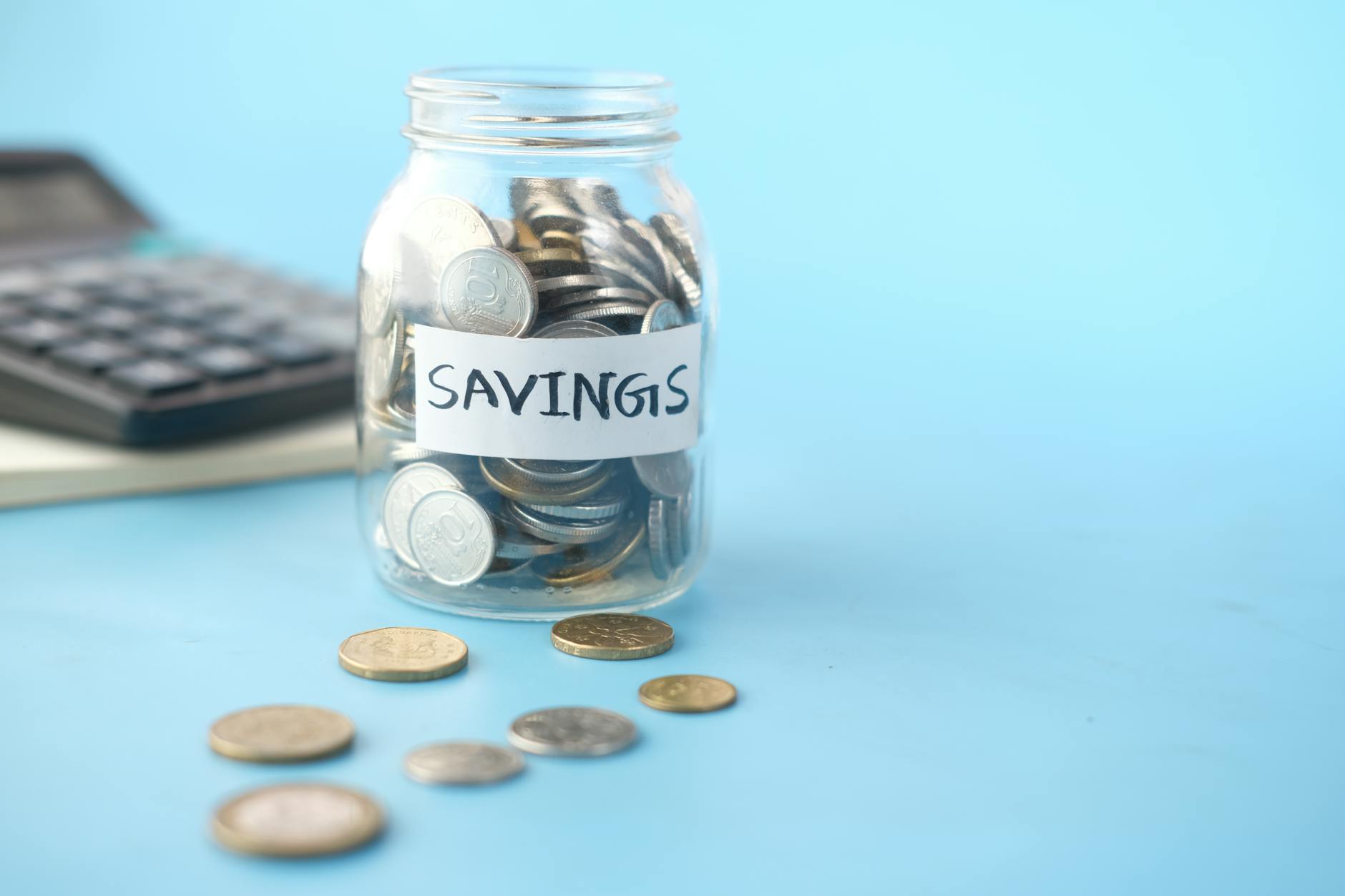

For most people building an emergency fund, a high-yield savings account is the better choice over a certificate of deposit. While both offer safety and modest returns, the critical difference lies in accessibility: high-yield savings accounts give you immediate access to your money without penalties, which is essential when unexpected expenses arise. CDs lock your funds away for a set period—typically three months to five years—and charge substantial early withdrawal penalties if you need the money before maturity. If your water heater fails or your car needs emergency repairs, you can’t wait six months for a CD to mature.
However, the comparison isn’t entirely one-sided. If you have already built a solid emergency fund in savings and you’re looking to park additional money you’re confident you won’t need for a specific period, CDs currently offer higher guaranteed rates. With inflation considered, the rate difference might make CDs worthwhile for a portion of your savings—but not for the actual emergency fund itself. The fundamental purpose of emergency savings is quick access to capital, which should always take priority over a slightly higher interest rate.
Table of Contents
- What Makes a High-Yield Savings Account Ideal for Emergency Funds?
- Why CDs Have Limited Value for True Emergency Savings
- Comparing Current Interest Rates and Real Returns
- How to Structure Emergency Funds That Balance Rates and Access
- The Hidden Penalty Trap and Why It Matters More Than You Think
- Tax Treatment and Interest Income Considerations
- The Future of Emergency Fund Strategy in a Changing Rate Environment
- Conclusion
- Frequently Asked Questions
What Makes a High-Yield Savings Account Ideal for Emergency Funds?
High-yield savings accounts combine three essential features for emergency funds: FDIC insurance protection up to $250,000, interest rates that typically range from 4% to 5% annually, and instant access to your money. When you deposit $10,000 into a high-yield savings account earning 4.5%, you earn roughly $37.50 in the first month without any restrictions. More importantly, if an emergency strikes that week, your full balance is available immediately. You simply transfer the money to checking or withdraw it, and the funds arrive within one to two business days at most. The real-world advantage becomes clear in scenarios most households face.
A single parent with two children has $7,500 saved for emergencies. Their car transmission fails unexpectedly, requiring a $4,000 repair that they need to pay within 48 hours. With a high-yield savings account, they transfer the funds and handle the problem. With a CD, they either pay the early withdrawal penalty—typically 3 to 6 months of interest, which could be $120 to $240 in lost earnings—or face not being able to fix the car. The penalty completely erases the advantage of the slightly higher CD rate.

Why CDs Have Limited Value for True Emergency Savings
Certificates of deposit are essentially agreements where you lend the bank money for a fixed period in exchange for a guaranteed rate. The problem for emergency funds is straightforward: you surrender liquidity. Early withdrawal penalties on a one-year CD might cost you six months of interest. On a five-year CD, penalties can be even steeper. If you have $15,000 in a five-year CD earning 5%, you’re earning about $750 annually. But if you need that money after two years for a medical emergency, the bank might charge a penalty equal to six months of interest—$375.
You’d recover your principal, but you’ve lost half your earnings before you even accessed your own money. The timing problem creates another limitation. CDs mature on specific dates. If your CD matures in eight months and an emergency hits in month five, you face two choices: neither good. You can access the money early and pay the penalty, or you can use a credit card and borrow expensive money while your emergency fund sits locked away. This scenario happens more often than people expect—a single household might face two or three emergencies in a year, and the odds of them perfectly aligning with CD maturity dates are low.
Comparing Current Interest Rates and Real Returns
As of early 2026, high-yield savings accounts are offering 4.25% to 4.75% APY, while CDs are offering slightly higher rates—typically 5% to 5.25% for one-year terms and up to 5.5% on longer-term CDs. The rate difference seems meaningful: $10,000 in a high-yield savings account at 4.5% earns $450 annually, while a one-year CD at 5.25% earns $525. That’s $75 extra from the CD. But that calculation ignores opportunity cost and accessibility. Consider what happens when the emergency occurs.
If you have $10,000 in a high-yield savings account and face a $2,500 emergency in month six, you immediately pay it. You have $7,500 remaining earning interest, and you can continue adding to the fund. If you have $10,000 in a one-year CD and the same emergency strikes, you withdraw the full amount, pay a penalty (say $175), receive $9,825, and pay the emergency. Now you have $7,325 remaining—but it’s removed from the CD, and you’ve lost the original higher rate entirely. Your advantage has evaporated.

How to Structure Emergency Funds That Balance Rates and Access
The most practical approach for most households is to keep your core emergency fund in a high-yield savings account and consider CDs only for additional savings beyond that emergency cushion. Financial advisors typically recommend three to six months of living expenses for an emergency fund. If your monthly expenses are $3,500, you need $10,500 to $21,000 immediately accessible. That amount belongs in a high-yield savings account, full stop.
If you have $25,000 saved and only need $15,000 for emergencies, the extra $10,000 could reasonably go into a CD ladder—a strategy where you stagger CD maturities so money becomes available in regular intervals. For example, you could buy three CDs: one maturing in four months, one in eight months, one in twelve months. This creates a hybrid: most of your money earns the higher CD rate while some becomes available predictably every few months. But this only makes sense once you’ve funded the actual emergency account.
The Hidden Penalty Trap and Why It Matters More Than You Think
One of the most overlooked aspects of CD penalties is how they’re calculated and their real impact. Banks phrase penalties different ways: some charge a flat fee, some charge months of interest, and some use a percentage of principal. A $25,000 CD with a six-month interest penalty at 5.25% costs you roughly $625 to access early. That’s real money that comes directly out of your emergency fund. If your emergency is a $15,000 car repair and you use a $25,000 CD, you pay $15,000 for repairs plus $625 in penalties, leaving you with only $9,375 remaining in savings.
Your emergency depleted your fund more severely because of the CD’s design. Another consideration: online banks sometimes make accessing CD funds surprisingly difficult. Some require mailing checks or completing specific paperwork for early withdrawal, which defeats the purpose of an emergency fund requiring quick action. A medical emergency might require paying a hospital deposit within days, not weeks. A high-yield savings account’s instant transfer capability matters more than rate differences in these scenarios.

Tax Treatment and Interest Income Considerations
Both high-yield savings accounts and CDs generate taxable interest income that you’ll report on your tax return. There’s no tax advantage to either product—interest from both is taxed as ordinary income at your marginal tax rate. If you earn $450 in interest from either account and you’re in the 24% federal tax bracket, you’ll owe approximately $108 in federal taxes on that interest.
The after-tax return becomes more relevant than the advertised rate. For example, a $10,000 CD earning 5.5% generates $550 in interest before taxes, approximately $418 after taxes at a 24% rate. The same amount in a 4.5% high-yield savings account generates $450 in interest, approximately $342 after taxes. The CD still offers about $76 more after taxes—but remember, that advantage disappears entirely if you need the money early.
The Future of Emergency Fund Strategy in a Changing Rate Environment
As interest rates eventually normalize over the coming years, the interest rate advantage of CDs will likely narrow further. Historically, CDs have offered only 0.25% to 0.5% more than savings accounts, not the current 0.75% to 1% spread. When that normalization occurs, the rate argument for CDs becomes even weaker.
The flexibility of high-yield savings will become the dominant factor in emergency fund strategy. Meanwhile, money market accounts have emerged as another option that blends features of both: they offer check-writing and debit card access (like savings accounts) with rates closer to CDs, though still typically slightly lower. For some households, a money market account might split the difference. But the core principle remains: emergency funds need to be accessible, and any rate advantage is secondary to that requirement.
Conclusion
High-yield savings accounts are the better choice for emergency funds because immediate accessibility matters more than marginal rate increases. While CDs currently offer higher interest rates, the penalties for early withdrawal erase those gains the moment an actual emergency occurs. Your emergency fund’s primary purpose is to cover unexpected expenses quickly, not to maximize interest earnings. A typical household will face two to four emergencies per year—car repairs, medical bills, home maintenance, job loss—and most of these can’t wait for a CD to mature.
Build your emergency fund in a high-yield savings account first, then consider other options. Once you’ve accumulated three to six months of expenses in easily accessible savings, additional money beyond that threshold could potentially go into CDs or other higher-yielding options. This strategy preserves your financial flexibility while still capturing some additional interest on savings you’re confident you won’t need in the immediate term. The goal is financial security, not chasing yield—and security requires quick access to capital.
Frequently Asked Questions
How much should my emergency fund be?
Most financial advisors recommend three to six months of living expenses. If your monthly expenses are $3,500, aim for $10,500 to $21,000 in immediately accessible emergency savings.
Can I use a money market account instead of a high-yield savings account for emergencies?
Yes. Money market accounts often offer rates close to CDs while providing check-writing and transfer capabilities. They’re slightly less liquid than savings accounts but more accessible than CDs, making them another reasonable emergency fund option.
What if I already have money in a CD that I didn’t intend as an emergency fund?
Let it mature rather than withdraw early and pay penalties. After it matures, don’t reinvest in another CD if you need liquid emergency reserves. Move the proceeds to a high-yield savings account instead.
Are high-yield savings accounts FDIC insured?
Yes, as long as the bank is FDIC-insured, accounts are protected up to $250,000 per depositor. This protection applies equally to high-yield savings accounts and regular savings accounts.
How often do high-yield savings rates change?
Rates change frequently, sometimes multiple times per month. Banks adjust rates in response to Federal Reserve decisions and market conditions. You should review your emergency fund’s rate annually and move to a better option if rates drop significantly.
What should I do if a high-yield savings account rate drops below 4%?
Compare it to other high-yield savings accounts and consider switching. Online banks compete aggressively on rates, and moving between accounts typically takes two to three days. Don’t stay with a low-rate account out of inertia.