
The highest paying bank promotions in March 2026 top out at a staggering $7,000 from HSBC, though that requires parking at least $1 million in new assets. For most people, the sweet spot sits in the $300 to $900 range, where banks like Chase, Huntington, and KeyBank are offering legitimate cash bonuses for opening new checking or savings accounts and meeting straightforward deposit requirements. Chase alone is running a combined offer worth up to $900 if you open both a Total Checking and savings account before April 15, 2026.
But not every bonus is worth chasing. Some require you to lock up six figures for months, others are limited to specific states, and nearly all of them come with fine print that can disqualify you if you miss a deadline or fall short on a direct deposit threshold by even a dollar. This article breaks down every major bank promotion available right now, organized by payout size, and walks through the real requirements, tax implications, and strategic considerations that separate a genuinely profitable bonus from a waste of your time.
Table of Contents
- Which Bank Promotions Pay the Most in March 2026?
- Mid-Range Bonuses That Don’t Require a Small Fortune
- Savings Account Bonuses and Why They Deserve a Second Look
- How to Stack Bonuses Without Getting Disqualified
- Tax Implications and Fine Print That Can Cost You
- State Restrictions and Availability Limits
- What Comes Next After March Promotions Expire
- Conclusion
- Frequently Asked Questions
Which Bank Promotions Pay the Most in March 2026?
The top tier belongs to institutions courting high-net-worth customers. HSBC Premier checking leads the pack with a tiered structure that pays $1,500 for bringing in $150,000 to $249,999 in new assets, scaling up to $7,000 for deposits of $1 million or more. You need to open by March 31, 2026, and maintain those balances through June 30, 2026, with the bonus arriving by August 31, 2026. That is a long runway, and you need to genuinely have that money sitting around doing nothing better. Chase Private Client follows a similar model, offering $1,000 for $150,000, $2,000 for $250,000, and $3,000 for depositing $500,000 or more.
Wells Fargo is offering $2,500 for its Premier Checking account, requiring a $250,000 deposit maintained for 90 days. The account must be opened or upgraded by April 14, 2026. Capital One 360 rounds out the high-balance category with bonuses ranging from $300 to $1,500, tiered based on deposits from $20,000 to $100,000 or more. For context, even the $1,500 Capital One bonus on a $100,000 deposit works out to a 1.5% return over a few months, which handily beats most savings account yields on an annualized basis. The question is whether you have that kind of capital available and whether tying it up is worth the opportunity cost.

Mid-Range Bonuses That Don’t Require a Small Fortune
The $300 to $900 tier is where most people will find realistic opportunities. Chase’s combined checking and savings offer is the headliner here. The $400 checking bonus requires $1,000 or more in direct deposits within 90 days, and the $500 savings bonus requires a $15,000 deposit held for 90 days. Both offers expire April 15, 2026. However, if you have claimed a Chase checking bonus within the past two years, you are ineligible. Chase enforces this rule strictly, and it resets from your last enrollment date, not from when you received the payout. Huntington bank is running two promotions worth watching.
The Platinum Perks Checking account pays $600 for depositing $25,000 in new money within 90 days, while the standard Perks Checking pays $400 for setting up direct deposits of $500 or more within the same window. Both require you to open by March 15, 2026, and here is the catch: Huntington operates in select states only, including Colorado, Illinois, Indiana, Kentucky, Michigan, Minnesota, North Carolina, Ohio, Pennsylvania, South Carolina, Texas, West Virginia, and Wisconsin. If you are outside that footprint, these bonuses do not apply to you regardless of whether you can open the account online. KeyBank offers $500 through its Key Select Checking with promo code KDMB0226 and $5,000 or more in direct deposits within 90 days, or $300 through Key Smart Checking with $2,000 in direct deposits. Both expire May 22, 2026, giving you a bit more breathing room than the Chase and Huntington deadlines. Citibank rounds things out at $325 for two enhanced direct deposits totaling $3,000 or more within 90 days, expiring April 13, 2026. SoFi Checking and Savings offers up to $300 for a new account with at least one qualifying direct deposit, with terms running through the end of 2026.
Savings Account Bonuses and Why They Deserve a Second Look
Checking account bonuses grab the headlines, but savings promotions can be quietly effective, especially when they stack with competitive interest rates. Barclays is currently offering a $200 bonus for opening a tiered savings account by March 31, 2026, and maintaining a $30,000 balance for 120 consecutive days. On its own, $200 for locking up $30,000 for four months is modest. But the account also pays 3.85% APY on balances under $250,000, which means that same $30,000 would earn roughly $385 in interest over those four months on top of the bonus. That combination pushes your effective return well above what a standard high-yield savings account delivers.
The tradeoff with savings bonuses is the maintenance period. Checking bonuses typically require you to meet a direct deposit threshold and then you are largely free to manage the account however you want. Savings bonuses demand that your balance never dip below the minimum for the entire qualifying period. One unexpected car repair or medical bill that forces you to pull from that account, even temporarily, can void the entire bonus. If you are considering a savings promotion, make sure the money you deposit is genuinely untouchable for the full duration.

How to Stack Bonuses Without Getting Disqualified
The most effective strategy is to hit multiple bonuses across different banks simultaneously, but this requires careful planning. Start with the time-sensitive offers. Chase expires April 15, Huntington closes March 15, and Citibank cuts off April 13. Map out which deadlines you can realistically meet, then work backward to determine your direct deposit timing. If your employer allows you to split direct deposits across multiple accounts, you can funnel portions of your paycheck to different banks to satisfy their requirements concurrently.
The comparison worth thinking about: a single Chase checking bonus of $400 requires $1,000 in direct deposits over 90 days. A KeyBank Key Smart Checking bonus of $300 requires $2,000 in direct deposits over the same period. Dollar for dollar, the Chase bonus pays more for less deposit volume, but if Chase’s two-year cooldown rule locks you out, KeyBank becomes the better available option. Meanwhile, SoFi’s $300 bonus has the most relaxed terms since it only requires one qualifying direct deposit and does not expire until the end of 2026, making it a good fallback if you miss the tighter windows. The mistake to avoid is spreading your direct deposits so thin that you fail to meet the minimums at any single bank, which would leave you with zero bonuses and multiple accounts to close.
Tax Implications and Fine Print That Can Cost You
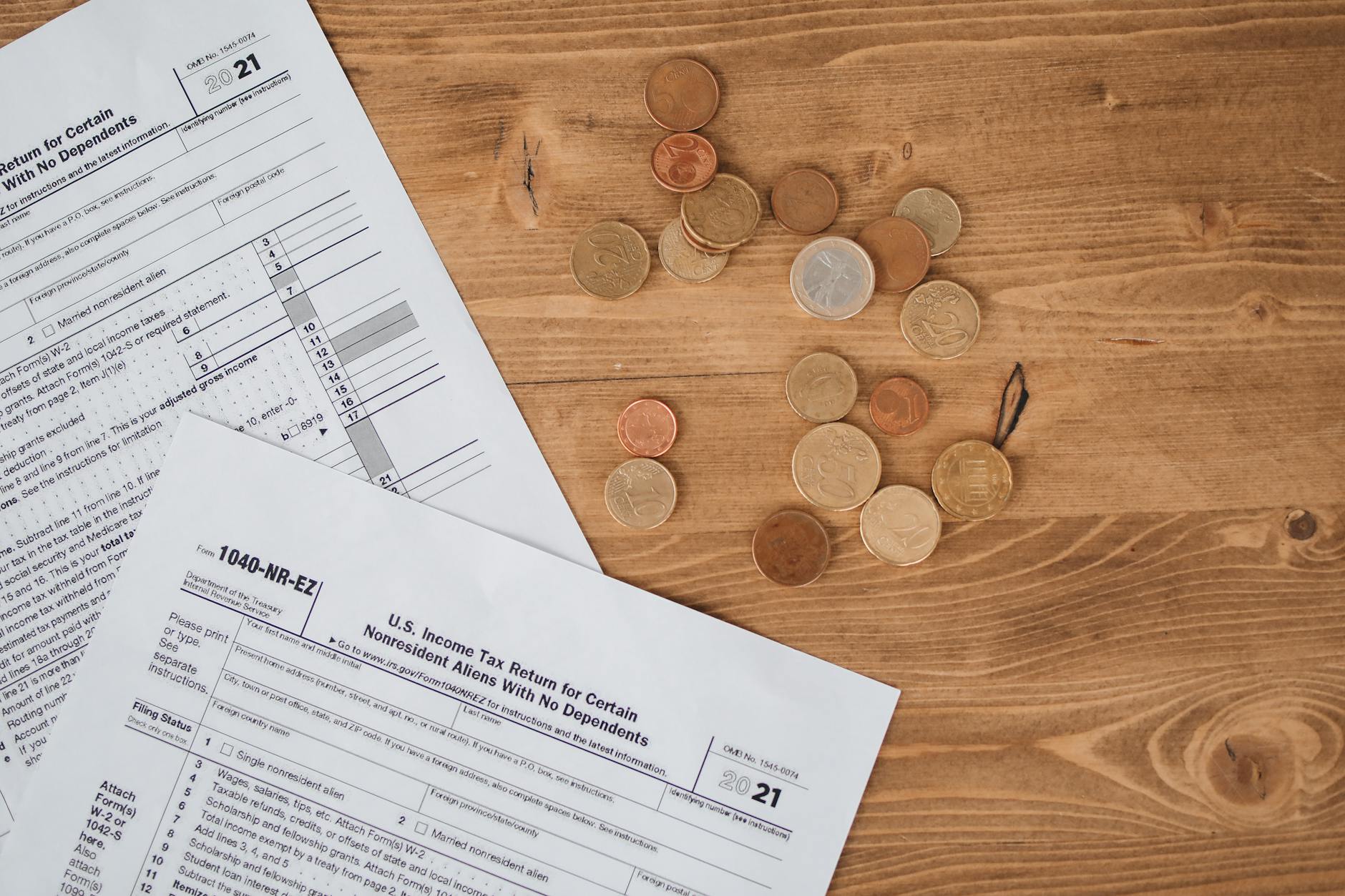
Bank bonuses are taxable income. Banks report them on a 1099-INT or 1099-MISC, and the IRS expects you to include them on your return for the year in which you receive the bonus, not the year you opened the account. A $900 Chase bonus earned by someone in the 22% federal tax bracket translates to roughly $702 after taxes, and that does not account for state income taxes. This does not make bonuses a bad deal, but it is worth factoring into your mental math when deciding whether a particular offer justifies the effort. The other fine print trap is the early account closure fee.
Many banks will claw back your bonus, or charge a separate fee, if you close the account within six months of opening it. Some require you to keep the account open even longer. So when you calculate the value of a bonus, factor in any monthly maintenance fees you might pay during that holding period. Chase Total Checking, for example, has a $12 monthly service fee that is waived with direct deposits of $500 or more. If your direct deposits stop after you collect the bonus but you need to keep the account open to avoid a clawback, you could bleed $72 in fees over six months, reducing that $400 bonus to $328. Always read the fee schedule before signing up.
State Restrictions and Availability Limits
Geography matters more than you might expect. Huntington’s $600 and $400 bonuses are limited to 13 states. Chase’s physical branch promotions sometimes carry different terms than their online offers.
And some credit union promotions that rival these bank bonuses are restricted to even smaller service areas. Before you build a strategy around a specific bonus, confirm that you actually qualify based on your state of residence. Huntington’s list, for instance, notably excludes major markets like California, New York, and Florida, which means millions of potential customers are automatically out of the running for two of the better mid-tier bonuses available this month.
What Comes Next After March Promotions Expire
Bank bonus offers tend to follow a seasonal rhythm. March through April is typically a strong window because banks are pushing to hit first-quarter acquisition targets. Several of the best current offers, including Chase, Huntington, and Citibank, expire in mid-April or earlier, and there is no guarantee they will renew at the same amounts.
Historically, Chase has refreshed its checking bonus multiple times per year, but the amount and requirements shift. If you are on the fence about a current promotion, the risk of waiting is that the same dollar amount may not come back, or may return with stiffer requirements. KeyBank and SoFi offer more runway with their later expiration dates, but even those will eventually close. The best approach is to treat the current batch of bonuses as a defined window and act within it rather than assuming something better is always around the corner.
Conclusion
March 2026 is a strong month for bank promotions across every tier. High-balance customers can earn up to $7,000 through HSBC or $3,000 through Chase Private Client, while everyday account holders can realistically pull in $300 to $900 through checking and savings bonuses at Chase, Huntington, KeyBank, Citibank, or SoFi.
The key is matching the right bonus to your actual financial situation, meeting every requirement precisely, and keeping the account open long enough to avoid clawbacks. Before you open anything, confirm your eligibility, note every deadline, set up your direct deposits in advance, and budget for the taxes you will owe on whatever bonus you collect. These promotions are one of the few areas in personal finance where banks are genuinely handing out free money, but only if you read the terms carefully enough to actually collect it.
Frequently Asked Questions
Are bank bonuses really free money?
They are real cash payments, but they come with requirements. You need to meet deposit thresholds, maintain balances for a set period, and pay taxes on the bonus. If you fail to meet any condition, you get nothing. Done correctly, though, the bonuses are legitimate income with no interest charges or hidden costs beyond the time and attention required to follow through.
Can I open multiple bank accounts at the same time to collect several bonuses?
Yes. There is no law or regulation preventing you from opening accounts at multiple banks simultaneously. The practical challenge is meeting each bank’s direct deposit or balance requirements without spreading your funds too thin. Split direct deposit features from your employer are the most common way to satisfy multiple checking bonuses at once.
How long do I have to keep the account open after receiving the bonus?
Most banks require you to keep the account open for at least six months after the bonus posts. Closing earlier can trigger a clawback of the full bonus amount or an early termination fee. Always check the specific terms for each promotion.
Will opening multiple bank accounts hurt my credit score?
Checking and savings accounts do not typically involve a hard credit inquiry, so they will not affect your credit score. However, some banks do run a soft pull through ChexSystems, which tracks your banking history. Opening too many accounts in a short period could flag you in ChexSystems, potentially making it harder to open additional accounts.
Do I have to use my employer’s direct deposit, or can I transfer money from another bank?
This depends on the bank. Some institutions, like Chase, strictly define direct deposits as payroll or government benefit payments. Others, like SoFi, have historically accepted ACH transfers from external bank accounts as qualifying direct deposits. Always verify the specific bank’s definition before relying on a workaround.