Yes, you can save $500 per month. In fact, the path to that goal sits right in front of most households—in overlooked spending, waste, and inefficient choices. A typical American spends $219 monthly on subscriptions alone but only realizes spending about $86, meaning most people have a $130+ blind spot before they even think about groceries or utilities. Add in meal planning, food waste reduction, and household efficiency, and $500 becomes not just achievable but realistic for anyone willing to do a honest audit. This isn’t about deprivation; it’s about redirecting money that’s already leaving your wallet into savings.
The average U.S. household spends $520 per month on groceries, carries credit card debt pushing toward $1.23 trillion nationally, and 54% of Americans report saving less for emergencies due to inflation. If you’re among them, this article walks through 25 concrete hacks—starting with the easiest wins—that add up to that $500. Some take 30 minutes. Others are one-time decisions. None require you to eat rice and beans for a month, though you might find cheaper proteins worth eating anyway.
Table of Contents
- How Subscriptions Become Your Fastest $100+ Savings
- Grocery Spending Is Your Biggest Hack Zone—If You Plan
- Price Inflation and Smarter Substitutions
- Utilities and Household Water Savings
- The Budgeting Framework That Makes Saving Stick
- Building an Emergency Fund Reduces Future Panic Spending
- Automation and Consistency Compound the Savings
- Conclusion
How Subscriptions Become Your Fastest $100+ Savings
Start here because subscriptions are the easiest $50–$100 per month to reclaim. The average household has 8.2 active subscription services, and that 2.5x gap between what people spend ($219) and what they think they spend ($86) means almost everyone underestimates this category. A 30-minute subscription audit—going through your email or bank statements for recurring charges—realistically saves $50–$100 per month, or $600–$1,200 per year. That single action takes you one-fifth to one-third of the way to your $500 goal. Cancel unused streaming services first. If you’re paying for Disney+, Hulu, and ESPN+ separately, you’re spending $27.97 per month; the bundle costs $15.99 with ads—roughly $144 per year in savings right there.
Most subscription services also offer 15–20% discounts for annual billing instead of monthly. Spotify Premium drops from $12.99 per month to $10.83 per month effective rate on annual billing, saving you about $25 per year on that single service. The limitation: some services require you to pay a larger upfront amount, which doesn’t work if your cash flow is tight, though the math heavily favors the annual approach over time. Next, consolidate or downgrade. Do you need both the premium and standard tiers of any service? Do you subscribe to a gym you haven’t visited in three months? These small cancellations add up. The warning: some subscriptions auto-renew after free trials, so check your statements monthly during the first quarter after any trial signup.

Grocery Spending Is Your Biggest Hack Zone—If You Plan
Groceries represent roughly 13% of household income—about $650 per month for a typical $60,000 annual household, though closer to $520 on average. Meal planning and shopping with a list can cut that by 20–30% according to the USDA, which means a $150–$200 monthly savings for an average household. That’s nearly half your $500 goal, and it doesn’t require eating less or choosing unhealthy food. The real problem isn’t what you buy; it’s what you throw away. The average U.S. household wastes 30–40% of the food it purchases. If that’s $175 of your $520 monthly grocery budget, you’re literally throwing away money. Start by taking inventory before shopping, checking your fridge before buying more vegetables, and being intentional about produce quantities.
Buy what you’ll actually use. A meal plan paired with a shopping list eliminates impulse buys and reduces waste simultaneously. For one family of four, this alone could mean $80–$120 per month straight to your savings account. Protein swaps offer another 20–30% reduction in your meal costs. Swapping two beef dinners per week for chicken thighs, beans, or eggs can save $40–$80 per month—and chicken thighs often taste better than lean beef. This isn’t a downgrade; it’s a different approach. The catch is that meal planning requires some upfront work; if you hate planning, this becomes friction. But the ROI is significant.
Price Inflation and Smarter Substitutions
Prices have risen about 26% between January 2020 and early 2026, and not evenly. Eggs are up 97%, cooking oils up 58%, and beef up 41%. This means some of your typical groceries have gotten truly expensive. Being aware of this inflation allows you to make better swaps. If eggs are unusually expensive this month, buy more yogurt or canned beans. If beef prices spike, chicken thighs or ground turkey fill the gap at lower cost. Buying seasonal produce also buffers against price swings; strawberries cost a fraction as much in June as in February.
Another lever is buying store brands instead of name brands where quality is identical. Store-brand eggs, flour, canned beans, and pasta are functionally the same as branded versions but often 20–40% cheaper. Over a month of groceries, this alone could be $50–$80. The limitation: some items—like certain dairy products—may have noticeable quality differences, so it’s worth testing store brands rather than assuming all are equal. Buying in bulk makes sense for non-perishable items you consume regularly. If you use a pound of pasta per week, buying the 5-pound box instead of individual packages saves money and reduces packaging waste. Warehouse clubs like Costco require a membership fee ($60–$120 per year) but pay for themselves in bulk savings if your household is large enough to justify it.

Utilities and Household Water Savings
Cutting even one minute from a daily shower saves about 75 gallons per month. Over a year, that’s 900 gallons, which translates to real water bill savings—$15–$30 per month depending on your local rates. It’s small individually but consistent, and unlike diet changes, it requires no willpower. Installing a low-flow showerhead costs $20–$40 one-time and can last years, making it a one-time investment that pays for itself in two months. Other household efficiency gains include adjusting your thermostat by 2–3 degrees when you’re away (saving $5–$10 per month on heating or cooling) and running full loads in the dishwasher and laundry machines.
These aren’t dramatic, but combined with water savings, you’re looking at $20–$40 per month in utility reductions. The trade-off: some changes (like slightly colder showers or warmer summers indoors) involve minor comfort adjustments, but most people stop noticing within days. LED light bulbs use 75% less energy than incandescent bulbs, though the upfront cost is higher. Replacing all bulbs in your home might cost $20–$50 upfront but saves $10–$15 per month on electricity. The payoff period is quick (3–5 months), making it one of the better long-term efficiency plays.
The Budgeting Framework That Makes Saving Stick
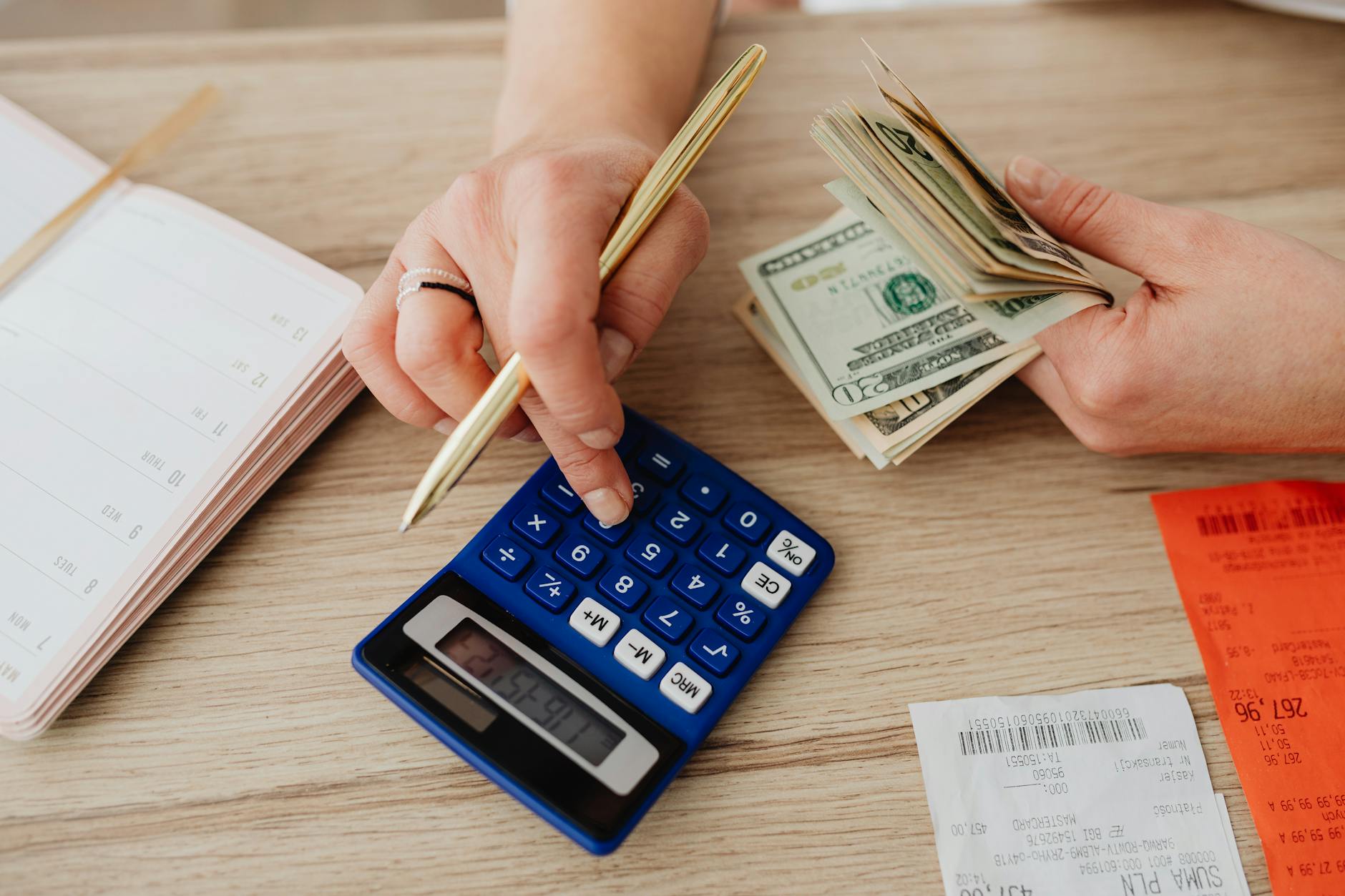
Understanding the 50/30/20 rule gives you a framework: allocate 50% of take-home pay to essentials (housing, utilities, groceries, insurance), 30% to lifestyle expenses (entertainment, dining out, hobbies), and 20% to debt payoff or savings. For someone earning $4,000 per month after taxes, that means $2,000 on essentials, $1,200 on lifestyle, and $800 to debt or savings. If that $800 feels impossibly high, it often means your essentials are consuming too much (common if housing costs are high) or your lifestyle spending is above 30% (easier to fix). Most people who want to save $500 per month aren’t actually far from it; they just have money leaking from the lifestyle bucket. Calculating where your money goes week-by-week—using a simple spreadsheet, app, or even pen and paper—reveals patterns you might not notice.
You might find you’re spending $100 per month on coffee, $80 on delivery fees, $60 on subscriptions you forgot about, and $120 on miscellaneous shopping. That’s $360 right there, almost three-quarters of your goal, without touching groceries or utilities. The warning: budgeting doesn’t work if you don’t review it. Set a monthly check-in for 15 minutes to see if you hit your targets. That small habit is the difference between a plan that lasts three months and one that sticks for years.
Building an Emergency Fund Reduces Future Panic Spending
37% of U.S. adults can’t cover a $400 emergency without borrowing or selling something. That gap forces people into debt spirals. Building an emergency fund of $1,200–$2,400 (covering 3–6 months of essentials) isn’t optional; it’s insurance against dipping into credit cards when the car breaks down or a medical bill arrives. The goal might seem distant, but even small automatic transfers work.
Setting up an automatic $50 transfer per paycheck (twice monthly) reaches $1,200 in a year—and crucially, you stop seeing that money as “spendable,” making it invisible to temptation. The psychological benefit of having an emergency fund is as important as the financial one. 54% of Americans report saving less for emergency expenses due to inflation, meaning most households are stressed about money. Knowing you have a $2,000 buffer eliminates that constant background anxiety, which often leads to stress spending and poor financial decisions. Building that buffer takes discipline, but the payoff is both concrete and emotional.
Automation and Consistency Compound the Savings
The most underrated savings strategy is automation. Even small automatic transfers of $50 per paycheck build consistency without willpower and reach $1,200–$2,400 per year. Set it and forget it; the money never hits your checking account, so you don’t miss it. Over three years, that’s $3,600–$7,200 without a single day of “feeling like you’re sacrificing.” Most savings plans fail because they rely on willpower; automation removes willpower from the equation.
Looking forward, inflation will continue shaping household budgets. The 26% price rise we’ve seen since 2020 teaches a crucial lesson: the earlier you build savings and understand your spending, the less vulnerable you are to future shocks. Households that already cut subscriptions, know their grocery costs, and have an emergency fund can weather inflation and unexpected expenses. Those still in reactive mode (spending everything and borrowing when needed) fall further behind each year.
Conclusion
Saving $500 per month is achievable through a combination of small changes—cutting subscriptions, reducing food waste, making smarter protein choices, and automating savings. Most households can identify $150–$200 in subscription and wasted food alone, then add another $150–$200 through utility efficiency and discretionary spending cuts. The remaining $100–$150 comes from being intentional about remaining lifestyle expenses. None of this requires deprivation; it requires awareness and small decisions compounded over time.
Start with the easiest win: audit your subscriptions this week and cancel what you don’t use. Then plan your meals for one week and notice what you actually spend on groceries. From there, set up an automatic transfer of even $50 per paycheck to an emergency savings account. These three actions—taking 30 minutes, one meal-planning session, and one bank setup—can realistically deliver $200–$250 of your $500 goal, proving it’s possible and worth the effort.