

The best bank bonus deals in March 2026 range from a modest $125 from Chase Secure Banking all the way up to $3,000 from Chase Private Client, with plenty of solid mid-range options in between for people who don’t have six figures sitting around. If you have at least $1,000 in monthly direct deposits and can leave an account open for 90 days, you can realistically pocket $200 to $600 in bonus cash this month from banks like Huntington, KeyBank, Bank of America, or Chase Total Checking. What makes this month particularly interesting is the sheer variety. Whether you have $500 or $150,000 to work with, there is a bonus tier designed for your situation.
Chase Total Checking offers $400 for a $1,000 direct deposit, which is one of the lowest barriers to entry for a bonus that size. Meanwhile, high-net-worth customers can stack significantly larger payouts from Chase Private Client or Wells Fargo. The catch, as always, is reading the fine print — minimum balance requirements, account maintenance fees, and the tax implications that come with every single one of these bonuses. This article breaks down every major bank bonus available in March 2026 by tier, walks through the qualification requirements, flags the hidden costs that can eat into your earnings, and helps you figure out which offer actually makes sense for your financial situation.
Table of Contents
- What Are the Highest Bank Bonus Deals Available in March 2026?
- Budget-Friendly Bank Bonuses That Don’t Require a Big Balance
- How Direct Deposit Requirements Actually Work for Bank Bonuses
- Comparing the Best Bank Bonus Deals by Effort vs. Reward
- Tax Implications and Hidden Costs That Eat Into Bank Bonuses
- Stacking Multiple Bank Bonuses in the Same Month
- What to Expect From Bank Bonuses Beyond March 2026
- Conclusion
- Frequently Asked Questions
What Are the Highest Bank Bonus Deals Available in March 2026?
The top-tier bonuses this month require serious capital. Chase Private Client leads the pack with up to $3,000, but you need to transfer at least $150,000 in new-to-Chase money into eligible accounts within 45 days of enrollment. Wells Fargo follows with up to $2,500, though the exact requirements vary by account tier. Capital One 360 Performance Savings rounds out the premium category with up to $1,500 for depositing $100,000 or more in new money. These are not casual offers — they are designed for customers moving substantial assets, and the banks are betting that once your money is parked there, it stays. For most people, the mid-range bonuses between $400 and $600 represent the sweet spot. Huntington Platinum Perks Checking pays $600 for depositing $25,000 or more in new money within 90 days.
KeyBank Key Select Checking offers $500 for setting up $5,000 or more in eligible direct deposits within 90 days. Bank of America runs a tiered structure: $100 for $2,000 in direct deposits, $300 for $5,000, or $500 and up for $10,000 in direct deposits within 90 days. That tiered approach is useful because it lets you earn something even if you can’t hit the highest threshold. The comparison worth making here is between the Huntington $600 bonus and the KeyBank $500 bonus. Huntington requires $25,000 in new deposits, meaning you need significant liquid cash. KeyBank only requires $5,000 in direct deposits over 90 days, which many working adults already meet through their regular paycheck. Dollar for dollar relative to the effort and capital required, KeyBank’s offer is arguably the better deal for the average earner.

Budget-Friendly Bank Bonuses That Don’t Require a Big Balance
Not everyone has thousands in spare cash to shuttle between accounts, and that is perfectly fine. Several banks are running March 2026 promotions with low or no minimum deposit requirements. Chase Secure Banking pays a $125 bonus with no minimum direct deposit required at all. TD Complete Checking offers $200 for setting up a $500 minimum direct deposit. SoFi Checking and savings pays up to $300 in tiered bonuses based on your direct deposit amount, charges no monthly fees, and adds a 0.50% APY on checking balances. However, if your direct deposit is under $500 per month, your options narrow quickly.
The TD Complete Checking bonus requires at least that $500 threshold, and SoFi’s higher bonus tiers scale with larger deposits. Chase Secure Banking is the only major offer this month with truly no deposit minimum, but the $125 payout reflects that lower bar. There is also the question of whether the account itself costs you money after the bonus period ends. Monthly maintenance fees on basic checking accounts can run $5 to $15 per month, which would eat through a $125 bonus in less than a year if you don’t meet the fee waiver requirements. The practical move for budget-conscious bonus seekers is to pair a no-fee account like SoFi with your existing bank rather than replacing your primary account entirely. Route your direct deposit to SoFi for the 90-day qualification window, collect the bonus, then reassess whether the account is worth keeping long-term based on the fee structure and interest rate.
How Direct Deposit Requirements Actually Work for Bank Bonuses
Direct deposit is the most common qualification hurdle for bank bonuses, and misunderstanding it is the fastest way to miss out on free money. When Chase Total checking says it requires a $1,000 minimum direct deposit for its $400 bonus, that typically means an ACH deposit from an employer, government agency, or payroll provider. A personal transfer from another bank account does not always count, though some banks have looser definitions than others. BMO Smart Advantage Checking, for example, requires $4,000 in qualifying direct deposits within 90 days after opening an account between January 29 and May 4, 2026, to earn its $400 bonus. That works out to roughly $1,333 per month in direct deposits, which is manageable for most full-time workers but could be tight for part-time earners or freelancers who get paid irregularly.
Huntington National Bank Perks Checking sets a lower bar at $500 in qualifying direct deposit within 90 days for its $400 bonus, making it one of the more accessible mid-tier options. A specific example worth noting: if you earn $2,500 per paycheck every two weeks, you would hit BMO’s $4,000 threshold in just four weeks. But if you split your direct deposit between two bank accounts, you might fall short. Before opening any bonus account, check whether your employer allows you to split direct deposits or add a new one temporarily. Most large employers and payroll processors like ADP or Gusto make this straightforward through their employee portal.
Comparing the Best Bank Bonus Deals by Effort vs. Reward
The raw bonus number is only half the equation. What matters is how much effort and capital you need to lock up relative to what you earn. Chase Private Client’s $3,000 bonus sounds enormous until you realize you need $150,000 in new money parked for at least 45 days. That works out to a 2% return on a roughly six-week commitment, which is decent but not dramatically better than a high-yield savings account when you factor in the opportunity cost. Compare that to Chase Total Checking’s $400 bonus for a $1,000 direct deposit. If you are already employed and receiving direct deposit, redirecting it to a new Chase account costs you essentially nothing beyond the 15 minutes it takes to update your payroll information.
That $400 is pure profit with almost zero friction. KeyBank’s $500 for $5,000 in direct deposits over 90 days falls in a similar category — the money was going to land in some checking account anyway, so you might as well get paid for choosing KeyBank temporarily. The tradeoff to watch is between high-balance bonuses and opportunity cost. If you pull $100,000 out of a high-yield savings account earning 4.5% APY to chase Capital One’s $1,500 bonus, you are giving up roughly $1,125 in interest over three months. Your net gain drops to $375, which suddenly looks a lot less impressive. Always run that math before moving large sums. The mid-range bonuses that rely on direct deposit rather than lump-sum deposits almost always deliver better risk-adjusted returns for the average person.
Tax Implications and Hidden Costs That Eat Into Bank Bonuses
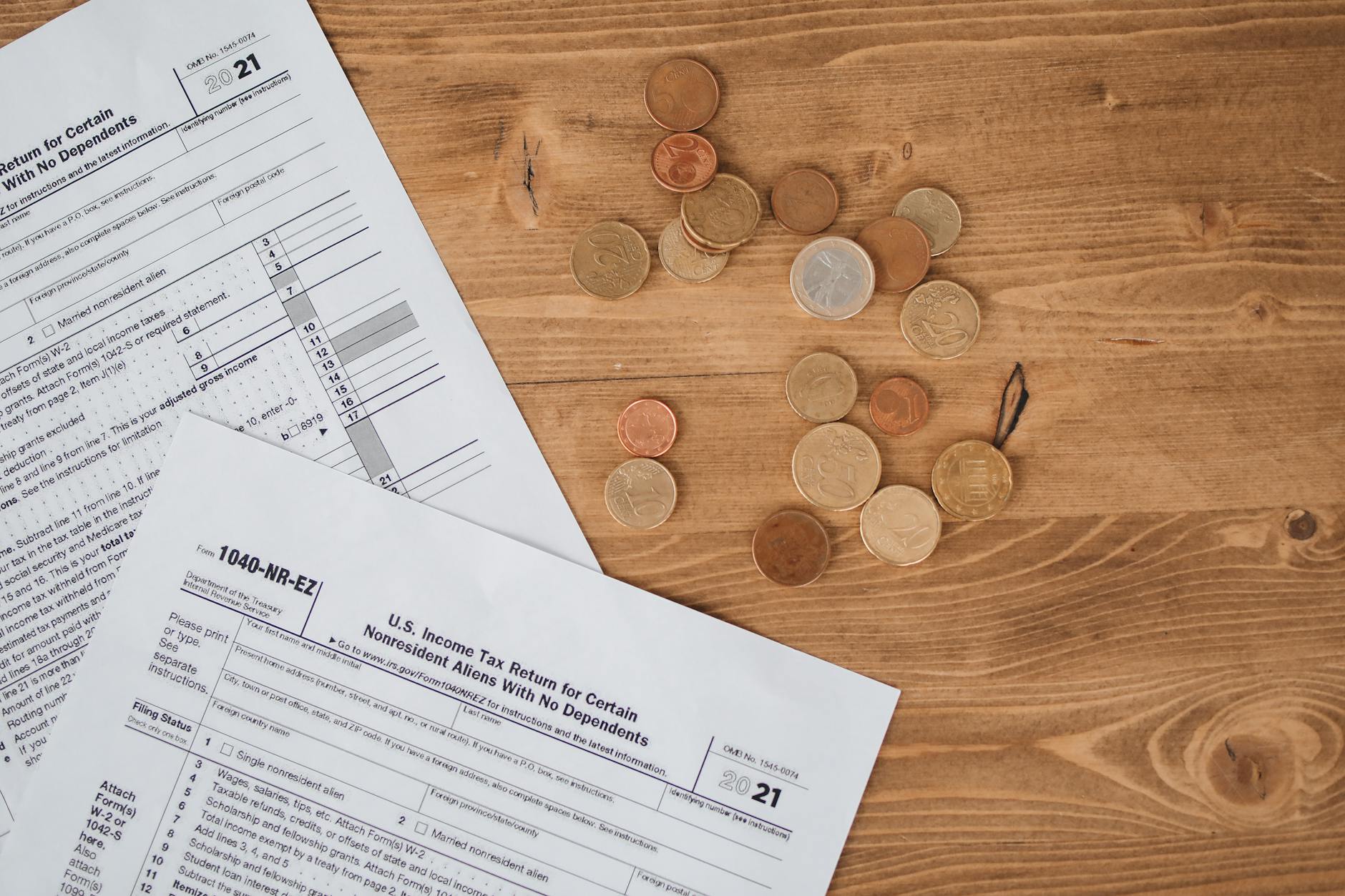
Every bank bonus you collect is taxable income. The bank will issue a 1099-INT at the end of the year, and depending on your tax bracket, you could owe 22% to 37% of that bonus to the IRS. A $500 bonus nets you somewhere between $315 and $390 after federal taxes, and potentially less once state income taxes are factored in. This does not make bonuses a bad deal — it just means the advertised number is not the number you keep. Monthly maintenance fees are the other silent killer. Many of the accounts offering bonuses charge $10 to $25 per month unless you maintain a minimum balance or meet direct deposit thresholds. If you open a Chase Total Checking account for the $400 bonus but forget to maintain the fee waiver requirements after the promotion period, you could hemorrhage $12 per month until you either close the account or meet the minimum.
Over a year, that is $144 gone. Banks design these promotions knowing that a meaningful percentage of customers will stick around and pay fees long after the bonus hits their account. The safest approach is to set a calendar reminder for the day after your bonus qualification period ends. On that date, evaluate whether the account still serves you. If it charges fees you cannot waive, close it or downgrade to a no-fee product. There is no penalty for closing a checking account in most cases, though some banks require you to keep the account open for six months to avoid a bonus clawback. Read the terms before you sign up, not after.
Stacking Multiple Bank Bonuses in the Same Month
Nothing prevents you from opening accounts at multiple banks simultaneously to collect several bonuses at once. A common March 2026 play would be opening Chase Total Checking for $400 and SoFi Checking for up to $300 in the same week, splitting your direct deposit between them. If your employer supports multiple direct deposit destinations, you could qualify for both within the same 90-day window and pocket up to $700 with minimal extra effort.
The limitation is that most banks restrict bonuses to new customers who have not held an account with that institution in the past 12 to 24 months. If you opened a Chase account for a bonus last year, you are likely ineligible for this year’s offer. Serious bonus chasers keep a simple spreadsheet tracking which banks they have opened accounts with and when, so they know exactly when they become eligible again.
What to Expect From Bank Bonuses Beyond March 2026
Bank bonus offers tend to follow predictable seasonal patterns. January through March typically brings the strongest promotions as banks push for new account growth at the start of the fiscal year. The current crop of March 2026 deals is competitive by historical standards, with the $400 to $600 mid-tier offers remaining roughly in line with what we saw throughout 2025.
The wild card is interest rates — if the Federal Reserve continues adjusting rates, banks may shift their acquisition strategy from upfront bonuses to higher ongoing APY offers, which could mean smaller sign-up bonuses but better long-term returns for savers. For now, March 2026 is a strong month to act if you have been waiting for the right time. The BMO Smart Advantage Checking offer runs through May 4, 2026, giving you a few weeks of buffer, but several other promotions could expire without notice. If a particular offer fits your situation, open the account sooner rather than later — the worst outcome is qualifying for the bonus early and having extra time to meet the requirements.
Conclusion
The March 2026 bank bonus landscape offers something for nearly every financial situation. High-net-worth individuals can earn up to $3,000 from Chase Private Client, middle-income earners can reliably pocket $400 to $600 from Huntington, KeyBank, or Chase Total Checking with standard direct deposits, and budget-conscious savers can still grab $125 to $300 from Chase Secure Banking or SoFi with minimal requirements. The key is matching the bonus to your actual financial capacity rather than stretching to meet requirements that don’t fit your cash flow.
Before you open anything, check the maintenance fee structure, confirm you meet the direct deposit definition, note the account closure timeline to avoid clawbacks, and remember that every dollar of bonus income will show up on your tax return. Set reminders, read the fine print, and treat the bonus as a short-term project with a clear start and end date. Done right, bank bonuses remain one of the easiest low-risk ways to put extra cash in your pocket — just don’t let the excitement of free money lead you into an account that costs you more than it pays.
Frequently Asked Questions
Are bank sign-up bonuses really free money?
They are real cash deposited into your account, but they are not entirely free. Bonuses are taxable income reported on a 1099-INT, and some accounts carry monthly fees that can erode the value. If you meet the requirements and close or downgrade the account before fees accumulate, the net gain is genuine.
How long does it take to receive a bank bonus after qualifying?
Most banks pay bonuses within 10 to 30 business days after you meet the qualification requirements, though some take up to 60 days. Chase and Huntington typically land on the faster end, while others may take the full window.
Can I open multiple bank accounts at once to earn several bonuses?
Yes. There is no rule against holding accounts at multiple banks simultaneously. The main constraint is that each bank typically requires you to be a new customer, meaning no existing account within the past 12 to 24 months.
Do transfers from another bank count as direct deposit?
It depends on the bank. Some institutions accept ACH transfers from external banks as qualifying direct deposits, while others strictly require employer or government payroll deposits. Chase and Huntington tend to be stricter, while SoFi has historically been more lenient.
Will opening multiple bank accounts hurt my credit score?
Checking and savings account applications typically involve a soft credit pull, which does not affect your credit score. However, some banks do a hard pull, so it is worth checking the specific institution’s policy before applying if your credit score is a concern.
What happens if I close the account before the required holding period?
Most banks will claw back the bonus if you close the account before the minimum holding period, which is typically 90 days to six months. Some banks may also charge an early account closure fee, usually around $25 to $50.