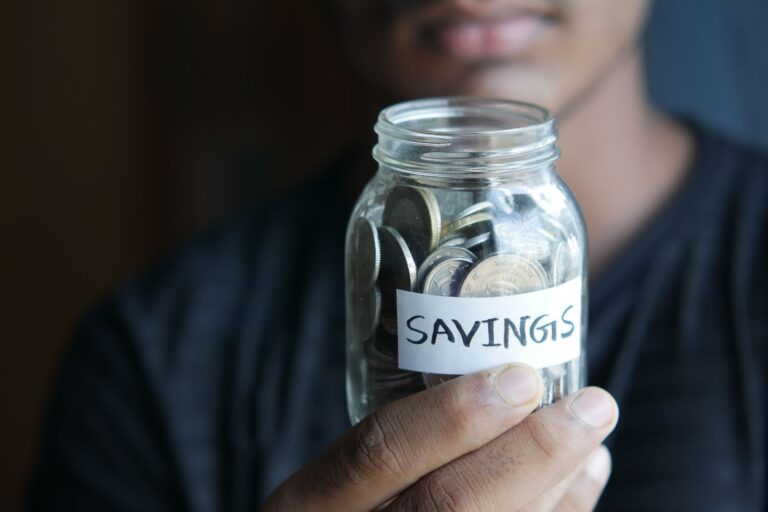

Several banks are offering sign-up bonuses right now that you can grab without tying up a thousand dollars or more in a new account. In March 2026, some of the strongest options include Wells Fargo’s $325 bonus requiring just $500 in direct deposits, Fifth Third Bank’s $300 bonus with a similar $500 direct deposit threshold, and Associated Bank’s offer that can reach up to $600 with only a $25 opening deposit and $500 in recurring direct deposits. If you have even a modest paycheck or side income you can route to a new account, these bonuses are realistic money on the table.
Beyond the headline numbers, though, the details matter. Some of these offers look accessible at first glance but carry direct deposit requirements that push well past the $1,000 mark when you read the fine print. Others, like Chase Secure Banking’s $125 bonus, require almost nothing at all. This article breaks down every worthwhile bank bonus available this month that keeps the actual out-of-pocket deposit low, explains which requirements are genuinely easy to hit, flags the tax implications most people overlook, and walks through a few strategies for stacking these offers without getting burned by early closure fees.
Table of Contents
- Which Bank Bonuses Under $1,000 Deposit Are Worth It in March 2026?
- Online Bank Bonuses That Require Even Less to Start
- How to Meet Direct Deposit Requirements Without a Full Paycheck
- Comparing the Best Bonuses by Effort vs. Reward
- Tax Implications and Early Closure Penalties Most People Miss
- Offers That Look Accessible but Have Hidden High Requirements
- What to Expect From Bank Bonuses Later in 2026
- Conclusion
- Frequently Asked Questions
Which Bank Bonuses Under $1,000 Deposit Are Worth It in March 2026?
Not all bank bonuses are created equal, and the gap between “low deposit” and “easy to earn” is wider than most lists let on. The simplest bonus available right now is Chase Secure Banking at $125. There is no minimum direct deposit requirement, and the opening deposit is minimal. You open the account, meet the basic terms, and collect $125. It is not the largest payout on this list, but it demands almost nothing from you, which makes it one of the highest return-on-effort bonuses available. For someone who just wants free money with minimal friction, this is the starting point. At the other end of the spectrum, Associated Bank is advertising up to $600 for its Access Checking account. The opening deposit is just $25, and you need $500 or more in recurring direct deposits within 90 days.
That is a genuinely low bar compared to offers from banks like BMO, which also asks only $25 to open an account but then requires $4,000 in cumulative direct deposits over 90 days to unlock its $400 bonus. The Associated Bank deal pays more and asks for less. If you can only pursue one bonus this month, that ratio of reward to requirement is hard to beat. Wells Fargo sits in a comfortable middle ground. Its $325 bonus requires a $25 opening deposit and $500 in direct deposits. Fifth Third Bank offers $300 under similar terms, though you will need an offer code and must hit $500 in direct deposits within 90 days. Both are straightforward, both come from large national banks with wide branch networks, and both clear the bar for anyone with a regular paycheck of any size. The practical difference between them comes down to which bank has branches near you and whether you already have an existing relationship with either institution.

Online Bank Bonuses That Require Even Less to Start
digital banks and neobanks have pushed the deposit floor even lower, sometimes to zero. Chime is currently offering between $390 and $426 when you sign up through cashback portals like Swagbucks, MyPoints, or InboxDollars. The catch is that you need to route a direct deposit of at least $200 to the account after signing up through the portal link. That is one of the lowest direct deposit thresholds available anywhere, and the bonus itself rivals what major brick-and-mortar banks are offering for far more effort. However, portal-based bonuses come with quirks. The exact payout depends on which portal you use and what their current rate is, so the $390 to $426 range can shift. You also need to make sure you are signing up as a new Chime customer through the portal’s tracked link, not directly through Chime’s website, or you will not get credited.
If you have ever opened a Chime account before, even if you closed it, you may not qualify. These are not dealbreakers, but they require attention to detail that a standard bank bonus does not. SoFi is also running a $300 bonus for new Checking or Max-Rate Checking accounts opened by March 31, 2026, using the promo code CHECKING25. The sticking point here is the direct deposit requirement: you need at least two deposits of $1,500 or more each within 90 days. That pushes the total well past $1,000, which puts it outside the spirit of this list for many people. If your regular paycheck already clears that amount, SoFi is worth considering. But if you are working with smaller income streams or trying to keep your commitment low, this one is better left alone.
How to Meet Direct Deposit Requirements Without a Full Paycheck
One of the most common barriers to earning a bank bonus is the direct deposit requirement, but the definition of “direct deposit” is more flexible than most people realize. Many banks accept ACH transfers from other banks as qualifying direct deposits. This means you could transfer $500 from an existing checking account at one bank to your new Wells Fargo or Fifth Third account, and it may count toward the bonus requirement. Doctor of credit maintains detailed data points from real users on which banks accept ACH transfers as direct deposits, and it is worth checking before you commit. For example, if you have a checking account at an online bank like Ally or Marcus, you can initiate an outgoing transfer to your new Fifth Third account. Fifth Third has historically counted many ACH transfers as direct deposits, though this is never officially guaranteed and can change without notice.
The point is that you do not necessarily need to reroute your actual payroll to a new bank for 90 days just to earn a $300 bonus. A few manual transfers from an existing account may do the job. This makes the “under $1,000 deposit” threshold genuinely achievable even if your employer’s payroll system is inflexible or slow to update. That said, some banks are stricter than others. Chase, for instance, tends to be more particular about what counts as a direct deposit for its premium bonuses. And KeyBank’s $400 offer, while it only requires a $10 opening deposit, needs $2,000 or more in eligible direct deposits within 90 days, which is a high enough bar that ACH workarounds may not be practical for everyone. Always verify the specific bank’s current policy before relying on this strategy.

Comparing the Best Bonuses by Effort vs. Reward
When you line up these offers side by side, the trade-offs become clearer. Chase Secure Banking gives you $125 for doing almost nothing. That is a guaranteed return with virtually zero risk or hassle. Wells Fargo asks for a bit more effort, $500 in direct deposits, but pays $325. Associated Bank pushes the payout to $600 but requires recurring direct deposits, meaning you need to sustain the deposit pattern rather than just make one lump transfer. The real calculation is not just the bonus amount but how much of your money gets tied up and for how long.
Most of these banks require you to keep the account open for 90 to 180 days to avoid having the bonus clawed back. If you close your Wells Fargo account 60 days in, you could lose the $325 and potentially get hit with an early account closure fee. Fifth Third Bank’s 90-day direct deposit window also means you are committing to maintaining some level of activity for three months. For a $300 bonus, that math still works out well, but it is not the same as a no-strings-attached cash payment. If you are deciding between pursuing one large bonus or several smaller ones, the answer depends on how many bank accounts you are comfortable managing simultaneously. Opening Wells Fargo for $325, Chase Secure Banking for $125, and routing a $200 direct deposit through Chime for roughly $400 would net you around $850 in bonuses, and none of those require more than $500 in deposits at any single institution. That kind of stacking is where the real value in bank bonuses lives, but it does mean keeping track of multiple accounts, requirements, and timelines.
Tax Implications and Early Closure Penalties Most People Miss
Bank bonuses are taxable income. This is the part that consistently catches people off guard. The IRS treats sign-up bonuses as interest income or miscellaneous income, and the bank will report it on a 1099-INT or 1099-MISC at the end of the year. If you earn $600 from Associated Bank, $325 from Wells Fargo, and $125 from Chase, that is $1,050 in additional taxable income for 2026. Depending on your tax bracket, you could owe $150 to $350 or more on that money. The bonuses are still profitable after taxes, but you need to plan for the liability rather than spending every dollar of the bonus as it arrives. Early account closure is the other trap. Most banks specify that accounts must remain open for a set period, often six months, or the bonus will be reversed.
Some banks also charge an early closure fee on top of the clawback, typically $25 to $50. If you open five accounts in March and forget about one of them, letting it go dormant or closing it too soon, you could end up worse off than if you had never opened it. The best practice is to set calendar reminders for the minimum holding period of each account and only close them after that date has passed. There is also the matter of ChexSystems, the banking equivalent of a credit report. Every time you open a new checking or savings account, it gets recorded. Opening several accounts in a short window can flag your profile and lead to denials on future applications. This is not a reason to avoid bank bonuses entirely, but it is a reason to be strategic rather than indiscriminate. Three or four new accounts in a quarter is generally fine. Ten is asking for trouble.

Offers That Look Accessible but Have Hidden High Requirements
A few of the bonuses circulating this month deserve a closer look before you commit. KeyBank’s $400 bonus for Key Smart Checking sounds great, and the $10 minimum opening deposit is about as low as it gets. But the direct deposit requirement is $2,000 or more within 90 days, which is a meaningful commitment that puts it out of reach for anyone looking to keep their total deposit exposure under $1,000. The offer expires May 22, 2026, so there is some urgency baked in, which can push people into signing up without fully reading the terms.
BMO’s $400 checking bonus has a similar profile. The $25 opening deposit is trivial, but qualifying demands $4,000 in cumulative direct deposits within 90 days. That is roughly $1,333 per month in direct deposits, which effectively means routing a full paycheck to BMO for three months. For someone whose employer makes payroll changes easy, this could work. For everyone else, it is a bonus that looks low-barrier but is not.
What to Expect From Bank Bonuses Later in 2026
Bank bonus offers tend to follow a seasonal rhythm. Q1 and Q4 are historically the strongest periods, as banks push to acquire new customers at the start of the year and before year-end reporting. The current batch of March 2026 offers is solid, but it is reasonable to expect another strong wave in September and October. If none of the current offers fit your situation, waiting a few months is not a bad strategy, though the specific offers listed here may not return at the same terms.
The broader trend is toward lower deposit thresholds and higher bonus amounts, driven by competition from neobanks and fintechs that have minimal overhead costs. Traditional banks are being forced to match, which is good news for consumers willing to do a little legwork. If anything, the window for earning easy bank bonuses is getting wider, not narrower. The key is staying informed, reading the full terms before you apply, and treating each bonus as a small project with a defined timeline rather than a passive windfall.
Conclusion
The best bank bonuses under $1,000 in deposits for March 2026 range from Chase Secure Banking’s effortless $125 to Associated Bank’s $600 offer that requires just $25 upfront and $500 in recurring direct deposits. In between, Wells Fargo at $325 and Fifth Third Bank at $300 both deliver strong returns for a $500 direct deposit commitment, while Chime’s portal-based bonus can net you nearly $400 for routing a single $200 direct deposit. Stacking two or three of these offers is realistic for most people and can add up to several hundred dollars in a single quarter. Before you start opening accounts, map out which bonuses you qualify for, set reminders for minimum holding periods, and budget for the tax hit at year-end.
Verify the latest terms directly with each bank, since offers change frequently and the details listed here reflect what was available as of March 2026. Done carefully, bank bonus churning is one of the few genuinely free lunch strategies in personal finance. Done carelessly, it is a mess of forgotten accounts and clawed-back bonuses. A little organization goes a long way.
Frequently Asked Questions
Do bank bonuses count as taxable income?
Yes. Banks report bonuses on a 1099-INT or 1099-MISC, and you owe federal and state income tax on the amount. Plan accordingly, especially if you earn multiple bonuses in the same year.
Can I use an ACH transfer instead of a real payroll direct deposit?
It depends on the bank. Many banks, including Fifth Third and Wells Fargo, have historically accepted ACH transfers from other banks as qualifying direct deposits, but this is not guaranteed and policies can change. Check current data points on forums like Doctor of Credit before relying on this method.
How long do I need to keep the account open?
Most banks require the account to stay open for 90 to 180 days. Closing earlier can trigger a bonus clawback and sometimes an early closure fee of $25 to $50.
Will opening multiple bank accounts hurt my credit score?
Bank account openings do not appear on your credit report, so they will not affect your credit score. However, they are recorded in ChexSystems, which banks use to screen new account applications. Too many new accounts in a short period can lead to denials.
What is the easiest bank bonus to earn right now?
Chase Secure Banking at $125. There is no minimum direct deposit requirement, making it the lowest-effort bonus currently available. If you want a higher payout with minimal work, Chime’s portal bonus of $390 to $426 requires only a $200 direct deposit.
Can I earn a bonus if I already have an account with the bank?
Generally, no. Most bank bonuses are restricted to new customers who have not held an account with that bank within the past 12 to 24 months. Always check the eligibility terms before applying.