

The best bank bonus offers in March 2026 range from $125 for a simple checking account all the way up to $7,000 if you have serious money to park. Right now, HSBC Premier is running the richest deal on the market — up to $7,000 for depositing $1 million or more in new assets before March 31, 2026. Chase Private Client follows with up to $3,000, and Capital One 360 Performance Savings offers up to $1,500 for deposits of $100,000 or more. If those numbers feel out of reach, there are still solid options in the $300 to $600 range that only require setting up direct deposit.
This is one of the better months for bank bonuses in recent memory. Several banks are competing aggressively for new customers, and the offers span everything from no-minimum checking accounts to high-net-worth private banking tiers. Whether you have $500 or $500,000 to work with, there is likely a bonus worth grabbing before these promotions expire. This article breaks down every major bonus available this month, explains who each offer is actually suited for, walks through the qualification requirements, and covers the tax implications and pitfalls that can cost you the bonus entirely.
Table of Contents
- What Are the Highest Bank Bonus Offers Available in March 2026?
- Mid-Range Bank Bonuses Worth Pursuing This Month
- Budget-Friendly Bonuses That Require Minimal Deposits
- How to Qualify for Bank Bonuses Without Getting Disqualified
- Tax Implications and Hidden Costs of Bank Bonuses
- Stacking Multiple Bank Bonuses in a Single Month
- What to Expect From Bank Bonuses Later in 2026
- Conclusion
- Frequently Asked Questions
What Are the Highest Bank Bonus Offers Available in March 2026?
The top-tier bonuses this month are reserved for customers who can move substantial assets. HSBC Premier leads with a tiered structure that starts at $1,500 for depositing between $150,000 and $249,000 in new money, scales to $2,500 for $250,000 to $499,000, jumps to $3,500 for $500,000 to $999,000, and tops out at $7,000 for $1 million or more. That last tier works out to a 0.7% instant return on your deposit, which is decent but not extraordinary when you consider the amount of capital required. The deadline to open is march 31, 2026. Chase Private Client runs a similar tiered promotion: $1,000 for $150,000 to $249,000, $2,000 for $250,000 to $499,000, and $3,000 for $500,000 or more. New-to-Chase money must be transferred within 45 days.
This offer runs through April 15, 2026, giving you a bit more runway. Wells Fargo rounds out the high end with up to $2,500 in its high-balance tier promotion. For people who have savings in the six figures but do not want a private banking relationship, Capital One 360 Performance Savings offers a cleaner path. You get $300 for depositing $20,000 to $49,000, $750 for $50,000 to $99,000, or $1,500 for $100,000 or more. Capital One’s savings account also pays a competitive APY on top of the bonus, making it one of the better combined deals this month. The comparison worth making here is that $100,000 at Capital One gets you $1,500, while $150,000 at Chase gets you $1,000 — so Capital One offers a better return per dollar at the lower deposit levels.

Mid-Range Bank Bonuses Worth Pursuing This Month
The $300 to $600 tier is where most people will find their sweet spot, because these bonuses are achievable with a normal paycheck and a straightforward direct deposit. Huntington Bank Platinum Perks Checking currently offers $600, with a $400 option available for their standard Perks Checking account. What sets Huntington apart is the payout speed — the bonus is deposited within 14 days of qualifying, which is faster than most competitors. Associated Bank is also running a $600 checking account bonus for new customers, and Provident Credit Union has a $475 new checking offer. BMO Smart Advantage Checking comes in at $400 with a wider window — you can open the account between January 29, 2026 and May 4, 2026, and you have 90 days to receive $4,000 or more in qualifying direct deposits.
Chase Total Checking offers $400 with a $1,000 minimum direct deposit requirement, and Wells Fargo Everyday Checking pays $325 for $1,000 or more in qualifying direct deposits within 90 days. However, if you already have an existing relationship with any of these banks, you likely will not qualify. Most bonuses explicitly require new accounts with no prior relationship, and some banks define “new” as not having held an account in the past 12 to 24 months. Before you apply, check the fine print on the specific offer. SoFi Checking and Savings also deserves a mention here, offering $50 to $300 depending on direct deposit amount — $1,000 in direct deposits within 31 days gets you $50, while $5,000 gets the full $300. The short 31-day window makes SoFi one of the faster turnarounds if you can meet the deposit threshold.
Budget-Friendly Bonuses That Require Minimal Deposits
Not every bonus requires thousands in direct deposits or six-figure balances. Chase Secure Banking pays $125 with no minimum direct deposit required, making it one of the most accessible offers on the market. This account is specifically designed for people who want a basic banking relationship without overdraft fees or minimum balance headaches. The $125 is not life-changing, but it is free money for opening an account you might actually use. TD Complete checking offers $200 for a $500 minimum direct deposit, which most people with any kind of regular income can meet in a single pay cycle.
That is a solid return for minimal effort. If you are someone who has been meaning to switch banks or open a secondary checking account, these lower-tier bonuses are essentially paying you to do something you were already considering. One practical example: if you open both a Chase Secure Banking account ($125, no direct deposit needed) and a TD Complete Checking account ($200, $500 direct deposit), you net $325 from two relatively simple account openings. Pair that with a SoFi account at the $300 tier and you are looking at $625 across three banks — all without needing to move large sums of money. The main trade-off is the administrative overhead of managing multiple accounts and making sure you meet each bank’s requirements within their specific timeframes.

How to Qualify for Bank Bonuses Without Getting Disqualified
The most common way people lose their bank bonus is by failing to read the qualification requirements carefully. Direct deposit is the standard trigger for most checking account bonuses, but banks define “qualifying direct deposit” differently. Some accept ACH transfers from another bank, while others strictly require payroll deposits. Chase, for instance, tends to be flexible about what counts as a direct deposit, while other banks are more rigid. If you are unsure, set up your actual employer payroll deposit to be safe. Timing matters more than people realize. BMO gives you 90 days from account opening to hit your deposit threshold.
SoFi gives you only 31 days. Chase Private Client requires the money to move within 45 days. Missing these windows by even a day means forfeiting the bonus entirely, and banks have no incentive to grant exceptions. Write down the exact dates when you open each account. The other critical requirement is keeping the account open. Most banks require you to maintain the account for three to six months after earning the bonus. Close early and you will either have the bonus clawed back or get hit with an early account closure fee — sometimes both. This is the trade-off with bank bonus churning: your money is effectively locked up for several months, and if interest rates on high-yield savings accounts are competitive, the opportunity cost of parking funds in a low-yield checking account needs to factor into your calculations.
Tax Implications and Hidden Costs of Bank Bonuses
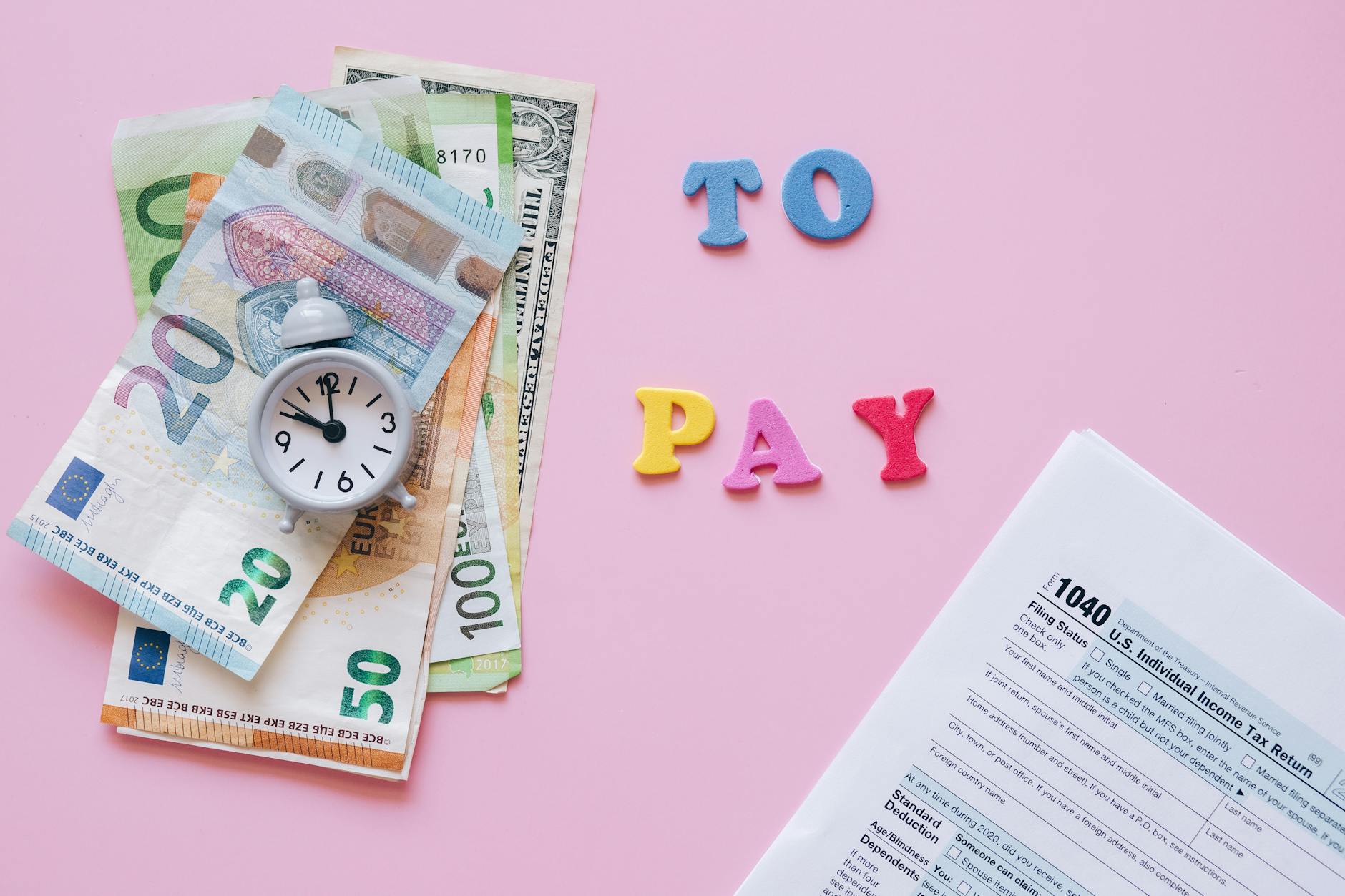
Bank bonuses are taxable income. Every bonus you receive will be reported to the IRS, typically on a 1099-INT or 1099-MISC form. A $600 bonus from Huntington Bank is $600 in taxable income, and depending on your tax bracket, you could owe $120 to $200 or more on that amount. This does not make the bonuses a bad deal — free money taxed is still more than no money at all — but you should plan for the tax hit rather than being surprised at filing time. Some banks also charge monthly maintenance fees that can eat into your bonus.
A $12 monthly fee on a checking account you keep open for six months costs you $72, turning a $400 bonus into an effective $328 before taxes. Always check whether you can waive the monthly fee through direct deposit minimums or balance requirements, and factor those conditions into your decision. If a bonus requires you to maintain a $15,000 balance in a zero-interest checking account for six months, you need to consider what that money would have earned in a high-yield savings account paying 4% or more. Another limitation worth noting: if you have claimed a bonus from the same bank within the past one to two years, you almost certainly will not qualify again. Banks track this, and the terms usually state clearly that the offer is for “new customers” or accounts not opened within a specified lookback period. Keeping a simple spreadsheet of which bonuses you have claimed and when helps you avoid wasting time on applications that will not pay out.
Stacking Multiple Bank Bonuses in a Single Month
Experienced bonus chasers often open several accounts in the same month to maximize returns. There is nothing preventing you from opening accounts at Chase, Huntington, BMO, and SoFi simultaneously, as long as you can meet each bank’s requirements. A realistic stack for March 2026 might look like this: Chase Total Checking at $400, Huntington Platinum Perks at $600, and Capital One 360 at $300 (for a $20,000 deposit), netting $1,300 before taxes.
The constraint is your cash flow. If your monthly paycheck is $5,000 and three different banks each need $1,000 or more in direct deposits, you need to split your payroll or stagger the account openings. Some people split direct deposits across multiple accounts through their employer’s payroll system, which works if your employer allows it. Others open accounts sequentially, satisfying one bank’s requirements before moving on to the next, though this risks running up against offer expiration dates.
What to Expect From Bank Bonuses Later in 2026
March through May tends to be a strong window for bank promotions, as financial institutions push to hit first-half growth targets. Several of the current offers expire in this window — HSBC Premier’s deadline is March 31, BMO’s offer runs through May 4, and Chase Private Client extends to April 15, 2026. If you have been sitting on the fence, the next few weeks are likely the best time to act.
Looking ahead, bank bonuses tend to fluctuate with the competitive environment and interest rate landscape. As long as banks are fighting for deposits, these promotions will continue. But individual offers come and go quickly, and the $600 or $7,000 deal available today may not exist next month. The practical move is to evaluate what is available now, qualify for the bonuses that fit your financial situation, and then reassess in a few months when the next round of promotions appears.
Conclusion
March 2026 is a strong month for bank bonuses, with options at every deposit level. The headline numbers — $7,000 from HSBC, $3,000 from Chase Private Client — grab attention, but the mid-tier offers from Huntington ($600), Associated Bank ($600), Chase Total Checking ($400), and BMO ($400) deliver the best value relative to effort for most people. Even at the entry level, Chase Secure Banking’s $125 requires nothing more than opening an account.
The key to making bank bonuses work is treating them like a small financial project: read the terms, note the deadlines, set up qualifying deposits on time, keep the accounts open for the required period, and budget for the tax bill. Done right, a few hours of paperwork in March could put $500 to $1,500 in your pocket by summer. Done carelessly, you end up with a pile of checking accounts, missed deadlines, and nothing to show for it. Be deliberate, and the math works out in your favor.
Frequently Asked Questions
Are bank sign-up bonuses really free money?
They are real cash deposited into your account, but they are not entirely free. You typically need to meet deposit or direct deposit requirements, keep the account open for a set period, and pay income tax on the bonus. After accounting for any fees and taxes, most bonuses still provide a net positive return.
Do bank bonuses affect my credit score?
Opening a checking or savings account usually involves a soft credit pull, which does not affect your score. However, some banks perform a hard inquiry, particularly for premium accounts or those with overdraft lines of credit. Ask the bank before applying if this concerns you.
Can I open multiple bank accounts to earn several bonuses at once?
Yes. There is no rule against holding accounts at multiple banks simultaneously. The main challenges are meeting each bank’s qualification requirements within their respective timeframes and managing the administrative burden of multiple accounts.
How long does it take to receive a bank bonus after qualifying?
It varies widely. Huntington deposits the bonus within 14 days of qualifying. Others take 60 to 90 days or even longer. Check the specific terms for each offer, as the payout timeline is usually spelled out in the promotion details.
Will I owe taxes on a $400 bank bonus?
Yes. Bank bonuses are reported as taxable interest or miscellaneous income. A $400 bonus might cost you $80 to $150 in additional taxes depending on your marginal tax rate. You will receive a 1099 form from the bank.
What happens if I close the account early?
Most banks require you to keep the account open for three to six months. Closing before that period ends typically results in the bonus being clawed back, and some banks also charge an early closure fee, usually $25 to $50.