

The best bank bonuses available right now range from $125 for basic checking accounts up to $3,000 for premium private banking relationships, with the sweet spot for most people falling in the $300 to $500 range from major banks like Chase, Bank of America, and Citi. If you are planning ahead for October 2026 promotions specifically, the honest answer is that those offers have not been announced yet — banks typically refresh their bonus structures monthly. But the current crop of sign-up promotions gives you a reliable preview of what to expect, since many of these banks run recurring or extended offers throughout the year.
For example, Chase Total Checking is currently offering a $400 bonus that only requires a $1,000 minimum direct deposit, making it one of the most accessible mid-tier bonuses on the market. Bank of America has a tiered structure topping out at $500 for those who can push $10,000 or more in qualifying direct deposits within 90 days. This article breaks down every major bank bonus currently active, walks through the requirements and fine print that trip people up, and covers the tax implications that too many bonus chasers overlook until January rolls around.
Table of Contents
- Which Bank Sign-Up Bonuses Offer the Highest Payouts in 2026?
- Understanding Direct Deposit Requirements and How Banks Verify Them
- Best Bank Bonuses for People Who Want Low Commitment
- How to Compare Bank Bonuses Beyond the Headline Number
- Tax Implications and Clawback Rules Most People Miss
- Stacking Bank Bonuses Across Multiple Institutions
- What to Expect From October 2026 Bank Promotions
- Conclusion
- Frequently Asked Questions
Which Bank Sign-Up Bonuses Offer the Highest Payouts in 2026?
The highest bank bonuses in 2026 are reserved for customers willing to park serious money. Chase Private Client leads the pack with up to $3,000 — structured as $1,000 for depositing $150,000 to $249,999, $2,000 for $250,000 to $499,999, and $3,000 for $500,000 or more. Huntington Platinum Perks Checking offers $600 for depositing at least $25,000 in new-to-Huntington funds within 90 days. These are real numbers, but they require real capital sitting in the account, which means the effective return depends heavily on what that money could be earning elsewhere.
For most people without six figures to move around, the $400 to $500 tier is where the action is. Bank of America Checking tops out at $500 for $10,000 in qualifying direct deposits within 90 days. Chase Total Checking and BMO Smart Advantage Checking both offer $400, though their requirements differ — Chase needs just a $1,000 minimum direct deposit while BMO requires cumulative $4,000 in qualifying direct deposits within the same 90-day window. Citi Checking lands in the middle at $325 to $450 depending on whether you hit $3,000 or $6,000 in qualifying direct deposits within 90 days of opening. The differences in effort versus payout are worth comparing carefully before you commit.

Understanding Direct Deposit Requirements and How Banks Verify Them
Nearly every checking account bonus hinges on direct deposits, but what counts as a “qualifying direct deposit” varies by bank — and this is where people get tripped up. Most banks want payroll direct deposits from an employer, government benefit payments, or pension distributions. Some banks will also accept ACH transfers from other bank accounts as qualifying direct deposits, but others explicitly exclude these. Chase, for instance, has historically been stricter about requiring actual payroll deposits, while some smaller banks and online institutions like sofi tend to be more lenient with ACH transfers. The timing windows matter just as much as the deposit type. TD Complete Checking requires a $500 minimum direct deposit for its $200 bonus, but you need to set that up quickly after opening. Wells Fargo Everyday Checking requires $1,000 or more in qualifying direct deposits within 90 days for the $300 tier — fall short and you get just $50.
However, if you are between jobs or work as a freelancer without traditional payroll, you may find it difficult or impossible to meet the direct deposit requirements at stricter banks. In that case, look for offers like Chase Secure Banking, which pays a $125 bonus with no minimum direct deposit required. It is a smaller payout, but it is genuinely accessible. The setup timeline is another pitfall. Most bonuses require direct deposit enrollment within 30 to 90 days of account opening. Do not assume you can open an account now, wait a few months, then start depositing. Read the offer terms carefully, because missing the window by even a day can disqualify you entirely.
Best Bank Bonuses for People Who Want Low Commitment
Not everyone wants to juggle $10,000 in direct deposits or park a quarter-million dollars in a new account. For those looking for a solid bonus without a heavy lift, several offers stand out. chase Secure Banking at $125 requires no minimum direct deposit at all — you open the account, and the bonus comes your way. TD Complete Checking asks for just a $500 direct deposit for $200. These are modest amounts, but for ten minutes of paperwork, the hourly rate on your time is hard to beat.
SoFi Checking and Savings offers an interesting structure with $50 or $300 depending on your direct deposit amount. To hit the $300 tier, you need $5,000 or more in eligible direct deposits within 25 days — a shorter window than most competitors but a strong payout for a combined checking and savings product. That offer is valid through December 31, 2026, giving you a long runway to take advantage of it. The $50 tier is there for people with lower deposit amounts who still want something for their trouble. TD Bank also deserves a look if you want to combine products, offering up to $500 across combined checking and savings account offers. Bundling can be a smart play if you are already planning to open both account types, but be cautious about spreading your deposits too thin across multiple accounts just to chase bonuses — the complexity is not always worth the incremental dollars.

How to Compare Bank Bonuses Beyond the Headline Number
A $500 bonus is not automatically better than a $300 bonus when you factor in the actual requirements and ongoing costs. The right way to evaluate these offers is to calculate the effective return on your effort and your money. Chase Private Client’s $3,000 bonus sounds incredible until you realize you need to deposit $500,000 to qualify for the top tier. That $3,000 represents a 0.6% return on those funds, which you could potentially beat with a high-yield savings account or Treasury bills without locking anything up. Compare that to Bank of America’s $500 bonus for $10,000 in direct deposits — that is a 5% return on the deposit requirement, earned in 90 days. Or look at Chase Secure Banking’s $125 for essentially zero effort beyond opening the account.
The return on your time is effectively infinite. When choosing between offers, weigh the bonus amount against the deposit required, the time your money is tied up, any monthly fees the account carries, and whether you will actually use the account after the bonus posts. Monthly maintenance fees are the silent killer of bank bonuses. Some of these accounts charge $10 to $25 per month if you fail to maintain minimum balances or direct deposit activity after the promotional period. If you earn a $200 bonus but pay $15 per month in fees for a year before closing the account, you have netted just $20. Always check whether the account has fee waiver conditions you can realistically meet long-term, or plan to close the account once the minimum holding period expires.
Tax Implications and Clawback Rules Most People Miss
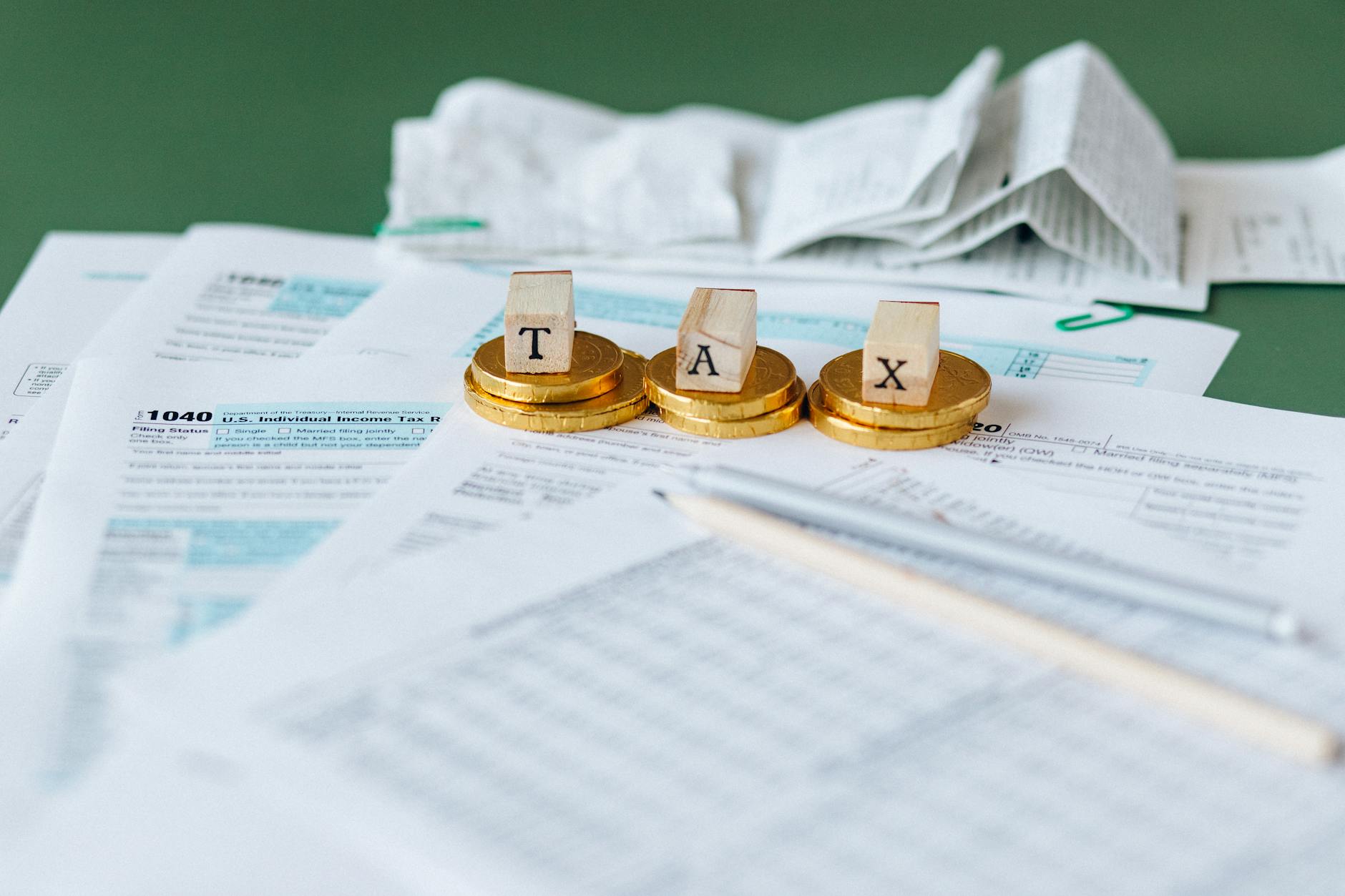
Bank bonuses are taxable income. This catches people off guard every year. Banks report bonuses to the IRS, typically on a 1099-INT or 1099-MISC form, and you owe federal and state income tax on the amount. A $500 bonus might net you $350 to $400 after taxes depending on your bracket. It is still free money, but it is not the full headline number landing in your pocket. The clawback provisions are the other landmine. Most bank bonuses require you to keep the account open for six to twelve months after receiving the bonus.
Close early and the bank will claw the bonus back — sometimes even debiting your linked account if the closed account balance does not cover it. This means you need to commit to maintaining the account for that full period, including meeting any minimum balance or activity requirements to avoid monthly fees. If you are a “bonus churner” opening and closing accounts frequently, banks also track this. Most offers specify that you must be a new customer who has not held an account at the bank within a certain lookback period, often 12 to 24 months. One more thing that surprises people: the bonus does not always post immediately. Some banks take 10 to 15 business days after you meet the requirements. Others can take up to two statement cycles. If you are counting on the bonus for a specific purpose, build in a buffer.
Stacking Bank Bonuses Across Multiple Institutions
There is nothing stopping you from opening accounts at Chase, Bank of America, and Citi simultaneously to collect bonuses from each. This is a legitimate strategy that personal finance communities have practiced for years. If you can meet the direct deposit requirements across multiple accounts — for instance, splitting your paycheck or directing different income streams to different banks — you could potentially collect $1,000 or more in bonuses within a single quarter. The practical limit is your ability to manage the logistics.
You need to track each bank’s deposit deadline, minimum balance requirements, fee waiver conditions, and account closure dates separately. A spreadsheet helps. Also verify that your employer’s payroll system allows multiple direct deposit splits — most do, but some smaller companies use payroll providers that only support one or two accounts. If you are self-employed, this becomes easier since you control where your income lands.
What to Expect From October 2026 Bank Promotions
Since October 2026 promotions have not been released yet, the current active offers serve as the best predictor of what is coming. Banks like Chase, Huntington, and SoFi have historically run recurring promotions with similar or identical bonus amounts throughout the year. Chase Total Checking has offered a $300 to $400 bonus in some form for several consecutive quarters, and there is no indication that pattern will break. Bank of America’s tiered structure has also been consistent.
What could change by October is the interest rate environment. If the Federal Reserve continues adjusting rates, banks may tweak bonus amounts or deposit requirements to stay competitive. A falling rate environment sometimes pushes banks to offer more generous bonuses as an alternative to high interest rates for attracting deposits. Keep an eye on the major personal finance comparison sites — NerdWallet, Bankrate, and Doctor of Credit are reliable for tracking updated offers as they roll out each month.
Conclusion
The bank bonus landscape in 2026 offers legitimate opportunities to earn hundreds or even thousands of dollars for relatively straightforward account openings and deposit requirements. The best strategy depends on your specific situation — Chase Total Checking’s $400 bonus with a low $1,000 direct deposit minimum is the best all-around option for most people, while Bank of America’s $500 tier rewards those who can push higher deposit volumes. For those with substantial assets, Chase Private Client’s $3,000 bonus is the ceiling.
Treat bank bonuses like a side gig that pays well for minimal hours. Read every term before you open an account, track your deadlines in a spreadsheet or calendar, budget for the taxes, and do not close accounts early. If you start now with the current active promotions, you will have the bonus income in hand well before October — and you can evaluate the fresh batch of fall promotions from a position of experience rather than guesswork.
Frequently Asked Questions
Are bank sign-up bonuses really free money?
They are real cash that gets deposited into your account, but they are not entirely free. You need to meet deposit requirements, keep the account open for a set period, and pay income taxes on the bonus amount. After taxes and any fees, a $400 bonus might net you roughly $280 to $340 depending on your tax bracket.
How long does it take to receive a bank bonus after meeting the requirements?
It varies widely. Some banks post bonuses within 10 to 15 business days after you satisfy the conditions. Others take one to two full statement cycles, which can mean waiting 30 to 60 days. The specific timeline is usually spelled out in the offer terms.
Can I open a bank account just for the bonus and then close it?
Technically yes, but you need to keep the account open for the required holding period — typically 6 to 12 months — or the bank will claw the bonus back. Also be aware that some banks track customers who repeatedly open and close accounts, and they may deny future bonus eligibility.
Do ACH transfers from another bank count as direct deposits?
It depends on the bank. Some institutions count ACH transfers as qualifying direct deposits, while others specifically require payroll, government, or pension payments. This is one of the most common reasons people fail to earn their bonus, so verify with the specific bank before relying on ACH transfers.
Will opening multiple bank accounts hurt my credit score?
Most banks perform a soft credit inquiry for checking and savings accounts, which does not affect your credit score. However, a few banks run hard inquiries, particularly for accounts that include overdraft lines of credit. Check beforehand if you are concerned about hard pulls, especially if you are planning a mortgage or major loan application.
How are bank bonuses taxed?
Banks report bonuses as interest income on a 1099-INT form or as miscellaneous income on a 1099-MISC form. You owe federal income tax at your ordinary rate, plus any applicable state income tax. The bank will send the tax form in January following the year you received the bonus.