
The best bank bonuses available heading into mid-2026 range from a staggering $7,000 from HSBC Premier Checking down to easy-grab offers like Chase Secure Banking’s $125 bonus that requires no minimum direct deposit at all. If you are looking to pad your savings with free money from banks competing for your business, right now is one of the better windows we have seen in years. For example, even someone with a standard paycheck can pick up $400 from Chase Total Checking just by setting up a $1,000 direct deposit within 90 days of opening the account.
While the title references July 2026, most of the promotions currently live have expiration dates stretching from April through the end of 2026, so many of these deals will still be available or will be replaced by comparable summer offers. Banks tend to refresh their bonus structures quarterly, and the mid-year period historically brings competitive promotions as institutions push to hit annual growth targets. What follows is a full breakdown of every major bonus tier, the fine print you need to watch for, the tax implications most people overlook, and a practical strategy for stacking multiple bonuses without tripping over eligibility rules. This article covers the highest-value checking bonuses for people with significant assets, the mid-tier sweet spot most readers will realistically qualify for, savings account bonuses worth pairing alongside checking offers, and the qualifying requirements that trip people up most often.
Table of Contents
- What Are the Best Bank Sign-Up Bonuses Available for Mid-2026?
- How Much Can You Realistically Earn From Checking Account Promotions?
- Which Savings Account Bonuses Are Worth Pairing With Checking Offers?
- Bank Bonus Fine Print That Costs People Money
- Tax Implications Most People Forget About Bank Bonuses
- How Bank Bonus Offers Typically Change by Summer
- Building a Long-Term Bank Bonus Strategy
- Conclusion
- Frequently Asked Questions
What Are the Best Bank Sign-Up Bonuses Available for Mid-2026?
The current landscape breaks into three clear tiers. At the top, HSBC Premier Checking offers up to $7,000, but that requires parking at least $1 million in new deposits. Chase Private Client follows at up to $3,000, and Wells Fargo rounds out the premium tier at up to $2,500 for its Everyday Checking account, which requires a $25 opening deposit and $1,000 or more in qualifying direct deposits within 90 days. These are serious bonuses, but they demand serious capital or banking relationships in return. The mid-tier is where most people will find the best return on effort.
Huntington Bank’s Platinum Perks Checking pays $600, Associated Bank matches that at up to $600 with a $500 direct deposit requirement within 90 days, and Bank of America’s Advantage SafePass Banking offers a tiered structure topping out at $500 for $10,000 in direct deposits within 90 days. Chase Total Checking’s $400 bonus and BMO Smart Advantage Checking’s $400 bonus round out this range. The Chase offer expires April 15, 2026, and the BMO offer requires a promo code and expires May 4, 2026, so neither should be put off. For comparison, consider that a high-yield savings account paying 4.5 percent APY on $10,000 earns roughly $450 over a full year. A $500 bank bonus for a 90-day direct deposit commitment effectively pays you a higher rate for a fraction of the time and effort. That math is why bank bonus churning has become a legitimate personal finance strategy rather than a niche hobby.

How Much Can You Realistically Earn From Checking Account Promotions?
A realistic target for someone with a regular job and one direct deposit to work with is between $400 and $600 from a single checking bonus. chase Total Checking at $400 is the easiest mid-tier bonus to hit since it only requires $1,000 in direct deposits within 90 days. If your employer allows split direct deposits, you could simultaneously fund a Bank of America Advantage SafePass account and aim for the $300 tier by directing $5,000 there, effectively doubling your bonus earnings from a single paycheck setup. However, if you have had an account at the same bank within the past 12 to 24 months, you almost certainly will not qualify. This is the single most common disqualifier, and each bank sets its own lookback period.
Chase, for instance, typically requires that you have not held a Chase checking account or received a checking bonus within the prior 24 months. Wells Fargo and Bank of America use similar windows. Failing to check this before applying means you will go through the entire process, meet every deposit requirement, and then receive nothing. There is also a timing issue people underestimate. Most bonuses require the qualifying direct deposits to land within 60 to 90 days of account opening, not application. If your employer takes two payroll cycles to update direct deposit information, that could eat three to four weeks of your window before a single dollar arrives. Start the direct deposit change process the same day you open the account, or even before if your employer’s payroll portal allows you to pre-stage changes.
Which Savings Account Bonuses Are Worth Pairing With Checking Offers?
Several banks offer savings bonuses that can be stacked alongside their checking promotions, and doing so is one of the smarter moves available. sofi Checking and Savings pays up to $300 for $5,000 or more in direct deposits, and their offer runs through December 31, 2026, giving you the longest runway of any current promotion. Capital One 360 Savings goes much higher, offering up to $1,500 for large balance deposits, though that requires substantial capital sitting in the account. A concrete example of stacking: open a Chase Total Checking account for the $400 bonus with a $1,000 direct deposit, then separately open a SoFi Checking and Savings account and route $5,000 in direct deposits there over the following months for another $300.
That is $700 from two accounts with relatively modest deposit requirements. Add a Capital One 360 Checking account using promo code CHECKING250 with two deposits of $500 or more within 75 days, and you are at $950 total. Capital One charges no monthly fees or minimums, so there is no carrying cost to keeping the account open. The key advantage of savings bonuses is that they typically do not conflict with checking bonuses at other banks since they rely on balance thresholds rather than direct deposit routing. You can maintain your primary direct deposit at one bank for a checking bonus while simultaneously transferring lump sums into savings accounts at other institutions to hit their bonus thresholds.
Bank Bonus Fine Print That Costs People Money
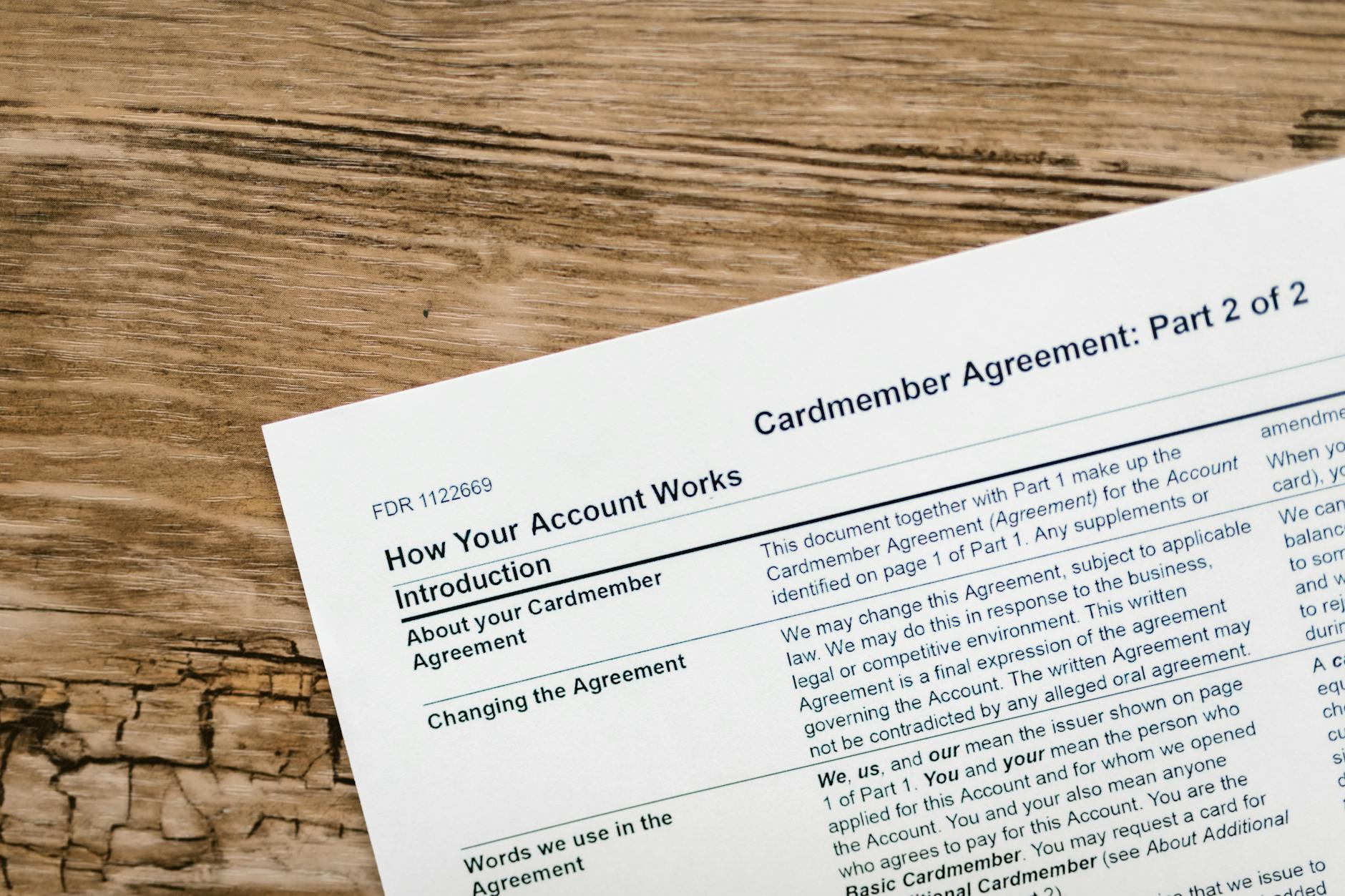
The most expensive mistake in bank bonus hunting is closing the account too early. Nearly every bank requires you to keep the account open for at least six months after earning the bonus. Close before that window, and the bank will claw back the bonus, sometimes by debiting your linked account or sending the balance to collections if the account is already at zero. The six-month hold is standard at Chase, Wells Fargo, and Bank of America. Some banks extend this to 12 months. Monthly maintenance fees are the other silent killer. Chase Total Checking charges $12 per month unless you maintain a $1,500 daily balance, receive $500 or more in direct deposits, or hold a combination of qualifying Chase accounts.
Over six months of mandatory account holding, that is $72 in fees eating into your $400 bonus if you do not meet a waiver condition. BMO Smart Advantage Checking, by contrast, has a $5 monthly fee that is waived with a single direct deposit of any amount, making it cheaper to maintain. Bank of America’s Advantage SafePass tiers its fees differently, and some accounts may carry no monthly fee at all depending on the product chosen. Always map out the fee waiver requirements before opening any account. The tradeoff between the highest bonus and the lowest friction is worth calculating explicitly. A $600 bonus that requires $25,000 in deposits and six months of active account management may net you less per hour of effort than a $250 Capital One bonus that requires two $500 deposits, charges no fees, and has no minimum balance. Optimize for net dollars after fees and effort, not headline bonus amounts.
Tax Implications Most People Forget About Bank Bonuses
Bank bonuses are taxable income, and every bank that pays you a bonus of $10 or more will issue a 1099-INT at the end of the tax year. This catches people off guard, especially those who pursue multiple bonuses and end up with several hundred or even several thousand dollars in reportable interest income they did not budget for. If you earn $2,000 in bank bonuses across multiple accounts during 2026, that is $2,000 added to your gross income for federal tax purposes. At a 22 percent marginal tax bracket, a $400 Chase bonus nets you $312 after taxes. A $7,000 HSBC bonus at the same bracket costs you $1,540 in federal taxes alone, plus state income tax if applicable.
This does not make the bonuses a bad deal, far from it, but it means you should set aside roughly 25 to 35 percent of every bonus you earn for tax obligations depending on your bracket and state. Failing to do this creates an unpleasant surprise in April of the following year. One limitation worth noting: you cannot deduct the costs associated with earning bank bonuses. The gas you spent driving to a branch, the opportunity cost of tying up funds, and any fees you paid are not deductible against the bonus income. The IRS treats bank bonuses as interest income, period. Plan accordingly and treat the after-tax number as your real earnings figure.

How Bank Bonus Offers Typically Change by Summer
Banks tend to rotate their promotional offers on a quarterly or seasonal basis, which means the specific numbers listed here will shift by July 2026. However, the structure rarely changes dramatically. Chase has offered a checking bonus in the $200 to $400 range almost continuously for years, adjusting the amount and direct deposit threshold slightly each cycle. HSBC and Wells Fargo refresh their premium tier bonuses less frequently but tend to maintain similar ranges.
What typically happens in summer is that banks increase bonus amounts slightly to offset the seasonal slowdown in new account openings. June through August historically sees fewer people thinking about banking, so institutions sweeten the pot. If you see a $400 bonus in March, do not be surprised to see $500 for the same product in July. That said, waiting carries the risk that a current offer expires without replacement, as happened with several regional bank promotions in mid-2025.
Building a Long-Term Bank Bonus Strategy
The people who earn the most from bank bonuses treat it as an ongoing rotation rather than a one-time event. Because most banks impose a 12 to 24 month lookback period on bonus eligibility, you can cycle back to the same banks every two years. A disciplined approach of opening two to three new bonus accounts per quarter, meeting the requirements, holding for six months, then closing and rotating to new offers can generate $2,000 to $4,000 per year in extra income with modest effort.
Looking ahead through the rest of 2026, the competitive dynamics suggest bonuses will remain strong. Online banks like SoFi and Capital One continue to pressure traditional institutions into matching or exceeding their offers, and the current interest rate environment gives banks more margin to fund generous promotions. The key is to start a simple spreadsheet tracking which banks you have opened accounts with, when you opened them, when the bonus posted, and when the earliest safe close date is. This single habit is the difference between organized bonus earnings and a mess of forgotten accounts bleeding monthly fees.
Conclusion
The best bank bonuses currently available heading into mid-2026 offer genuine, no-gimmick payouts ranging from $125 to $7,000 depending on how much capital and effort you are willing to commit. For most people, the sweet spot sits in the $300 to $600 range with offers from Chase, Huntington, Bank of America, BMO, Associated Bank, and SoFi all delivering strong returns for standard direct deposit setups. Stacking a checking bonus with a savings bonus at a different institution is the simplest way to maximize earnings without adding complexity.
The critical steps are straightforward: verify you meet the new customer requirement, open the account, immediately set up qualifying direct deposits, track your 60 to 90 day deadline, hold the account for at least six months, and set aside 25 to 35 percent of every bonus for taxes. Miss any one of those steps and you either lose the bonus entirely or give back a chunk of it to fees or tax surprises. Start with one account, get the process down, then scale up as you get comfortable with the rhythm.
Frequently Asked Questions
Are bank sign-up bonuses really free money?
They are real cash deposited into your account, but they are not free in the strictest sense. You need to meet deposit requirements, keep the account open for a set period, and pay income tax on the bonus. After accounting for any monthly fees and taxes, the net payout is still overwhelmingly positive, but it is not zero-effort.
Can I open multiple bank accounts at once to earn several bonuses?
Yes, as long as you can meet the direct deposit and minimum balance requirements for each account simultaneously. If your employer allows split direct deposits across multiple accounts, this becomes straightforward. Just keep a spreadsheet to track deadlines and requirements for each account.
How long does it take to receive a bank bonus after meeting the requirements?
Most banks deposit the bonus within 10 to 15 business days after you meet the qualifying criteria, though some take up to one full statement cycle. Chase and Bank of America are generally faster, while some regional banks can take 60 to 90 days after the qualifying period ends.
Will opening multiple bank accounts hurt my credit score?
Opening a checking or savings account typically involves a soft credit inquiry, which does not affect your credit score. However, some banks do perform hard inquiries, particularly for accounts that include overdraft lines of credit. Check the specific bank’s policy before applying if credit impact concerns you.
What counts as a qualifying direct deposit for bank bonuses?
Employer payroll deposits are universally accepted. Some banks also accept government benefit payments, pension distributions, and certain ACH transfers from other banks. Person-to-person payment apps like Venmo or Zelle generally do not count. When in doubt, use your actual employer payroll deposit to be safe.
What happens if I close my account before the required holding period?
The bank will claw back the bonus. This typically means they debit the bonus amount from your remaining balance. If your balance is insufficient, you may owe the bank money, which could be sent to collections. Always hold the account for at least six months unless the bank’s terms specify a shorter period.